
Disclaimer: The views expressed by the artist/interviewee are their own and do not necessarily represent the beliefs of Aweh Online, or our respective editors.
Rohil, 25, is a writer and digital artist. He has primarily made a living in the video game industry as a narrative designer, writing story-lines, dialogue, directing visuals, and creating digital art assets. More recently, Rohil’s films have won awards at festivals across the globe, and he’s released his debut music project, the “Run Me Back” EP.
So, you grew up in Cape Town, South Africa. What was your upbringing like, and do you miss home at all?
Growing up in Cape Town was a blessing, man. I used to resent being the only Indian kid for much of my adolescence, especially not having the vocabulary or support to communicate how I was being othered. I look at my childhood now as something that fortified my mental toughness and gave me a greater sense of awareness and comfort within a diversity of different people and cultures. Cape Town taught me to love and empathize, and with that instilled a purpose to stand up for marginalized voices. I also miss the food on an intense, cellular level. I even miss Steers’ Wacky Wednesdays. You don’t even know. Cape Town is beautiful, too. I miss hiking and looking out at the ocean.
You have found a home in New York City; surely, this is quite a contrast to growing up in South Africa. What challenges have you faced during this move? What are the advantages and disadvantages of being in a city as vast as New York?
The resilient personality and overwhelming pace of New York align perfectly with the type of person I am. It’s a very harsh, activated city overflowing with creative collaboration. Things I grew up inspired by overlap with my day-to-day life because they’re created in my immediate area. So, I feel a lot more motivated and closer to fully realizing my artistic expressions. Disadvantages are; New York is incredibly expensive, and America is a police state. America imposes a dystopic-level of surveillance on its citizens, and if you’re an immigrant, you can expect intense scrutiny. America also systemically values labor over lives; this is especially true for its minorities and immigrants. If you’re not operating with awareness, you can quickly become trapped in the ass-chasm of meritocracy; an ideology only used to reinforce oppressive socioeconomic power dynamics.
Give us a little more insight into the New York creative landscape and what its been like cutting your teeth in The Big Apple?
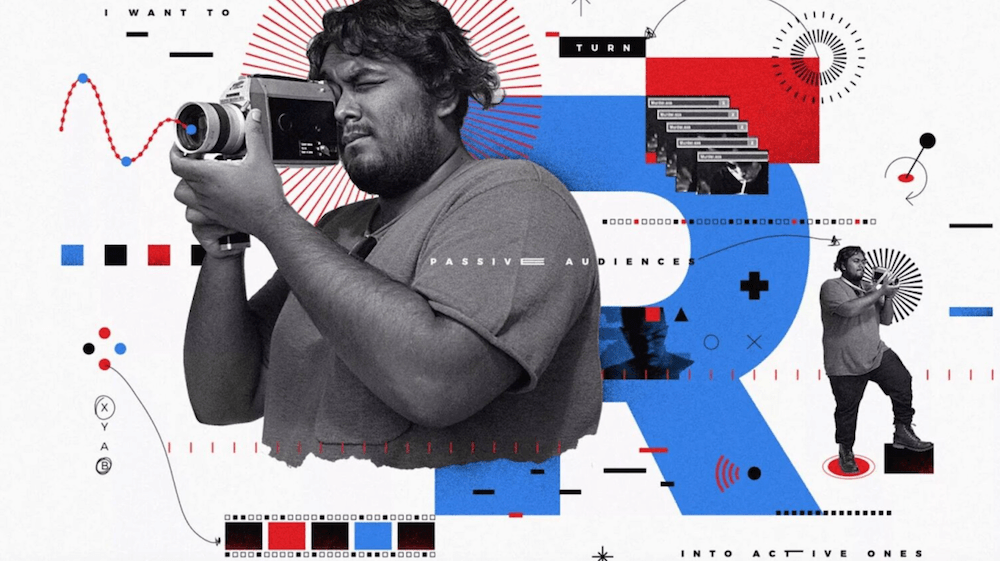
New York cherishes the attempt. The people here celebrate those who are trying to create things and develop their crafts — and there are so many great self-started spaces in the city. The collective self-belief in New York surges through everyone. If you are actively pursuing your art, you feed into the city’s collective energy. It feels like we’re all a part of this larger thing, a shaping of culture.
I listened to your debut EP, “Run Me Back.” It has a lot of hip hop influences, and from a glance, seems soaked in a very New York energy. I noticed a few South African-inspired sounds as well. How was the EP produced? What are some of the main lyrical themes? Was it done 100% DIY, or did you record the EP in a studio?
Lyrically the project is me processing and evaluating my journey from Cape Town to New York, my place in America, and my reason for wanting a platform. Ultimately, it’s a project about laying the foundations for building “home.” The project is DIY; almost all of it was put together in my studio apartment in New York. It shows. It’s kinda dusty and janky, but that’s why I love it. The closing track, “Lucky,” is produced by Skuwid, who is in and out of studios. His production is super rare. He used to throw New York’s dopest art shows, and he’s a known sonic innovator. I recorded a few cuts in a traditional studio, but they didn’t fit the overall direction of the project. Might drop them randomly at some point, or they might sit eternally in the digital abyss of some forgotten hard drives.
Can you elaborate on some of your biggest influences in any of the mediums you choose to express yourself?
Najma Sharif and Earl Sweatshirt and Zack Fox and Noname and Trevor Noah and my homegirl Mari and my homegirl Macy and Santangelo and Dumbfoundead and Edmund McMillen and KevJumba and Rodney Mullen and Satoshi Kon and my father. They influence my work in all mediums.
Looking through your portfolio, I’ve noticed that you are a very disciplined, multi-faceted artist. From copywriting to video editing and game design. How important do you feel it is to have a diverse skill set in a continually changing digital landscape?
I love exploring different mediums for expression and enjoy the process of developing a new skill. On a practical level, if you’re young and trying to make a living off being creative — most digital media companies, especially the smaller ones, will have you wearing multiple hats. You don’t want to limit your creativity; you also don’t want to limit the jobs you can apply for either. You should at least have your graphic design and video editing skills on lock; there’s always an expectation for those. They make up most of the branding/content creation timelines—and expand into things like motion graphics and animation. You can do them remotely, too.
Tell us a little bit about some of the awards you’ve received, and what advice you’d give to those wishing to pursue a career in the arts?
I made a film about A.I. safe spaces. It’s a commentary on privacy and performative allyship from universities who go hard to market their wokeness and diversity but ultimately fail their minority students. It won Best Sci-Fi at The New York Film Awards, IndieX Film Festival in Los Angeles, and Tagore Festival in India. It also won Best VFX at The International Independent Film Awards, Los Angeles. It got some nominations in festivals around Canada, too. Here’s my advice; that film was me holding a camera and Mari’s performance. A two-person operation, few locations, most of it taking place in one room. Start smart and frugal. Think about what you have access to, then think of a core message you find culturally relevant and are passionate about sharing. How can you communicate this message with your immediate resources? If you’re able to invest money into your project, performance and sound are essential. Good actors can save shit writing, but good writing can’t save a shit actor. Think, how do you make your immediate locations dynamic and cool? If your subject is captivating and the sound is clear, you’re on track to succeed. Start small. Create within your means, and keep doing it. Don’t go blowing your money on a fancy camera; people always look to crazier gear when they lack a strong idea.
Tell us a bit more about THRIBING and some of the work you do with this platform; it seems to also operate as somewhat of a record label? Is this a solo effort, or do you run it with other individuals?
Thribing is a music and arts publication focused on your homies who make cool shit. We’re not interested in super established artists; it’s all people on the come up. Right now, all the writing comes from me, but I’ll reach out to Santangelo for his feedback and thoughts. Santangelo is a pivotal figure within emerging music and design on this side of the world.
You’re a graduate from Parsons School of Design, The New School. What was your specific field of study? As an international student graduate, how has the COVID-19 pandemic affected you and your loved ones in the city?
I graduated with a degree in Design & Technology. Before that, I was at the New York Film Academy in a film-acting program. COVID-19 has impacted my group quite heavily. I have friends whose countries’ borders are still closed due to the pandemic, but their OPT work authorization or visas are about to end. So, they can’t leave, and they can’t stay — what happens to them? COVID-19 came with mass layoffs; this means many people on H-1B visas had to go home. Many of my friends had to leave. It’s really difficult to sacrifice everything to start over in America and then lose it all in this way.
What is it like living in Trump-era America? It must be a highly complex, interesting, and harrowing experience with the recent protests surrounding the death of George Floyd. How have things changed for you as someone who immigrated to the country? Do current events influence your work at all?
I will always use my art and platform to speak on these issues, and moving to America has only expanded my awareness. The South Asian diaspora owes a great deal of our confidence, voice, and understanding of oppression and America to Black leaders and Black culture. That’s the reality. The Immigration and Nationality Act of 1965 in America, which allowed South Asians entry into the U.S., was only possible because of Black leaders’ work. Keep in mind this immigration was also based on education, so there were disproportionately advantageous opportunities for our people in America. These are the roots of the “model minority” myth and the aforementioned meritocratic ass-chasm. We were presented as hard workers, whereas disenfranchised Black citizens were presented as lazy and criminal, and unfortunately, a lot of my South Asian community bought into that bullshit. I see the American-Desi community perpetuate racism and segregation. I saw this growing up in South Africa among my Indian community, too. A remnant of the apartheid regime giving Indian people greater access to resources as a means of further segregating, sowing the seeds of resentment, and preventing unity among all oppressed groups. I still see some of my people silent. One of the officers present and complicit in George Floyd’s death was Asian. Silence is the armor that coats our oppressors. Understand, I’ve too, been ignorant in my life, but it is on us to educate ourselves. It’s about accountability. I’m saying my Indian/Asian community needs to acknowledge and address racism and anti-blackness in our communities. We need to stand with Black people in the fight for all of our collective humanity and freedoms. If we don’t stand with Black people, we let regimes like apartheid thrive years after abolition. The energy we see in America now with the protests is deep-rooted in a vile, bloody history.
This fight is for George Floyd, who was murdered over suspicion of a counterfeit $20. It’s for Breonna Taylor, who was shot in her own home. It’s for 12-year-old Tamir Rice, who was playing in the park and Philando Castile, who was driving home. It’s for Ahmaud Arbery, who was my age when he was hunted and gunned down jogging and the countless other Black lives brutalized by America and law enforcement. I was in this country the day Trump was elected; I was in my second semester of university. He is incompetent and hate-filled and has done nothing but escalate tension and violence in this country.
I want to say with regards to these protests surrounding police brutality, including the horrible killing of Collins Khosa by law enforcement in his own yard. Now is not the time for helplessness. We all have a role in this. Your role may be protesting, or donating, or art-activism or educating those around you. There is an abundance of resources being shared on all of our social media, and there is no excuse not to engage with what’s happening. Take care of each other, and let’s make sure this energy of compassion and humanity continues beyond the protests.
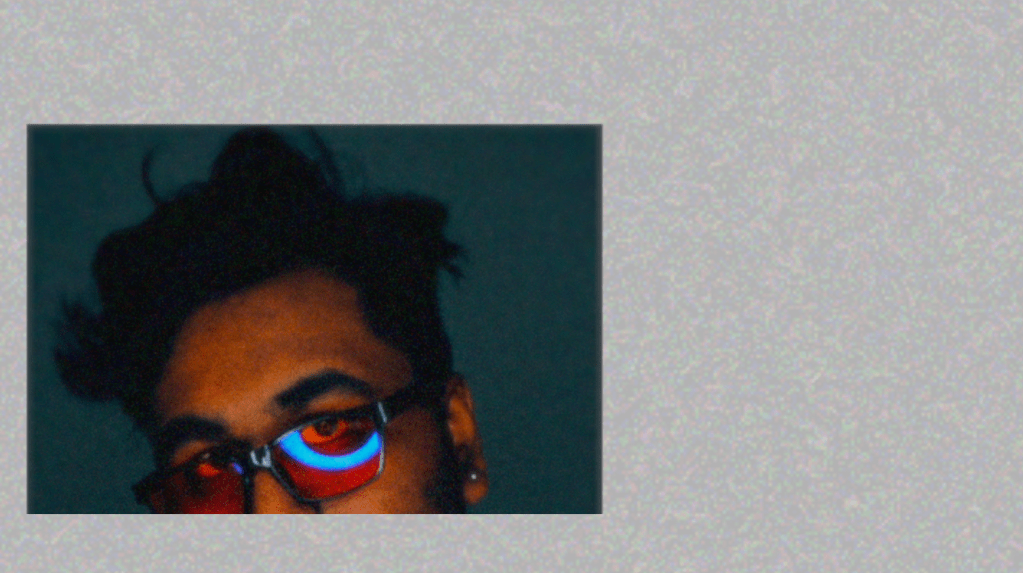
Rohil currently lives and works in New York, where he hopes to continue creating socially current art that drives conversations within the intersections of tech, culture and identity. His musical debut, “Run Me Back” EP, is available on all streaming platforms and the rest of his portfolio can be found at www.rohil.work.
 Aweh Online
Thank you Matt again for an awesome interview experience engaging with fellow South Africans around the world. Always love to read a success story, now let’s all lead in this example as we can make the same success of our story. Peace, Joy and Love.
LikeLike