“The infinite vibratory levels, the dimensions of interconnectedness are without end. There is nothing independent. All beings and things are residents in your awareness”. –Alex Grey
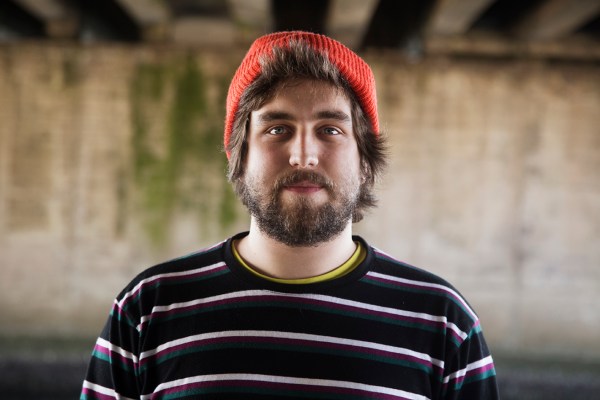
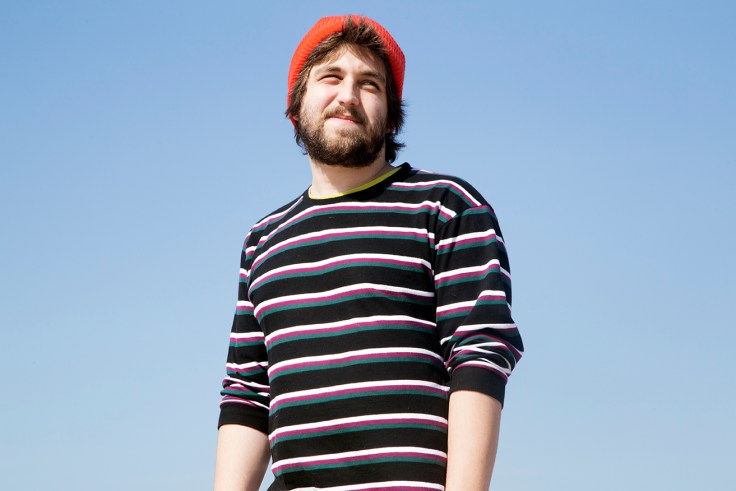
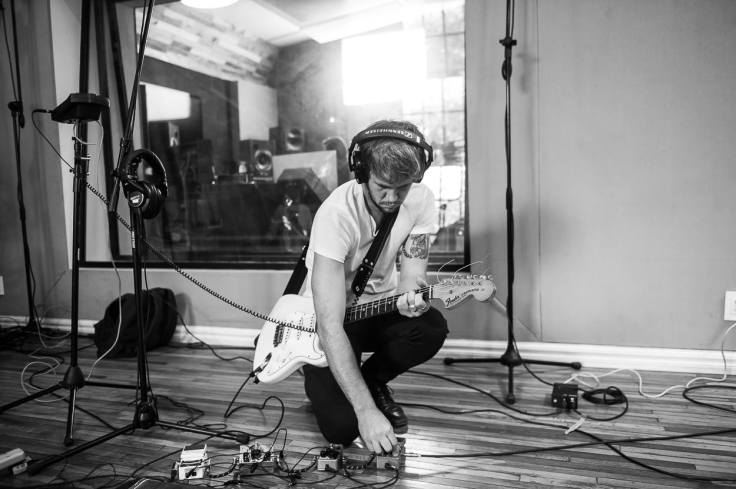
Image by Justin McGee
Music has a strange way of creating a connection, time or space, a feeling or conversation. A conversation without words just sonar layers of subjective, deciphering. Art indulges in the outwardly inward reflective contradicting nature of humanity and its inability to face reality, strolling through the darkest corners of the subjective contours of the imagination.
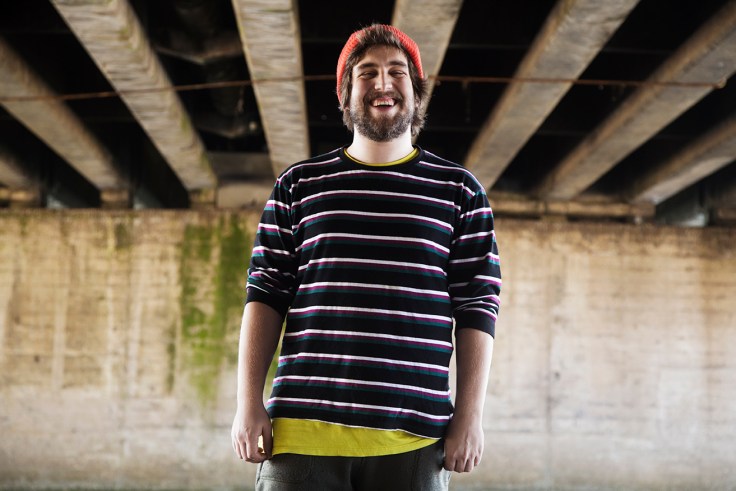
Often these kinds of moods and reflective artifice need a conjurer, and sometimes this illusionist can be unpredictably down-to-earth in their mystic pursuit of unfiltered artistic, expression and madness. Cam Lofstrand is this kind of magician and either through his music or his visual art he has managed to capture a dreamlike sentiment and aesthetic and in turn has created a world entirely of his own making.
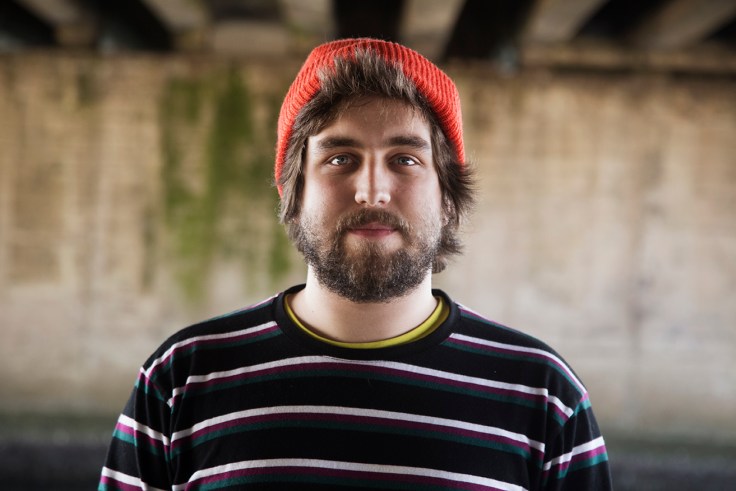
Image by Justin McGee
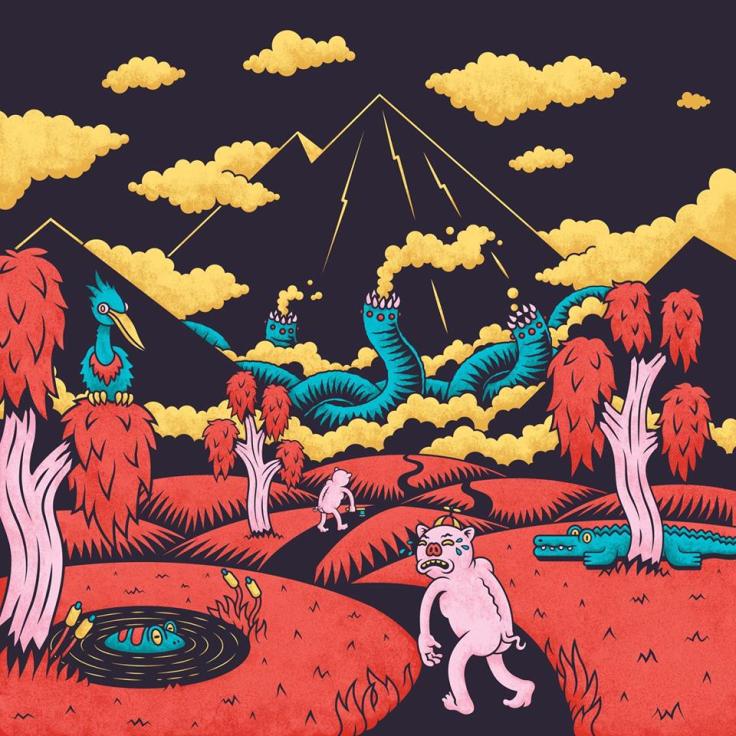
Cam made a name for himself a few years ago as the lead vocalist and guitarist for the psychedelic-noise rock band, Black Math and since then the group has grown in popularity, touring all over South Africa with a few appearances in Reunion Island, as well as recording a string of DIY releases, which all went on to become prevalent among a diverse circle of listeners. Since his inception into rock ‘n roll, he has contributed vastly to both music and art, playing in numerous other projects including The Sisters, Taekwondo Sleepover, Hadeda, Return to Worm Mountain (with Duncan Park), Fruits and Veggies and Existing Consciousness.
Return to Worm Mountain – Art by Cam Lofstrand
Cam is often commissioned as a visual artist or designer for innumerable bands or artistic undertakings, which landed him a job as a graphic designer for The Hardy Boys design agency. He studied fine art at the Durban University of Technology.
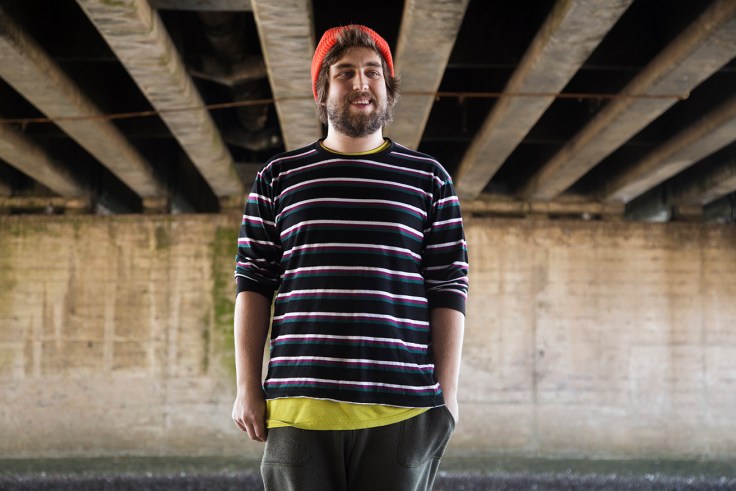
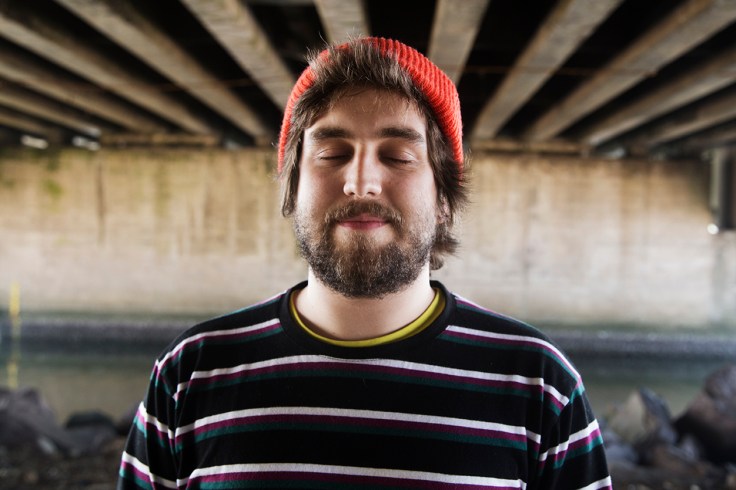
Image by Justin McGee
We find ourselves down by the train tracks near Umgeni Road on a random weekday afternoon. We both have decided to do the interview during our lunch hour so unfortunately, we don’t have a very long time to talk. The conversation is brief, we ramble towards the subject of both music and art.
“I don’t ever want to limit art to a medium, because art is all-encompassing so you could imply that anything is art, but I have to say I like visual media and I especially love music” – remarks Lofstrand.
The 25-year-old artist then reflects on why he loves making music so much maybe even more then visual art, he uses adjectives such as “heavy” or “psychedelic” to describe the music he makes which he implies can sometimes be “brutal” in composition or form.
“It was all kind of random, I learned how to play guitar from a very young age, but I never had a love for music as I do now, so I stopped playing for a period. Then when I started listening to music, I started playing guitar again and that’s when I really appreciated what music was.”
The young Durbanite reflects on why creating is so vital in everything he does:
“I like doing things that are very creative, I like art and I like the act of creating and music is the most visceral, and immediate art form there is. I also think I took to music because I have a very short attention span (laugh), and music is very pleasing in the moment of creation.”
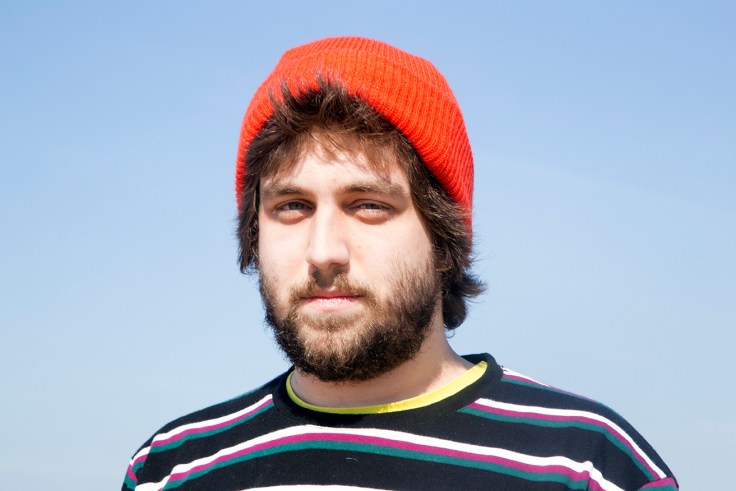
Image by Justin McGee
Cam is a musician who thrives on collaboration, he gives appreciation to his long-time collaborator Tyler Burnett, bass player of Black Math as well as confirming his commitment to any project he decides to get involved in.
“I love jamming, I’ve learned a lot by playing with friends, Tyler (Black Math bass player) and I have taught each other a great deal, I’ve played different instruments and I’ve played in many different bands and at the moment I don’t really favour any of them. I used to think Black Math was my most important project but as time goes on, I don’t really mind, I enjoy playing with whomever, as long as it’s fun”.
Support has never been an issue for this sonic troubadour, and he remarks on his gratitude towards this:
“I’ve been very privileged to be in a position in life where I have been able to make music like this; my parents are very supportive, I’m aware that other people in the scene haven’t had the same kind of opportunities”.
This support has encouraged Cam to give back and in turn he has also become a competent music producer, which has prompted him to produce recordings for his own projects as well as other bands in Durban including Mouse and Write Off.
The lunch hour is up and we both have to run off to our respective jobs, walking adjacent to the trains screeching along the tracks in a typical smoggy Umgeni Road afternoon, I start to think back on all the times I’ve seen this quiet gentleman turn into a man possessed, tearing up the stage. Durban has a strange way of producing mesmerizing and surprisingly shy eccentrics like Cam Lofstrand. The haze, heat, and pollution keep everyone gasping for air. It seems creativity is also grasping through the glare, reaching for whatever oxygen there is left in the sun-drenched ether. Lethargy or the lacklustre nature of the space is no deterrent for Cameron and his ever-expanding roster of projects or mind-bending artworks.
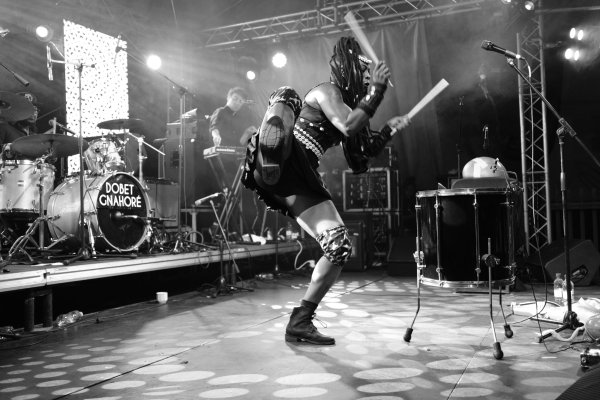
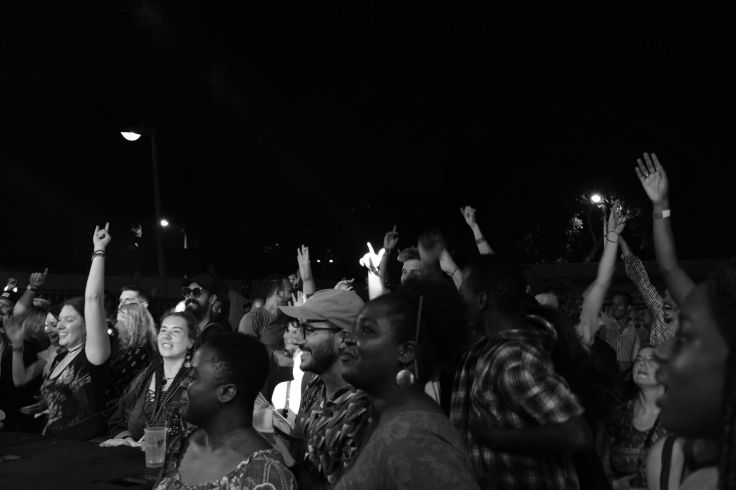
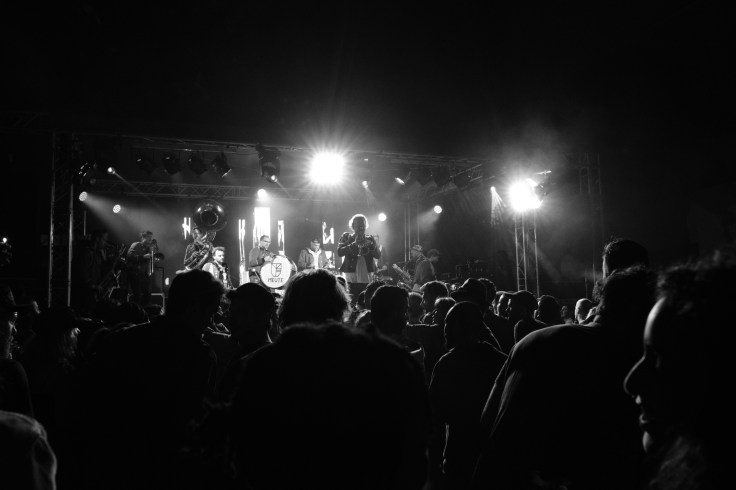
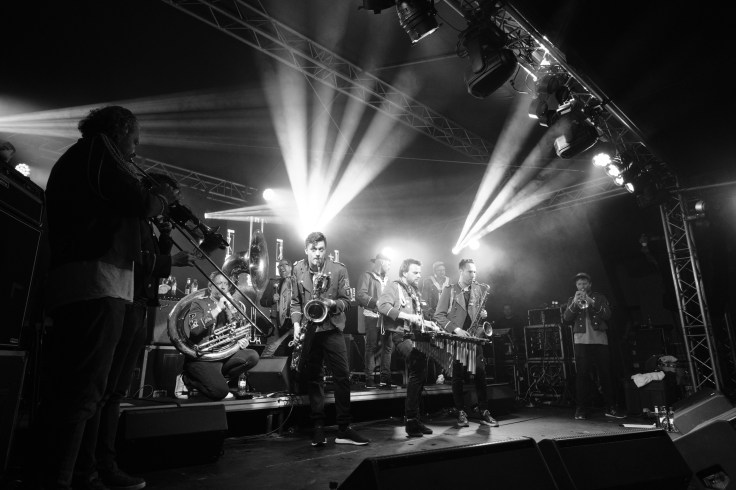
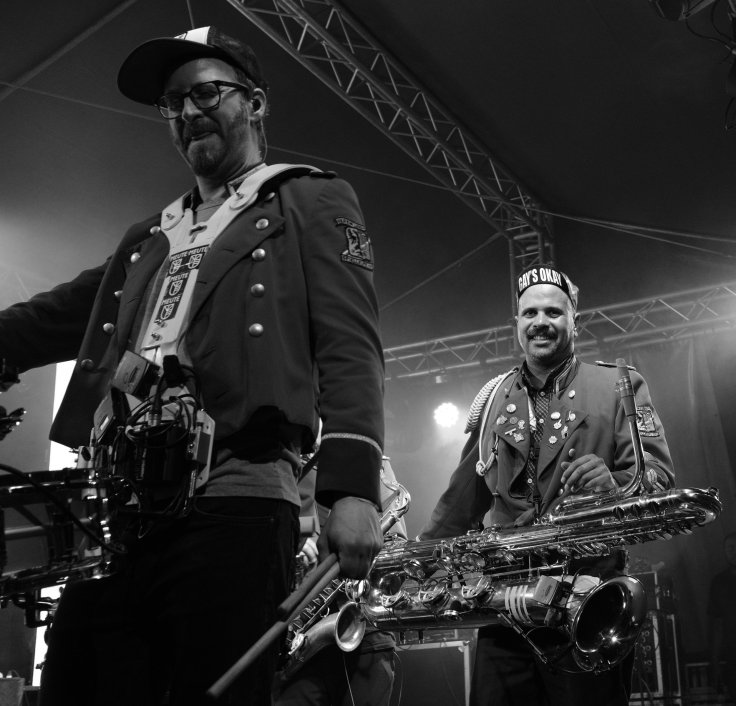
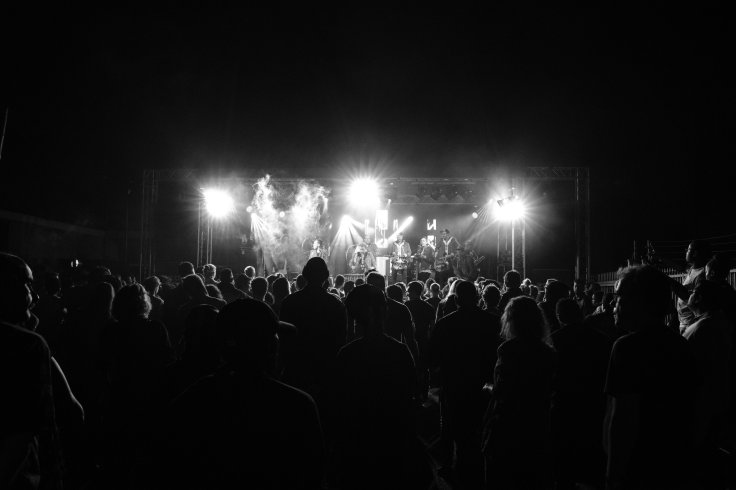
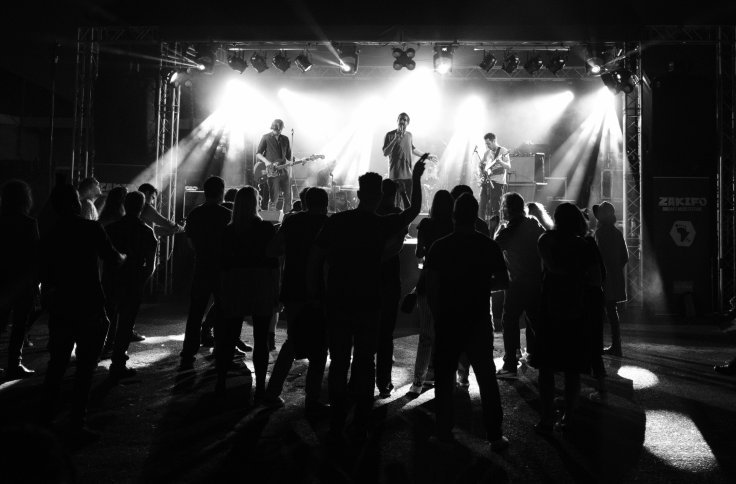
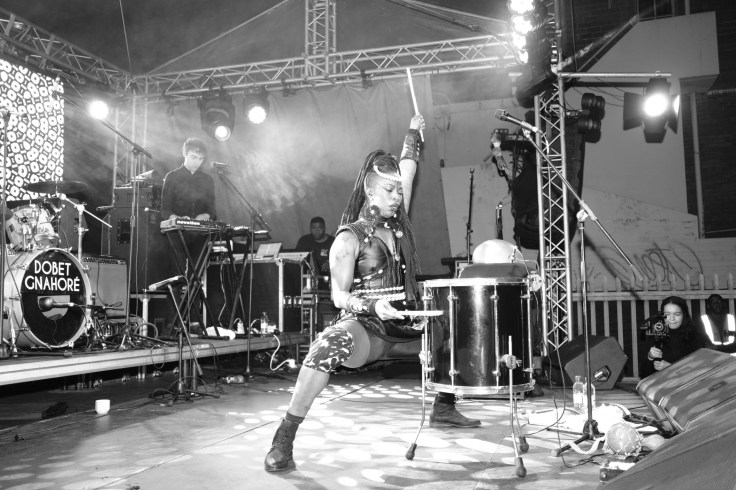
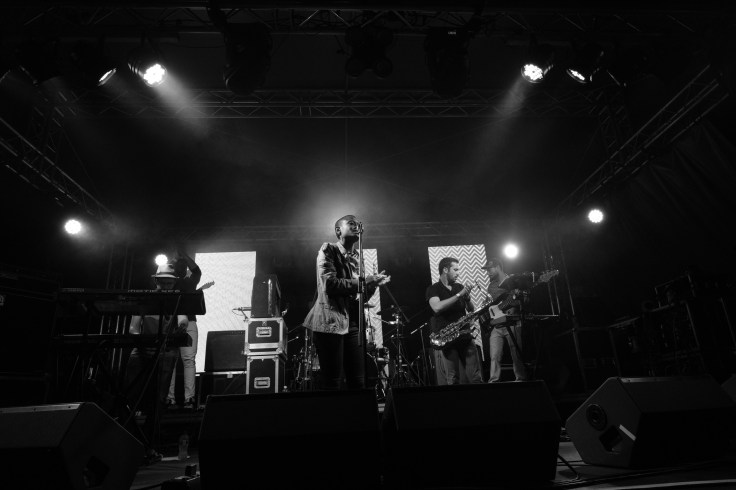
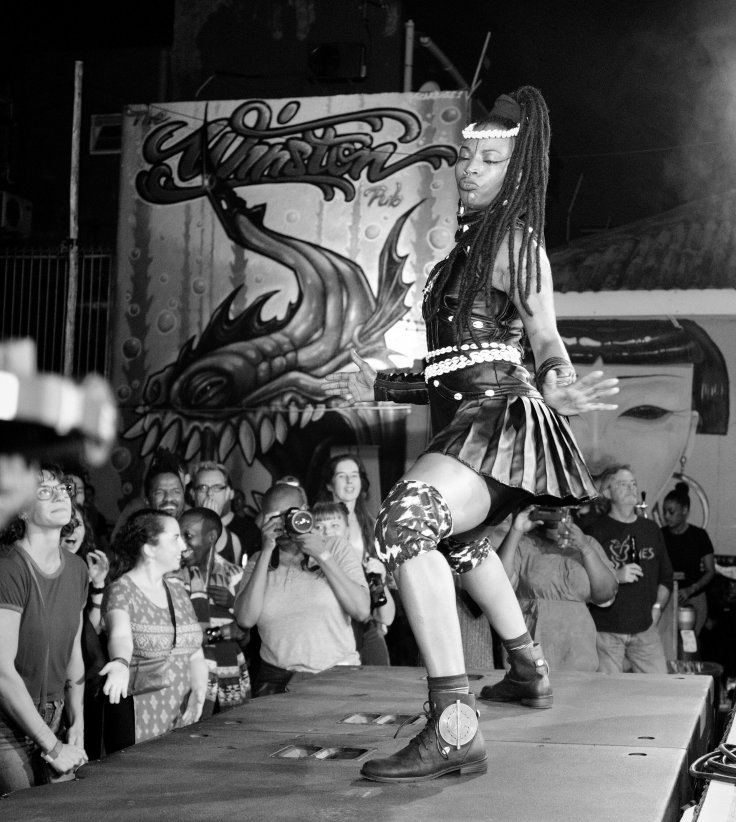
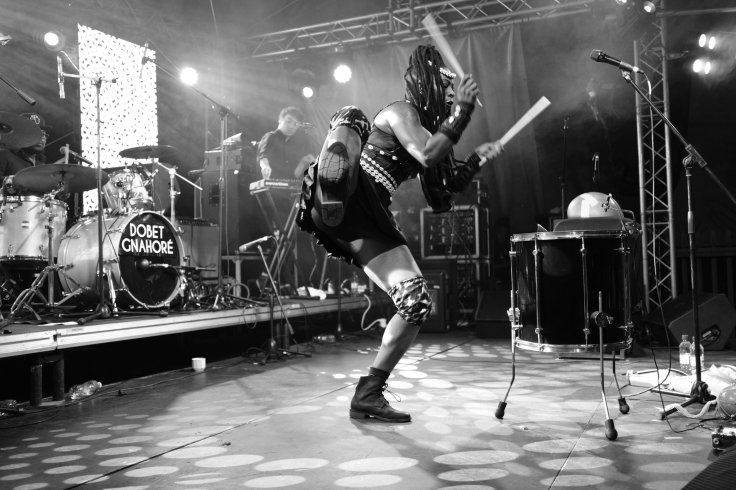
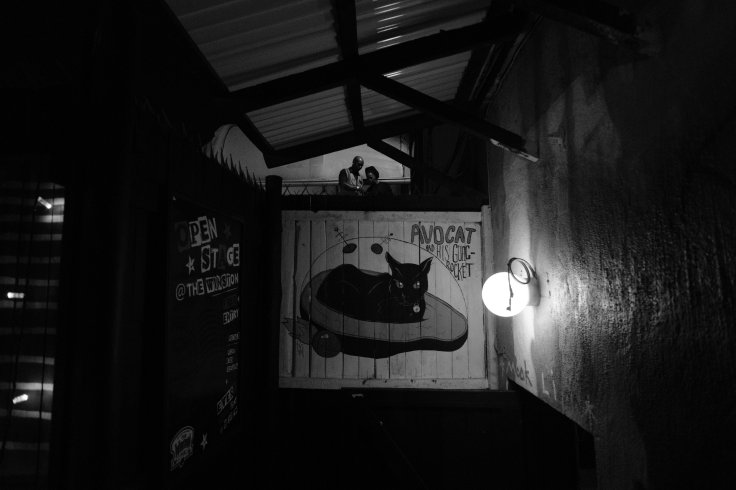
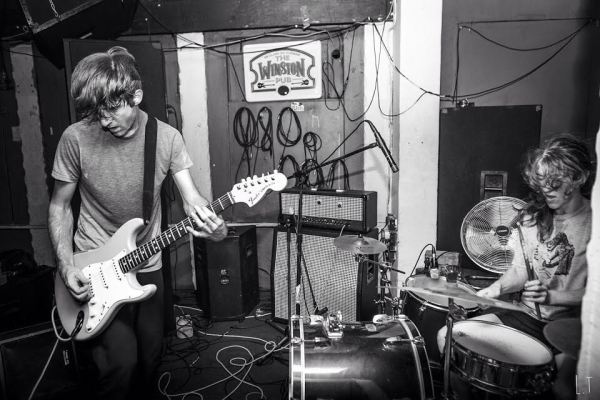
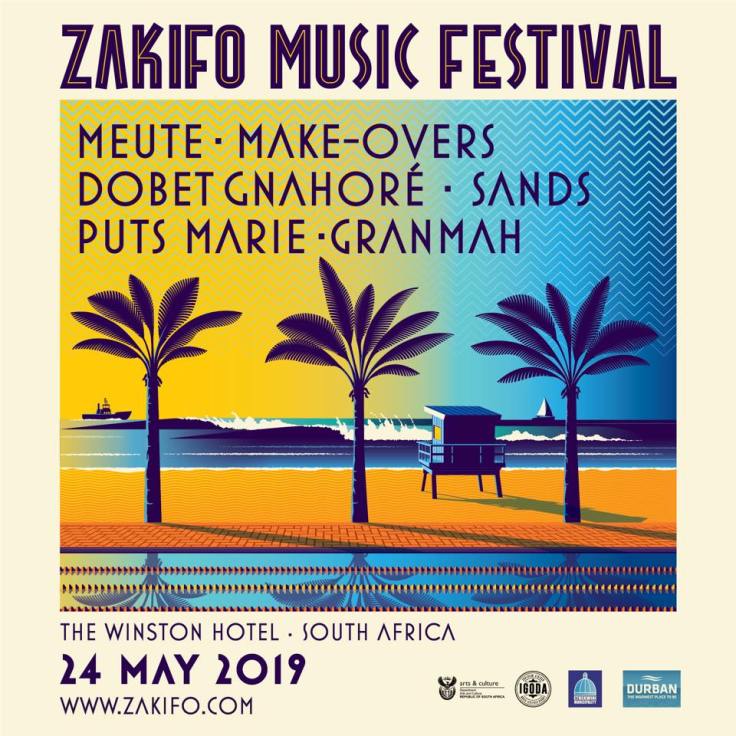
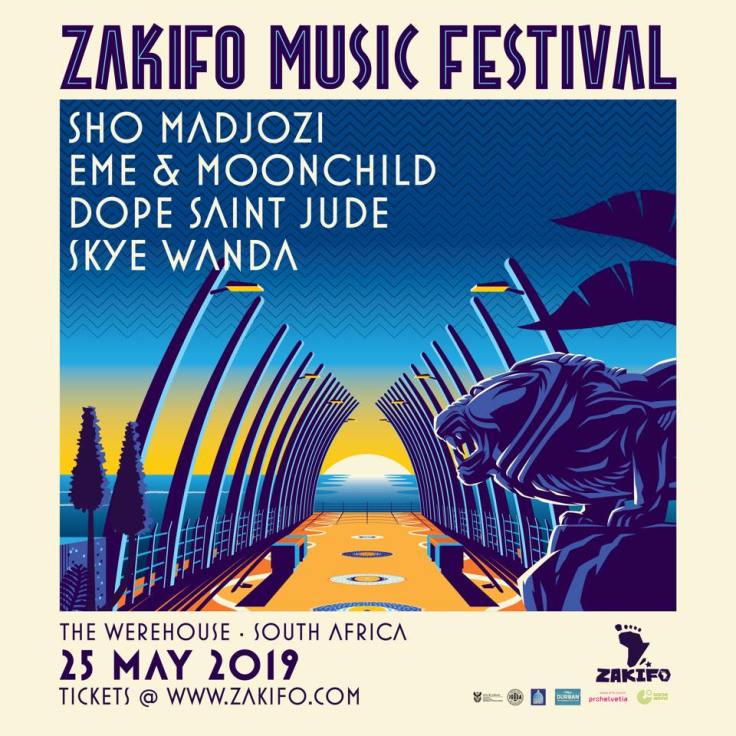
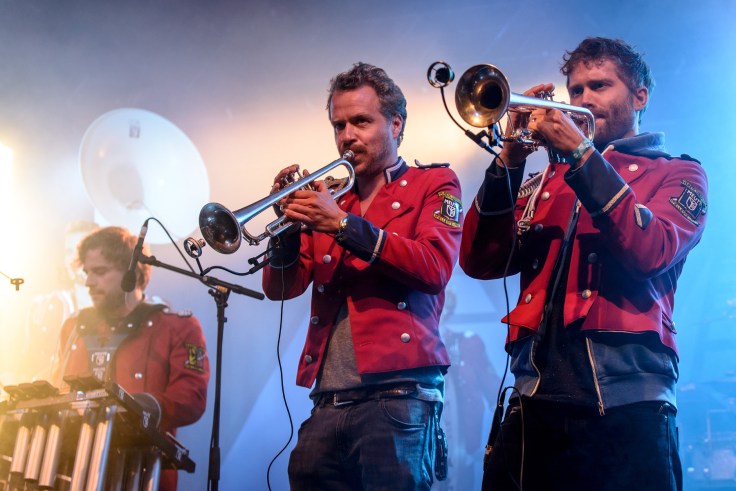
The Winston Pub hosted an eclectic mix of bands for the opening night of Zakifo 2019. Durban’s most long standing music venue and dive bar cleaned up for the occasion, which included opening up the car park and erecting a stage in the vacant location. The line-up featured brass techno marching band, Meute (Germany); alternative Indie Puts Marie (Switzerland); Dobet Gnahoré (Côte d’Ivoire / France) with her urban / alternative French / Tunisian band; psychedelic garage rock band – Make-Overs (SA) ; guitarist, songwriter, performing artist and singer, Sands Eswatini, (Swaziland); and six-piece Dub Reggae fusion band Granmah (Mozambique). If you missed any of the Zakifo events this weekend, there are two more shows.
ZAKIFO SHOWS THIS WEEKEND:
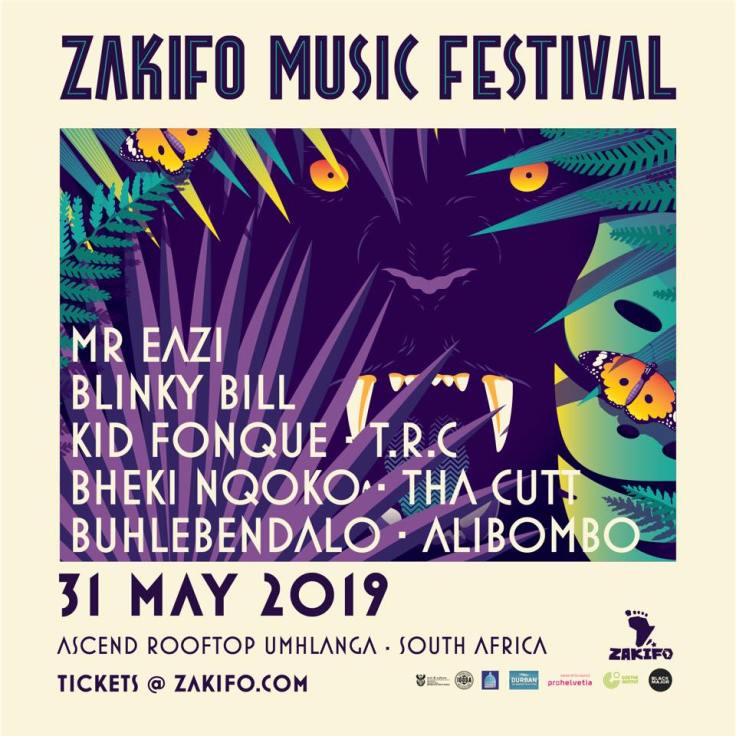
31 May at The Werehouse in Durban, South Africa. Featuring: Mr Eazi, Blinky Bill, Kid Fonque, Buhlebendalo, Alibombo, Tha Cutt, Tune Recreation Committee.
In the blink of an eye, wanderlust can grab the most resolute recluse by both hands, compelling them into a journey that transgresses time and space. The addiction of the road can become so intoxicatingly infinite, that it might seem that there is no end to the length of the journey. Around every corner a new escapade presents itself and life can become a series of sporadic moments, constant new experiences and perpetual newly acquainted individuals, people, places, ghosts, and shadows. Travel isn’t for everyone, yet once the urge and desire arise, it also can become a habit that is hard to kick.
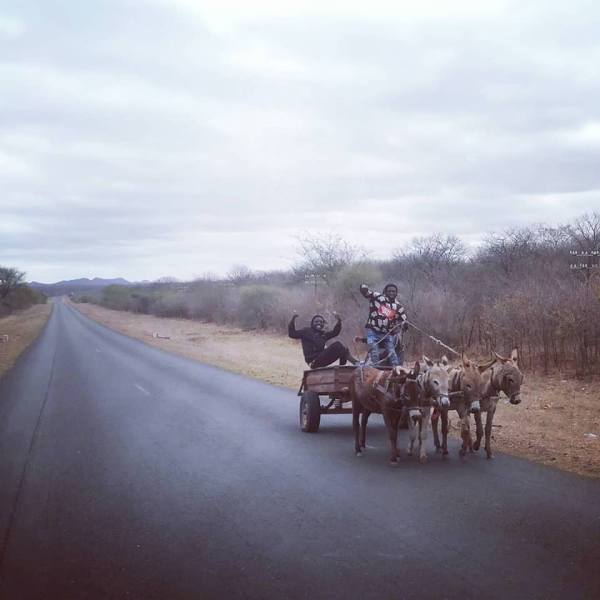
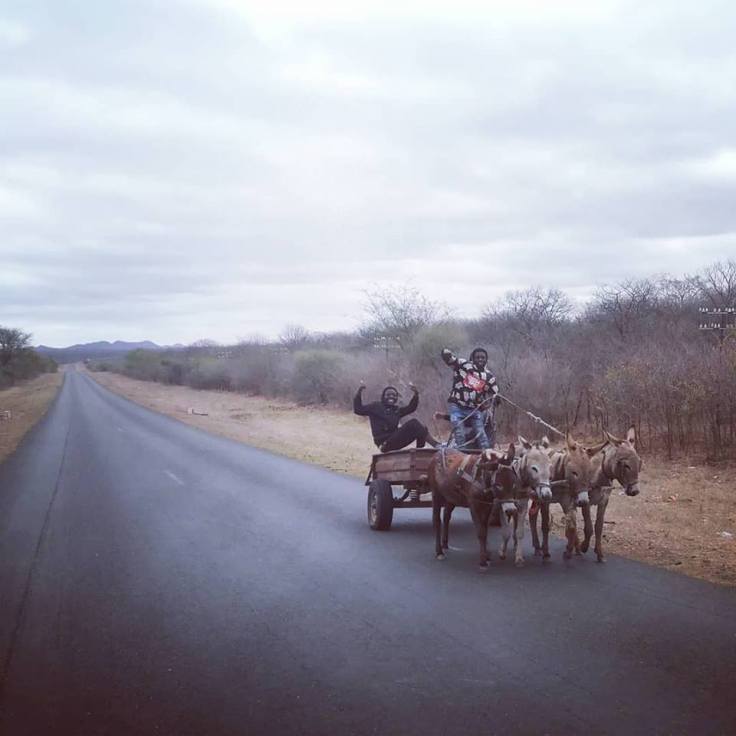
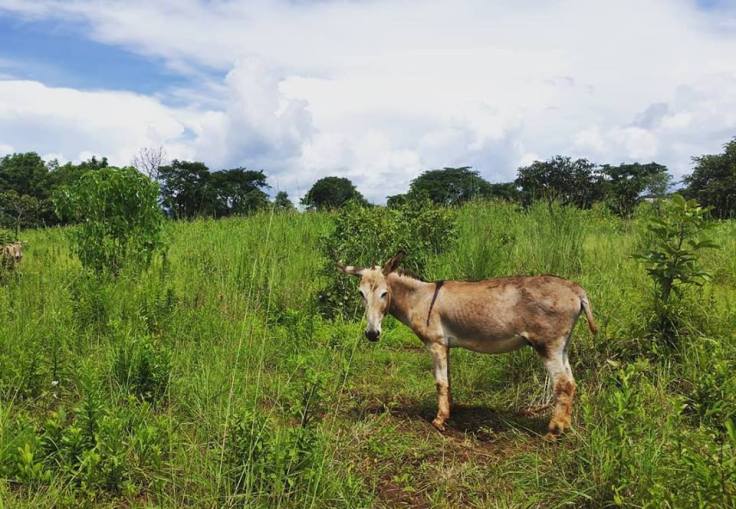
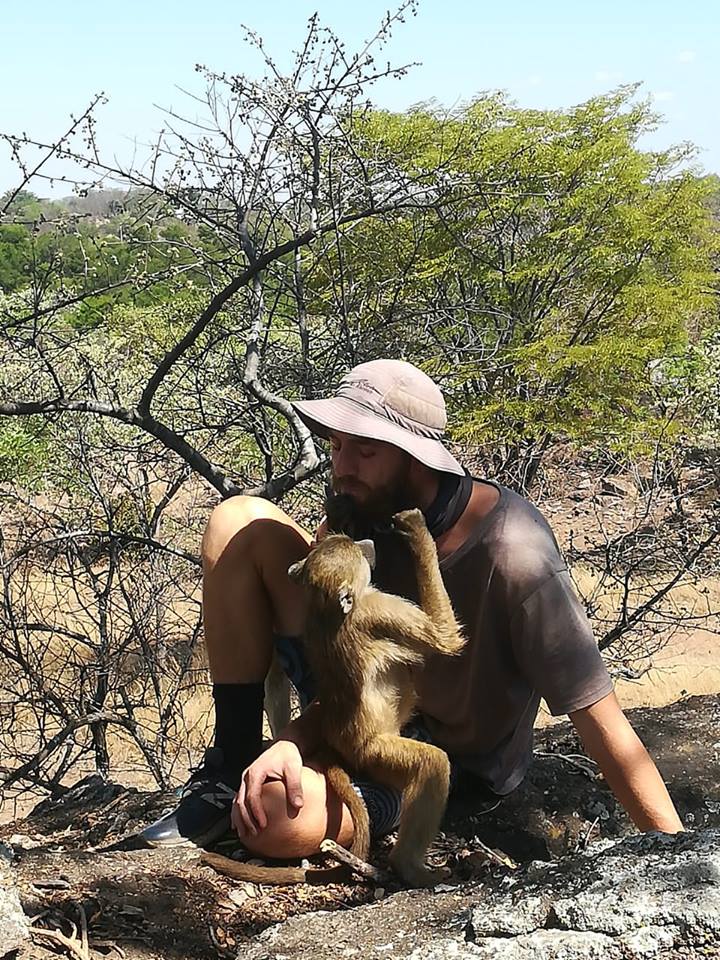
Keegan Horn left a successful job in the film industry to become a full-time traveller in aid of one of Africa’s, most unassuming, yet vitally important animals – the donkey. Some might argue that there are more pressing issues than gallivanting across a continent in support of an animal. Yet after a brief chat with this riotous voyager, one is reminded that the donkey also deserves a helping hand. Due to the animals’ modest nature, there isn’t as much support for the plight of donkeys across Africa, Keegan is on a fundraising mission to lend this helping hand. We caught up with the traveller, while he’s been volunteering in Tanzania.
Firstly, please can you give me your name, age and what you do for a living?
My name is Keegan Horn, I am 30 years of age and I am a full-time traveller now. My work is raising funds for a donkey sanctuary, MARES in Zimbabwe, Bulawayo.
You have been traveling through Africa, over the last few months; to save the donkey, tell us a bit about how you are achieving this?
It’s been a challenging task trying to raise funds, using only the Internet and word of mouth, unless you are a marketing wizard. Sometimes you get lucky or people find your content very interesting. My goal is to raise 4000$ US dollars and the way I go about this is utilising social media platforms such as Facebook, Instagram and a website. I talk to a lot of people on the way and see how they are contributing in their own ways in different countries. I post on these platforms roughly once a week on how far I travel using an app called Strava, and I write small stories about the things that happen in my daily life. Traveling by foot and bicycle and always taking alternative routes to keep it exciting.
Why specifically the donkey, as there are many other causes, what attracted you to this unassuming animal?
I wanted to do something for a good cause and I was doing research on the Internet and talking to people. I realised that many of the endangered animals had organisations and have funding and have money being put towards the safety and protection of these poor creatures. At this time I was working in a restaurant in the Eastern Cape. We were being supplied cheese from a goat farm. I was fetching the cheese directly from the farm. On the farm, there were a few donkeys in which I became acquainted with. After getting to know them, and their stories my heart was sore. I realised there is an issue worldwide with donkeys being abused due to lack of knowledge, and just pure cruelty. Then I discovered a grave problem of abattoirs opening up all over Africa for a ”medicine” the Chinese make using the gel underneath the hide of the donkey. So I thought we need to raise awareness and think of a way to preserve an animal that works very hard for our people and stop allowing others to keep pilfering our resources.
Tell us a bit about where you have been so far, and what kind of challenges come with this kind of undertaking?
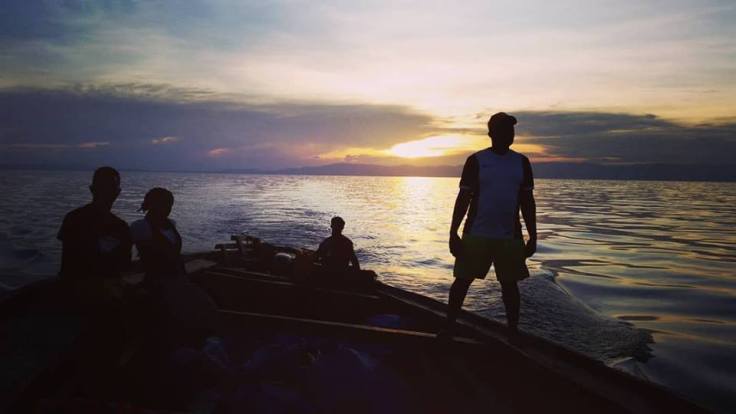
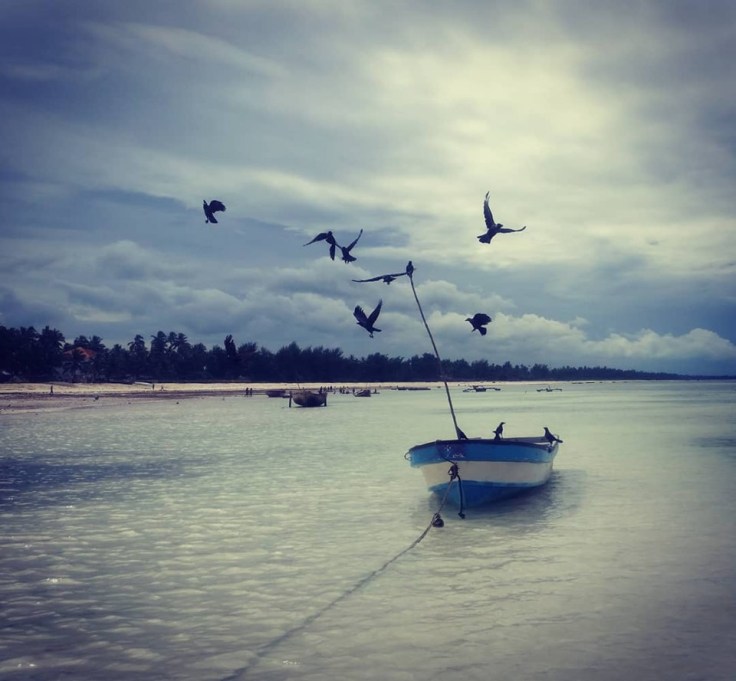
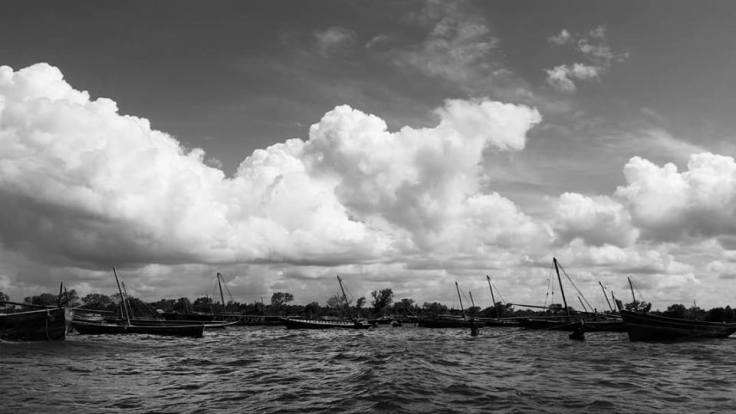
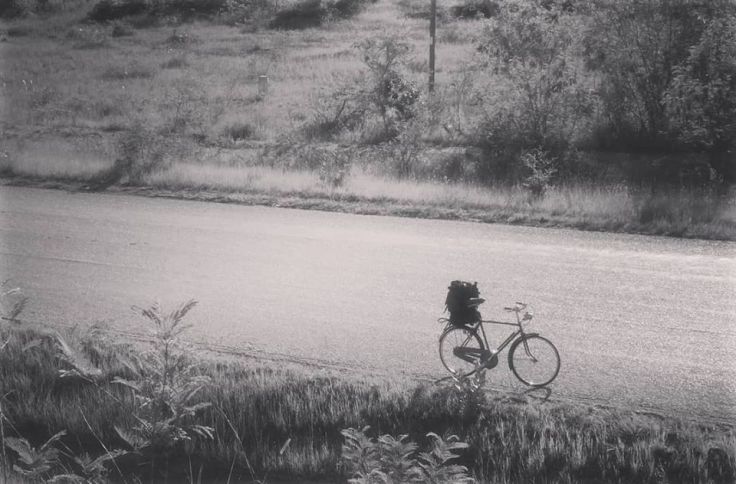
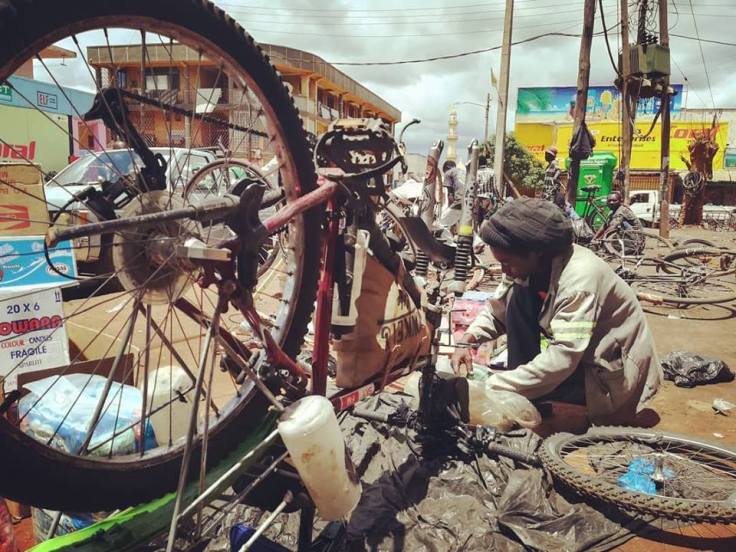
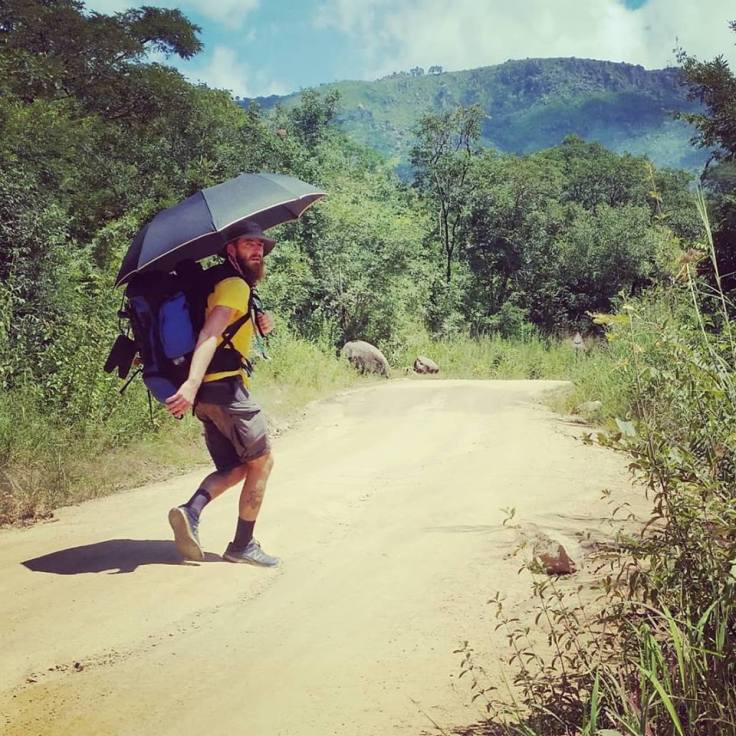
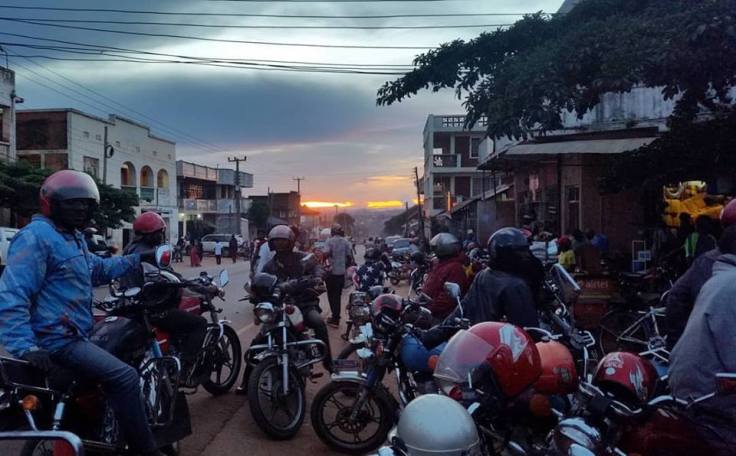
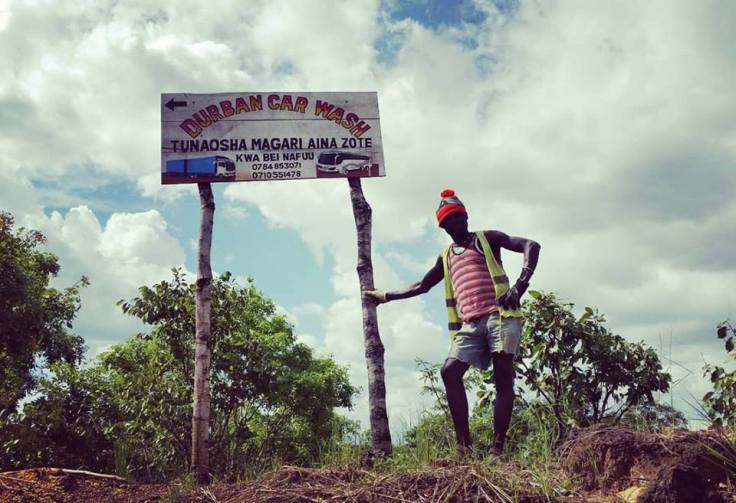
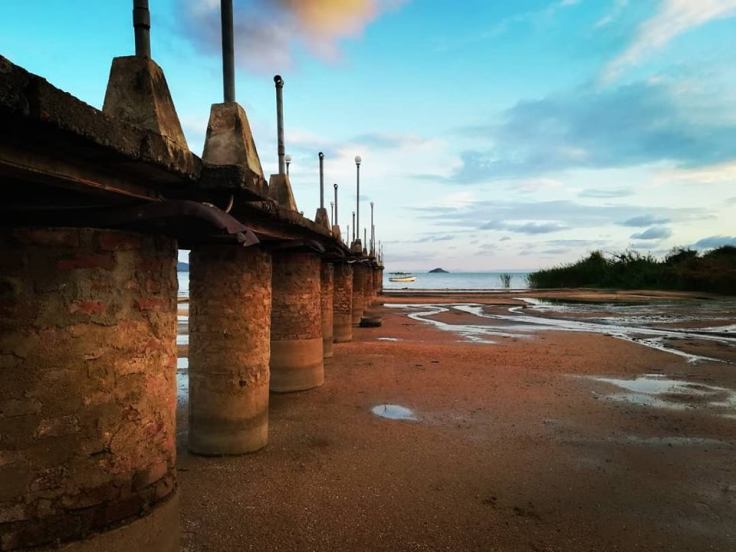
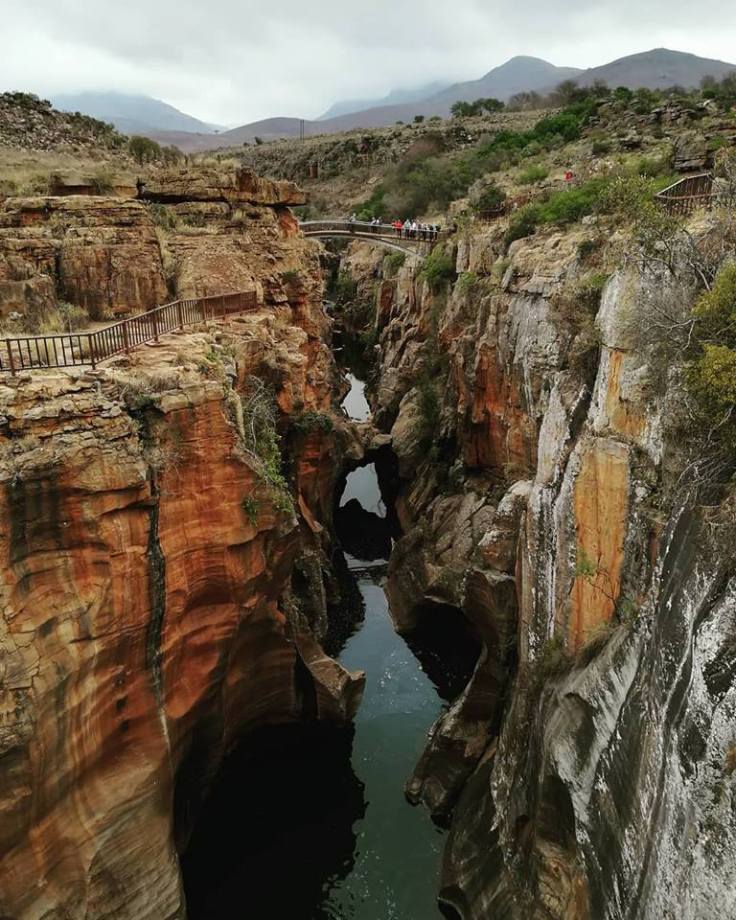
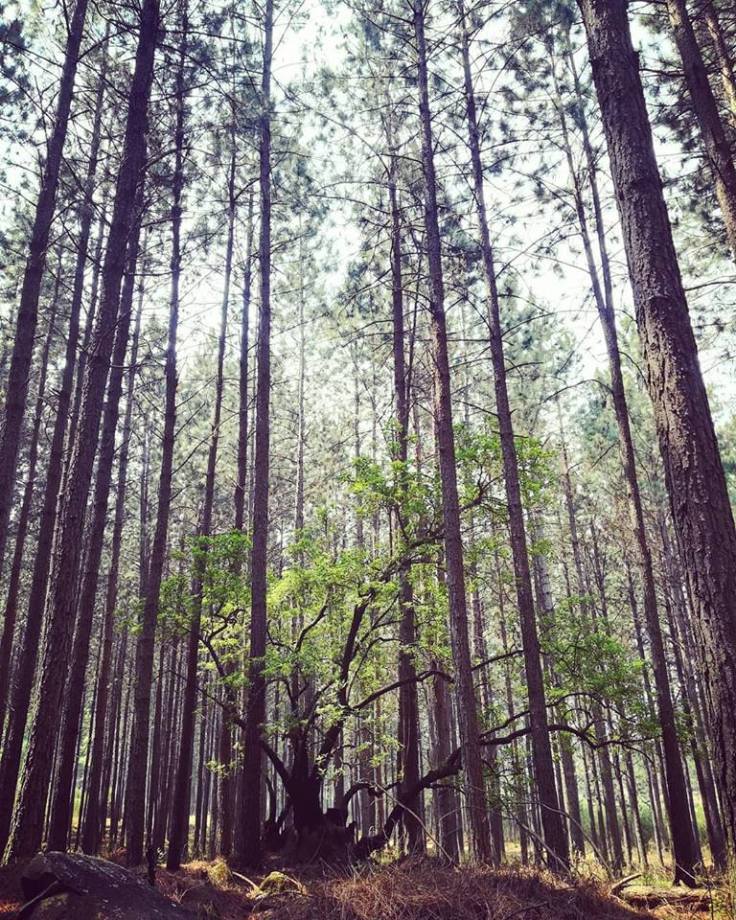
I started in South Africa in a small town called Bathurst, Eastern Cape. I walked across the wild coast up to Bulwer, KwaZulu-Natal. I was sponsored a bicycle by a good friend of mine because she was tired of me going so slow. I then rode into Lesotho through Sani-Pass and back into South Africa into the Free State, then Mpumalanga up to Limpopo crossing into Zimbabwe (Beit Bridge) to Victoria Falls and into Zambia, then Malawi from the south towards Mzuzu in the North. I then started walking again after selling my bicycle. I left Mzuzu, walked to Lake Malawi, crossed the lake to Mbamba bay in Tanzania, then I walked to the Indian Ocean on a pretty straight path eastward. In Lindi on the coast I then bought another cheap bicycle and made my way north. So far the road and people have been so good to me. There are many challenges every day. You use a lot of energy and you need a lot of energy. Living on the road on a tight budget makes you quite easy going. You will eat and drink anything because you are just so happy to get more energy. Your body has its limits which I have learned on the road. When you travel long distances and you get tired and the distances are long between places which results in a tendency to push yourself “if I go just a little further it will be easier tomorrow”. I think anyone can do this; they just have to want to. Some of the issues are equipment breaking during the ride or sometimes it’s your leg that hurts. I got shin splints on the road and then after that, I was scared it could happen again. Other issues can be that you are not getting enough nutrition during the journey because you are in places that are scarce on resources, especially in more remote areas. It’s always exciting to see how things will change on the journey. At times people would warn me that it’s going to get dangerous the further I go, but it is always nothing as they say. But fear becomes less of a thing in this form of travel. Since I have started I have had no bad experiences with people. Once in Zambia, I was told not to sleep in the forest because someone had been murdered there, so I made a different plan.
Tell us about Africa and how people have treated you on your journey so far?
Africa is a unique and beautiful place with a kaleidoscope of cultures, languages, and food. I have learned a lot since I have started, like how to appreciate small things, for example, every drop of water is vital, and to take it easy because life is too short to worry all the time. The people have been so good to me. Feeding me when I am out in the sticks, even when they have so little, they have shown me short cuts on the route, letting me sleep in their gardens or houses. People here are still purer than places more ‘developed’. Wherever you go, even if its 10kms, things change so you have to adapt. Generalising is difficult because of this diversity, but Africa so far has been a gem to me. I have appreciated the way I have been looked after.
How is the fundraising going and how can people get involved?
The fundraising has not gone so well. We have currently made about R5000 so far, but are still hoping for the best. Our goal is 4000$ US Dollars. We really want to kick-start this community project “MARES” (Matabeleland Animal Rescue and Equine Centre) in Bulawayo, Zimbabwe. People can follow me on Instagram, Facebook and there are links there for the donation, so help out and share the page.
You have you been traveling for quite some time now and when do you think this mammoth journey will end, where is the last destination?
I want to arrive in Morocco and I am thinking one more year.
Any advice for those thinking of doing similar things?
Go for it. The world has a lot to offer. You will find out in very little time what the necessities are.
So what gave you the idea to do something like this in the first place?
Truly I just wanted to give back somehow.
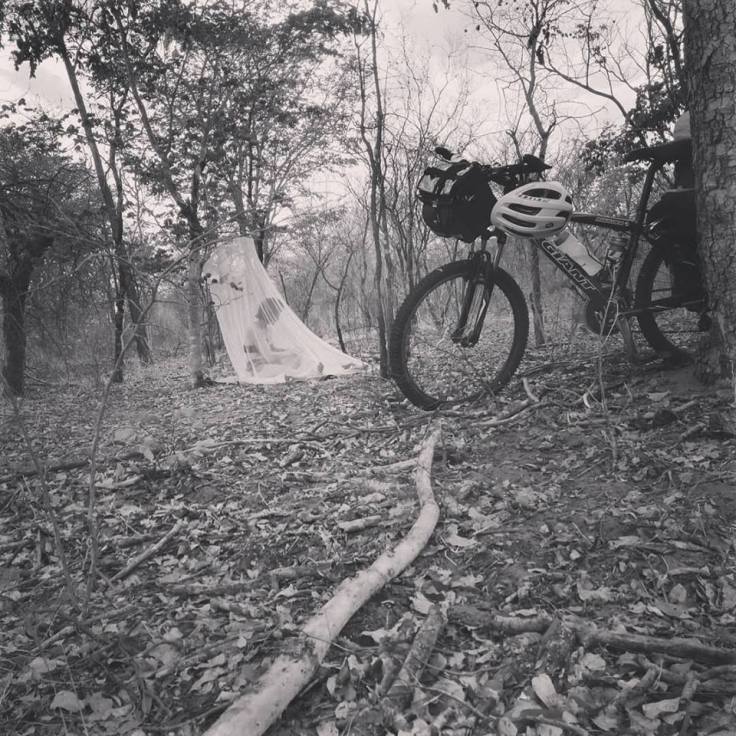
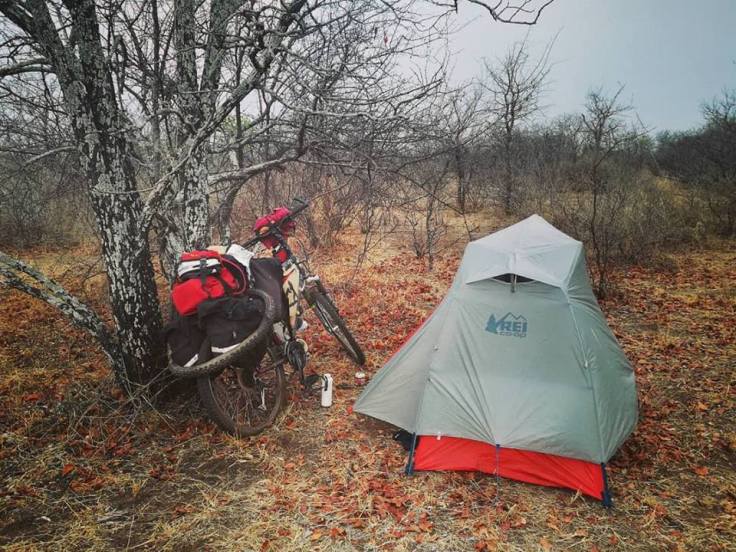
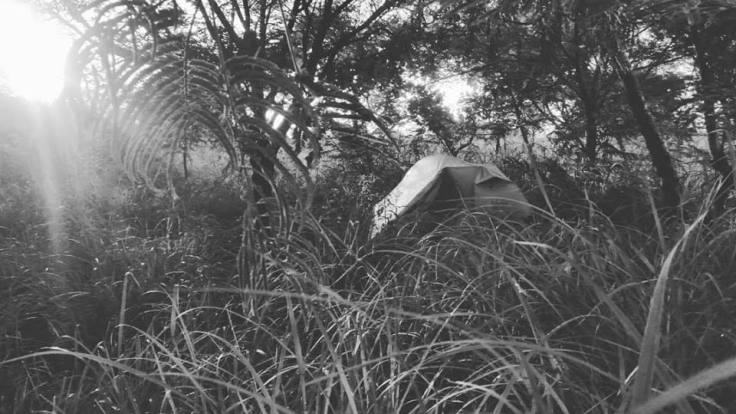
I see you have been on foot mainly and sleeping in tents, has this not been a somewhat terrifying experience, also how is it to travel alone?
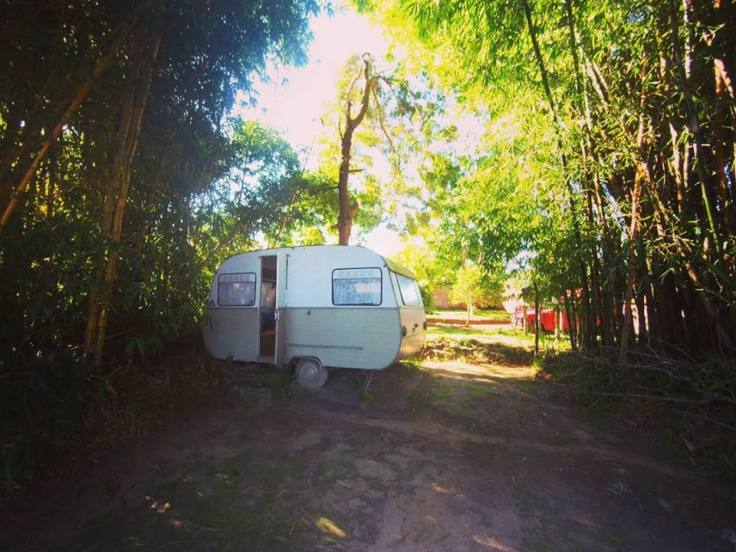
Tent Life
Traveling alone is great, you are able to make decisions on hand and be very spontaneous. It has been scary at times, but when it gets scary and you are alone, you can’t just call your mom to come to get you – unless your family is in the helicopter business. You adopt a technique, well I have, and you just breathe and let things flow. Whatever happens, you have to embrace everything with open arms.
So you have been traveling by foot and bicycle, what has that been like?
Yes, I like to mix it up and try different things. Walking and riding are so different exercise wise. Walking is tough. You can’t go as far and when you finished at the end of the day you just want to lie down and you don’t care where. You eat and drink a lot more and your legs get skinny and toned. With cycling, it’s a lot, breezier. You can freewheel and when you arrive somewhere you have a free ride all over. I really love riding but walking teaches you valuable lessons, like to be patient, and how lucky we are to have the things we do.
Where are you now?
I am in Tanzania, a super beautiful country. I am on route to Arusha.
Anything else to add, please do?
I really want to thank all the people who have helped me with this cause during the journey so far, your funds and kindness have been greatly appreciated. I just realised the smaller things are so important. Just be nice, it really does go a long way. I always think of how I can help others. I meet so many people that it would be impossible to help everyone. But in a subtle way, we can all help each other just by respecting each other and giving each other the time of day. “Love is a state of being” – Eckhart Tolle.
Keegan is currently in Arusha, Tanzania at the Society for the Protection of Animals (ASPA) volunteering at an animal protection unit specialising with donkeys. Keegan has been traveling for just over a year, with his last destination being Morocco.
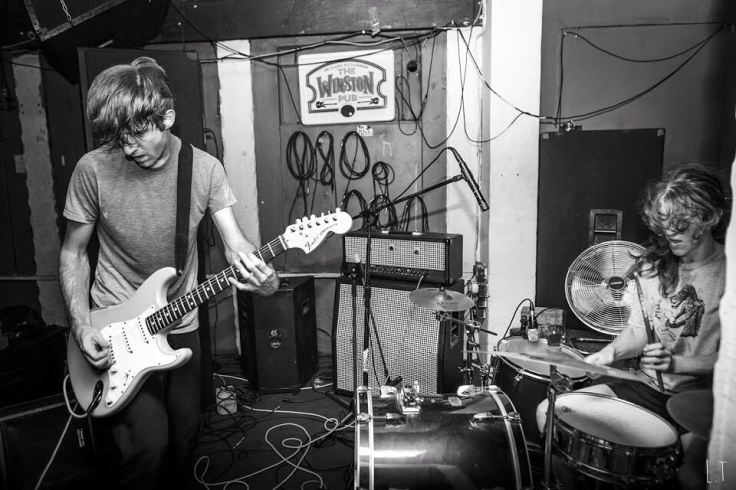
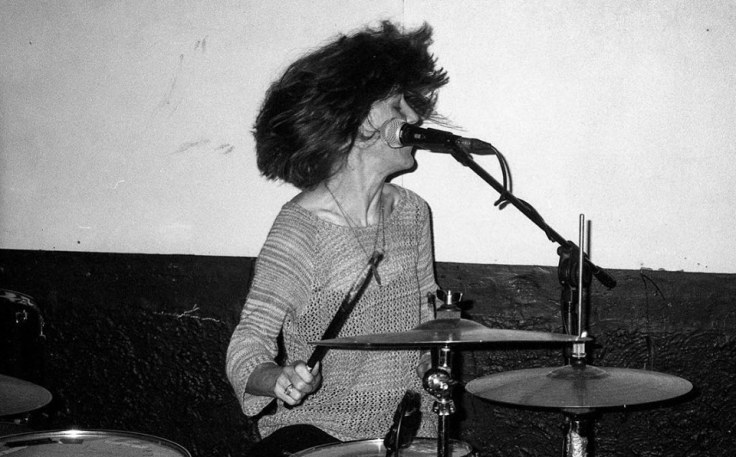
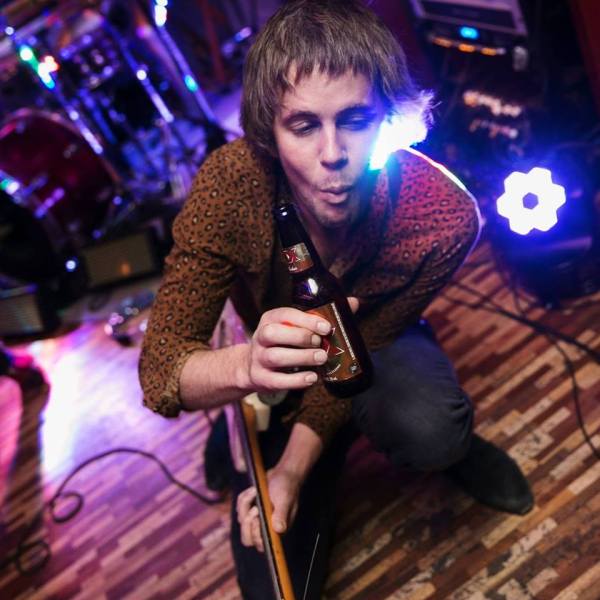
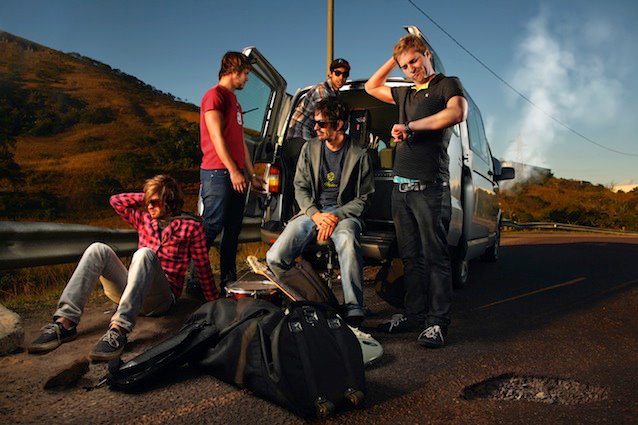
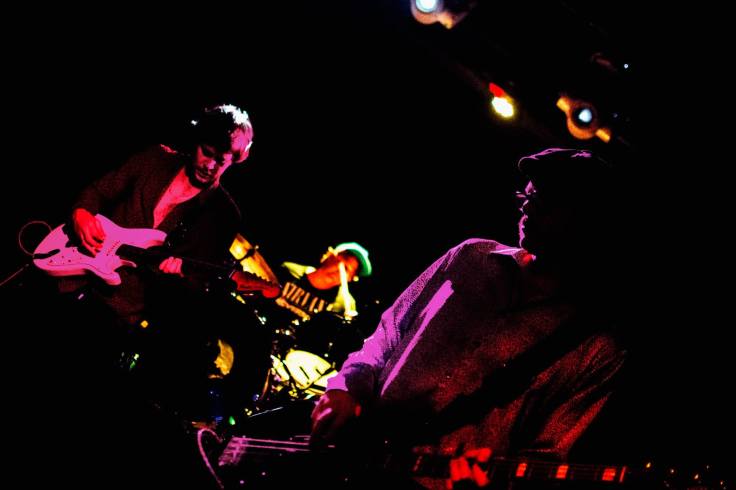
I’ve never witnessed a band quite like Make-Overs, a band that has the unique ability of being brazenly edgy, loud and unapologetic, while still having so much appeal to a varied and diverse audience. Their ruthless touring schedule and workaholic disposition has seen them put out countless albums and EP’s in record time. All while touring extensively, to destinations in North America, Europe and South Africa. They will be playing tomorrow night at The Winston Pub for the opening night of Zakifo Music Festival 2019. Aweh.online, caught up with the band before they head to Durban, to discuss, touring life and what it’s like to be pretty much full time rock ‘n rollers in an era where making money off your creativity is proving to be increasingly difficult.
1. Firstly can you give us your full names, age and what you do for a living (if anything besides for music)?
Andreas (aka A. Computer or just A) sells rare pop culture collectibles ranging from records, vintage guitars, and music memorabilia, to toys and games. Also involved in some side projects and dabbles in design.
Martinique (aka Miss Overs or just M) has somehow managed to maintain her part time employment as a Videography Lecturer at the TUT (arts campus) and does freelance video projects when she has time (something we have less and less of lately as the band is doing well).
2. You’ve been touring quite extensively, how have the tours been as you gear up for another extensive one?
M: Funny you mention extensive because this next one does not feel that extensive, it’s only a month (we’re used to two or three months at a time). Later this year (Sept/Oct/Nov) we will go on a longer tour again.
We love it, it suits us, we love to travel, and we have been all over and seen so many amazing things and met some super awesome people along the way.
A: It’s been such a treat for us. Touring is hard work and can be exhausting but we live for it. We are used to extensive touring having done some lengthy tours all over Europe, Canada, and the US. I’m really looking forward returning to the venues we love in France and the adventure of all the new places we will be visiting.
Image by – @joshnsphotos
3. So you’re playing in Durban this Friday for Zakifo Music Festival at The Winston Pub, it’s a pretty awesome show, tell us a little bit about playing at The Winston and Durban and what can the audience expect, for those who have never witnessed a Make Overs show?
We’ve played the Winston before and it’s one of our favourite venues in South Africa. It’s been around for such a long time it’s an institution at this point. You can expect us to give our all, we always try to give high energy performances, we have some newer songs in the set, and our sound ranges from loud energetic rock/punk to experimental, groovy loop based tracks. We have never used a set list before so we never know exactly what we will be playing.
4. So you’ve played at Zakifo before, how was the experience and what sets this event apart from other festivals?
Yes, we played the very first Zakifo it was a great experience. I remember being taken care of exceptionally well by the team and crew. We had a lot of fun but I am almost more excited for this year as it’s at the Winston. Zakifo has an incredibly eclectic range of music; there is definitely something for everyone.
5. You’re also off to play Sakifo, surely that must be quite exciting, will it be your first time in Reunion Island?
No, I think this will be out 6th time in Reunion Island. We have been going there for the last 5 years repeatedly for various shows and love going there, super excited to see all our friends and fans, and we love to hang out and explore the island, it really has a lot to offer. We were at Sakifo a few years back as guests of friends who played and it was on the beach and very busy, so I am looking forward to being back again this year but this time on stage.
6. Any interesting stories from your recent tours?
Where to start? Our guitars and pedals were stolen whilst on tour in France last year, amidst that we had to deal with the yellow jackets, who were protesting heavily in France at the time, so it meant we had to drive through night after shows so we could make the next show in time (road blocks everywhere during the days). During that same tour we were in a meeting and a riot broke out outside, and the police started teargassing everyone, including us. Then we got to travel with the Limiñanas, a group we both love, all over following their massive tour bus in our tiny rental, and the places we got to drive through and see is just beyond amazing – even the rest stops are breath-taking 🙂
7. Touring isn’t all glamour and glitz, what kind of advice would you impart to younger musicians who want to become a full time touring artists?
Ease yourself into it, do some local touring, and build from there. You will know very quickly if it’s for you, on the road a week can feel like a month and constant travelling can take a toll on you. If it works out then expand and keep adding new places to your schedule until you feel comfortable with how much time you will be away from home. Make sure to go back to territories where you’ve had success and build a circuit. It’s not easy sticking to something when times are hard, and on tour things can get tough, if you persist and put your best foot forward, give it your all and never let up and find your niche market, because there are so many out there, you can carve a road that’s much more rewarding down the line. You need to be realistic about how long things take, and how many things can go wrong, the show must go on regardless. We’ve been stuck at airports, had vital equipment stolen before big shows, car breaking down and a deadline to make, stuck on trains with no alternatives trying desperately to find them…. so many things always will and can go wrong, so be ready with a plan b,c,d and e and always try and stay positive. The reward of being able to create your art full time is worth it, at least it is for us.
8. Ok lastly, what time are you guys on this Friday and will you have any new merchandise on sale, as Make Overs always seem to have the coolest merch?
23h30 – and we have an hour set.
Thank you so much, we are always so happy to hear people like our stuff! We will have records and CD’s for sale. Unfortunately, we have sold out on most of our merch after the last tour (so sadly no shirts in just yet). We’re busy working on a load of exciting things, there’s a new album with art by Anton Kannemeyer coming soon. We recently acquired a tape duplicator so there will be cassette releases of our back catalogue in the near future.
9. Anything you’d like to add?
We can’t wait to be back in Durban – it’s been far too long since our last show there, and who knows when we will be able to make it back again.
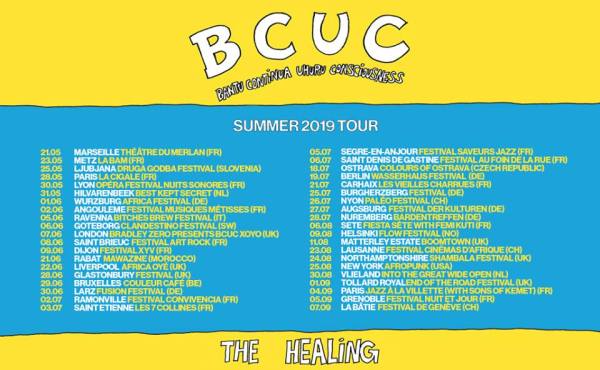
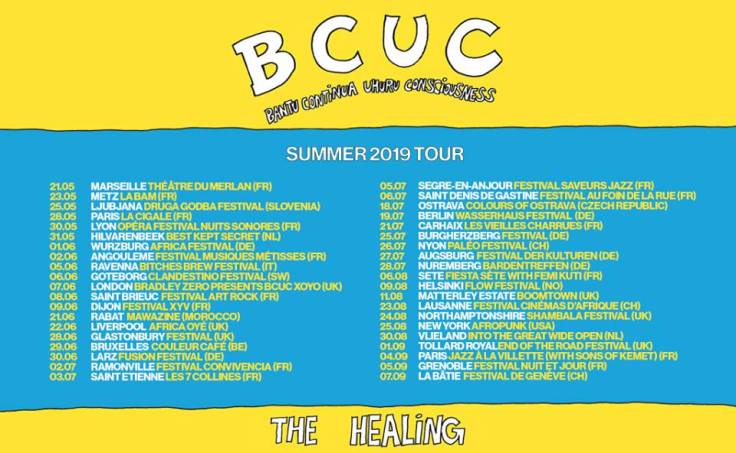
BCUC, have been making an enormous impact on the music industry over the last few years. This has led to massive shows and epic tours all over the world. They have just finished recording their second album in Paris, France. Check out their collaboration with one of the poetry world’s most distinct voices – Saul Williams in the video below. They are also about embark on a mega tour throughout various locations in Africa, Europe and North America. All dates above. – AwehOnline…
We have 1 double set of tickets to Saturdays event for Zakifo Festival at The Werehouse. However you need to get creative if you’re going to get your hands on them. Check us out on Instagram at: aweh_online and post us a little video don’t forget to tag us so we can know who you are. Since there is a fairly strong hip hop influence for Saturday’s show, we are asking you to make up a small rhythm, rap, lyric or poem on why you deserve these tickets. The winner will be announced on Friday afternoon on our Instagram, Facebook and Twitter pages, and the tickets will be waiting at the door on Saturday.
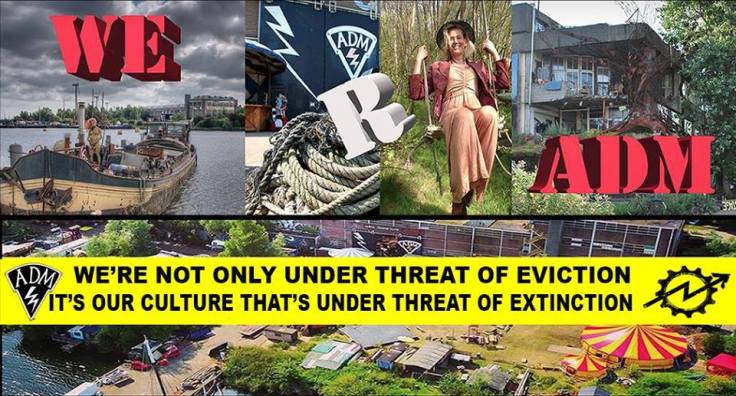
Hidden somewhere beneath the collective city subconscious,beyond the shadow of the liminal spaces and places we think of as boundaries, there lie the antithesis to the system of dependence and loss of sovereignty. These are ‘Free Havens’ or ‘Cultural FreeSpaces’. Beyond the fringe, where communities, projects and action groups gather, connect, experiment and commune towards common purpose and under autonomous self governance. FreeSpaces, where freedom is the currency and expression of the self is not a thing to explain or make apologies for.
Free thought havens for those rebels who wish to see themselves contribute as little as possible to the ‘System’ and find-force a new and different set of social codes, and in this way clear the pathway towards whatever our next governance systems will be, whether its completely decentralized, or city states or on continental nodes.
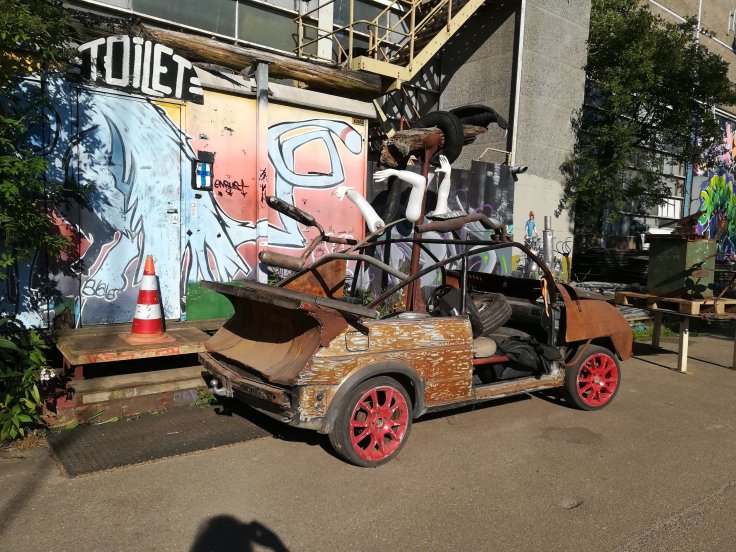
Art in the toilet of ADM
“A free cultural space is a topographically open space, whether located in a landscape or structure, a Freiraum (German: “free space”) that sustains countercultural values and traditions, such as happenings, pop-up festivals, gatherings and squatting movements (Waalwijk, 2016)”
“Free space is the breathing space of the city. Free space actually questions the applicable principles. It shows unseen possibilities and makes social unusual practices visible. It is about the space in your head, a space without logos, slogans or dull revenue models. An allotment garden is a green making space, organized collectively. A free-space is an active living workplace with an alternative program. An experimental place for new forms of collaboration and personal responsibility. The practice of free-space in the city shows that alternatives are possible. That change is possible ”
History is rich with tales of the Zapatista (RATM’s ‘People of the Sun’), ‘FreeTown’ Christiania in Denmark (see how the self governance system works), and the squat culture of Berlin , from La ZAD (read about the successful defence of land and permanent autonomous community ) to Ruikgoord . These spaces created generational frameworks, maintained hope in crumbling times and inspired generations of dreamers and defenders, to be themselves in a conforming society. ADM, one of the more renowned squats of Amsterdam, stands among these giants, having been host to hundreds of artists, families, dreamers and healers all finding a place in the crazy world that, for them at least, made perfect sense. Creating a Utopia
“These venues offer prospective spaces for experimentation, selfdiscovery and different forms of learning/re-skilling, which in turn provide inspirational models to learn from as artists, cultural workers, or art educators committed to imagining micro-utopias through politically and socially engaged art. Free cultural spaces that emerge from autonomous movements offer frameworks for collective creativity, carving out spaces for freedom of expression.
As cities face crucial issues directly related to gentrification, reduction of public or free spaces, and an increase in state and corporate surveillance and control, how can artists cultivate strategies for freedom of expression through autonomous ways of living and working?
(Ultimately, the question being asked is..)
What is the relationship between autonomous spaces, communalising and freedom of expression?”
— crir.net/Img2018/Tina_Carlisi_Free%20Cultural%20Spaces.pdfAn unregulated self organizing space, here is also the basics of HomeNeighbours included this noisy bunch
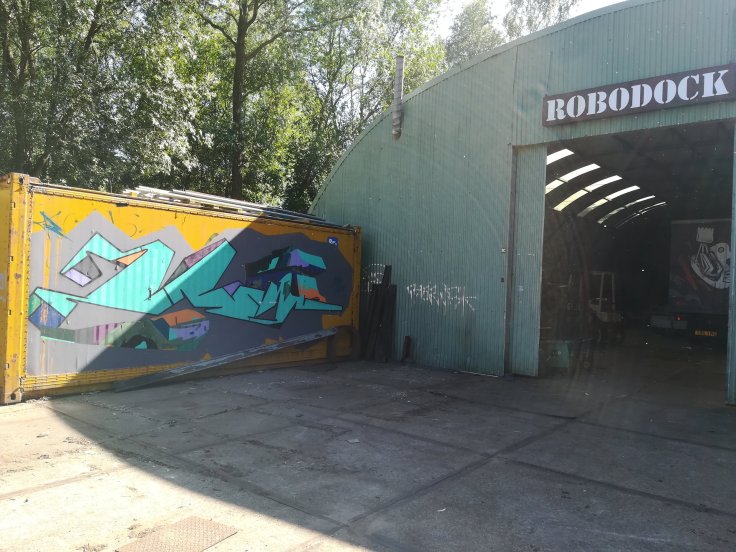
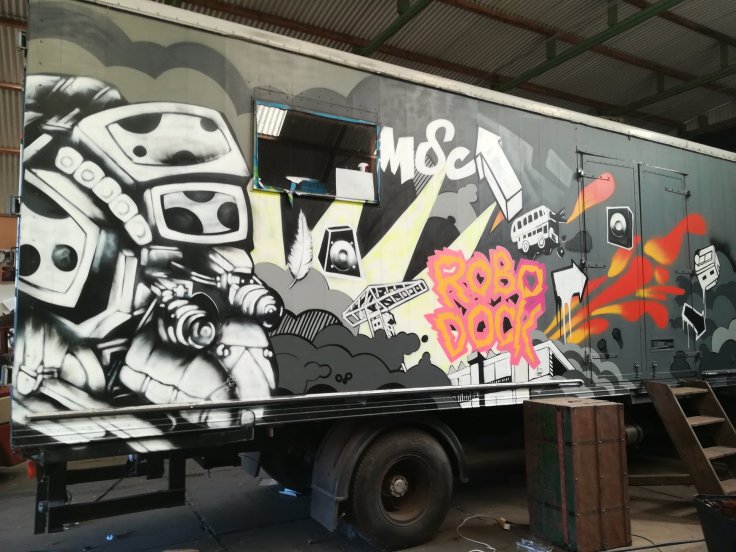
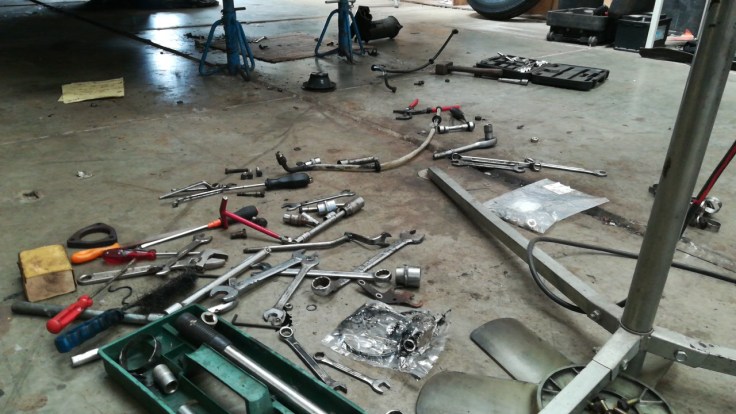
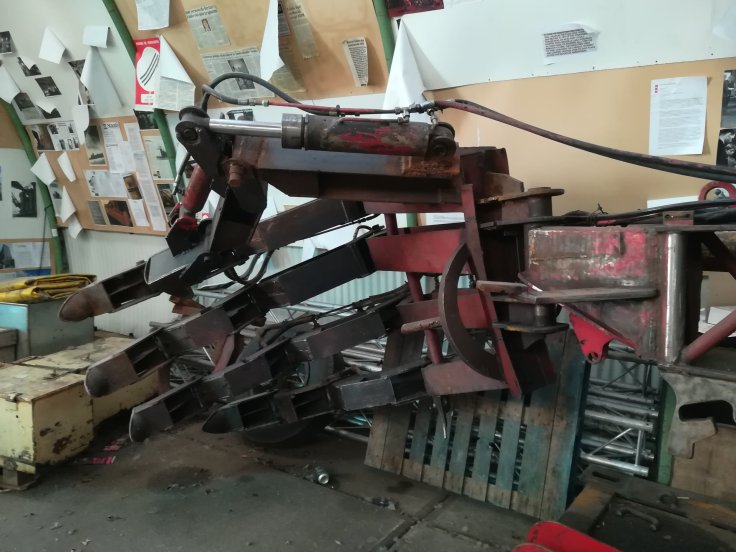
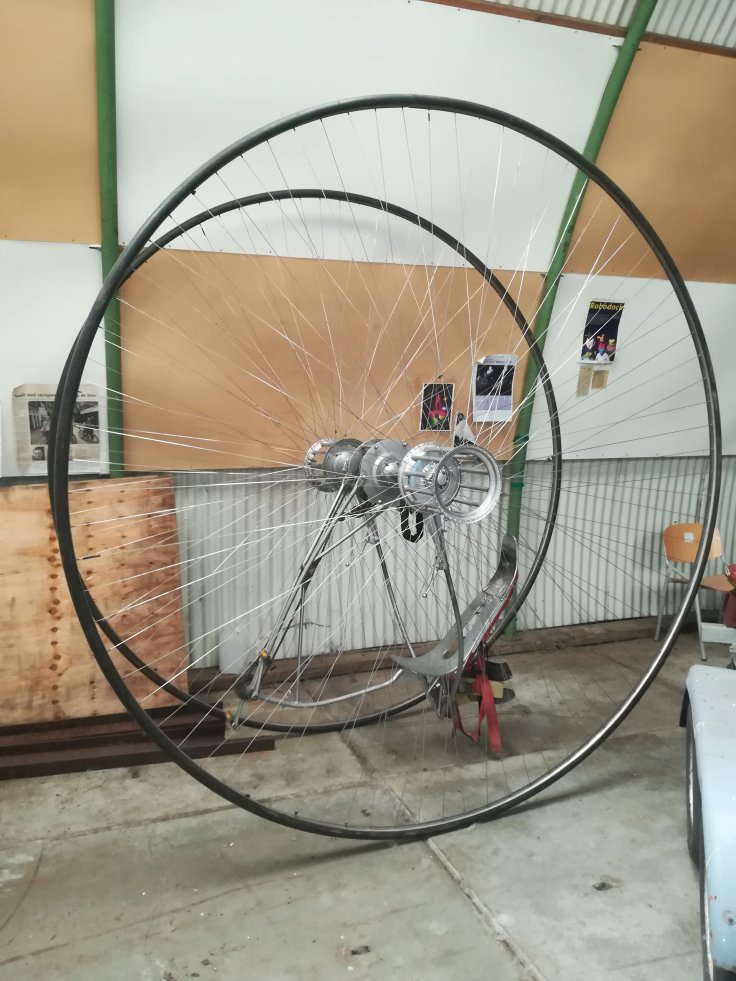
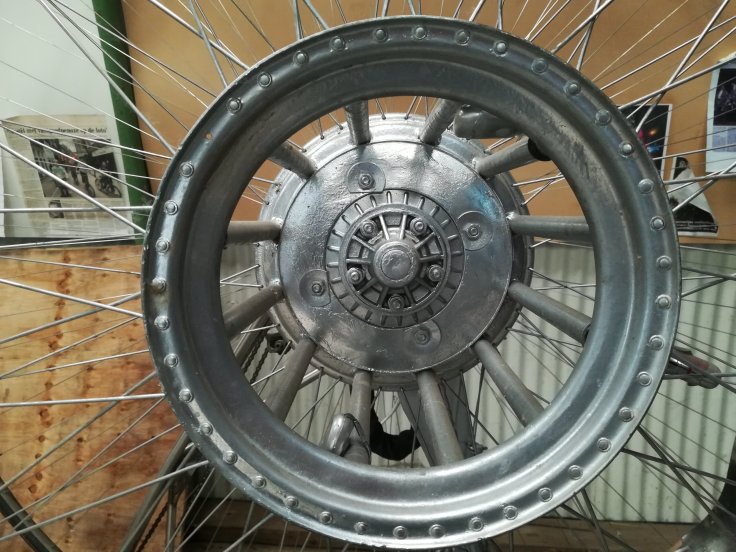
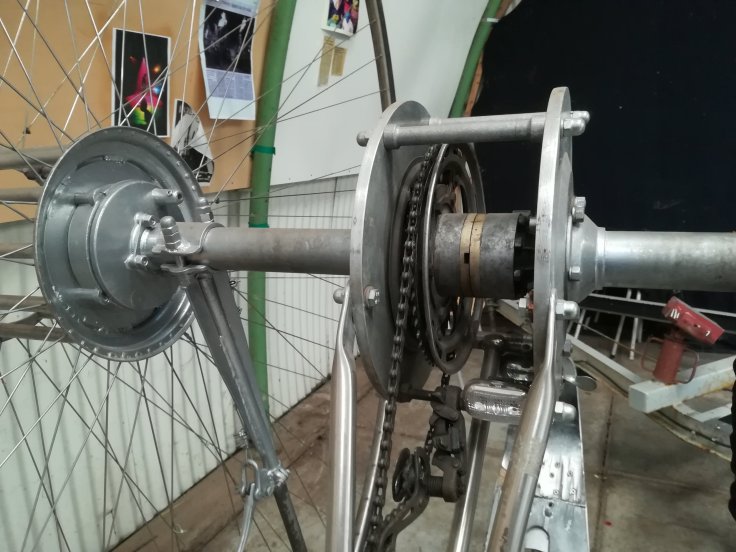
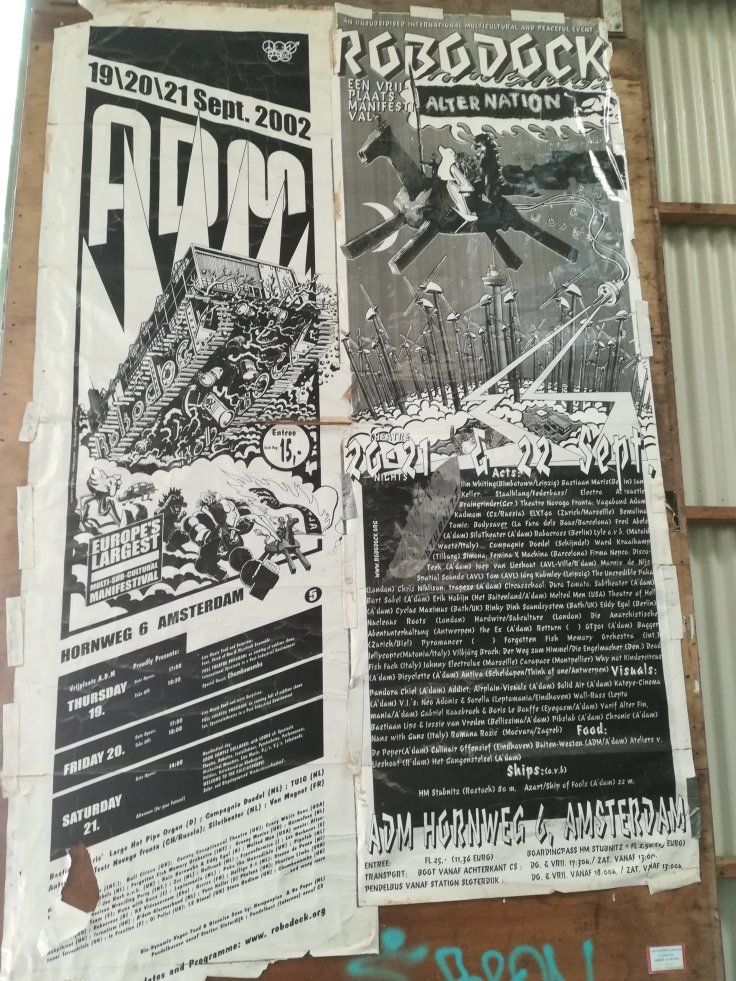
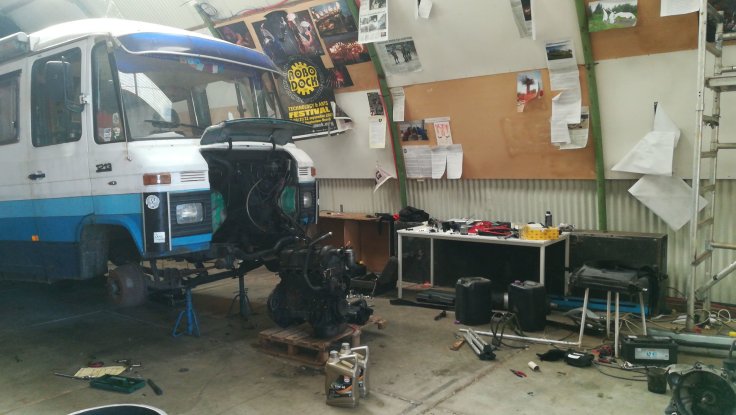
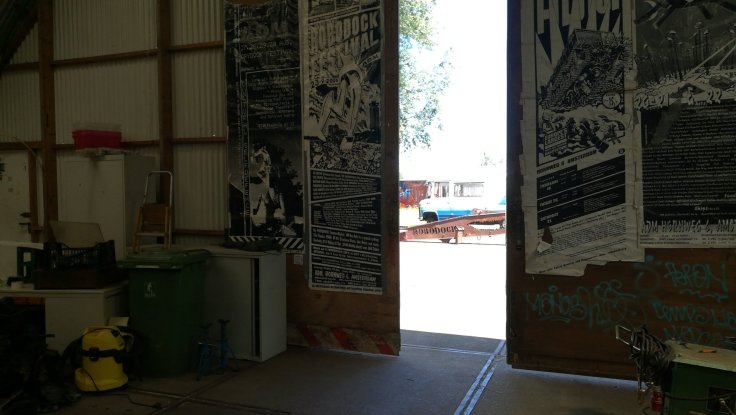
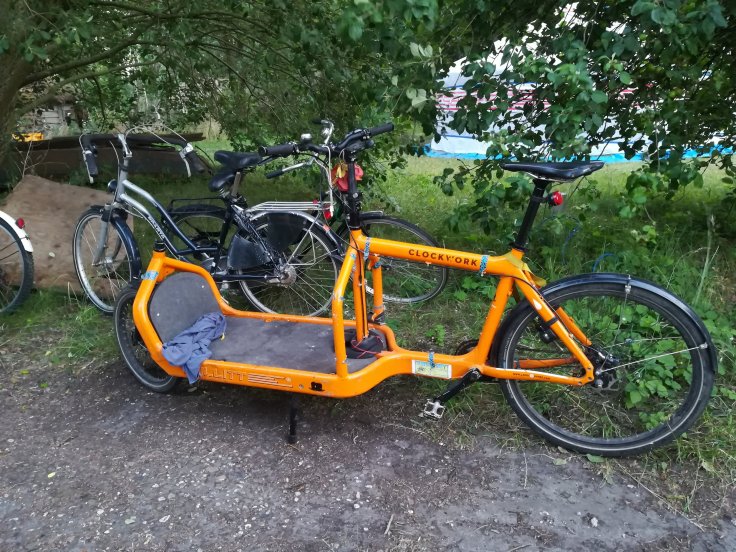
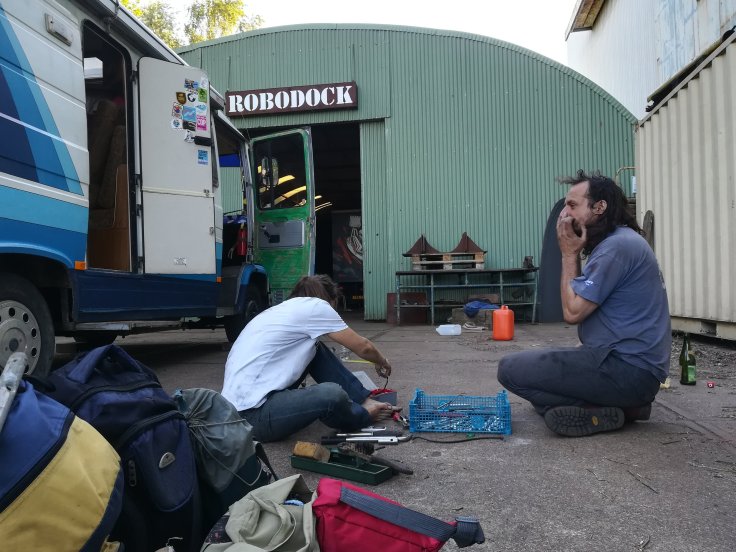
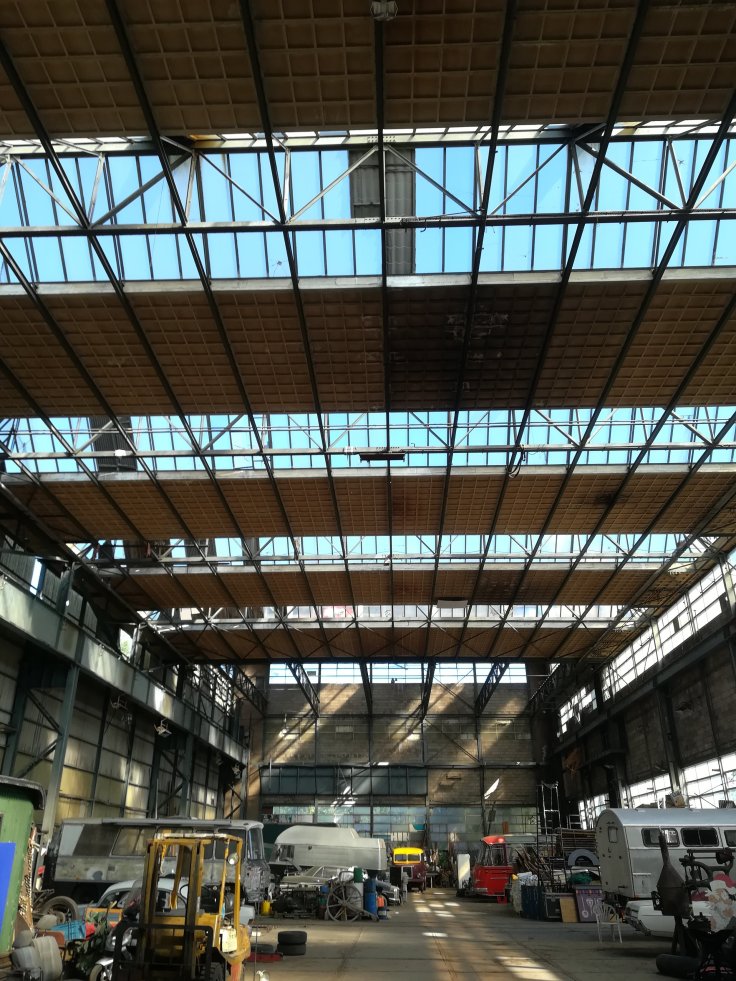
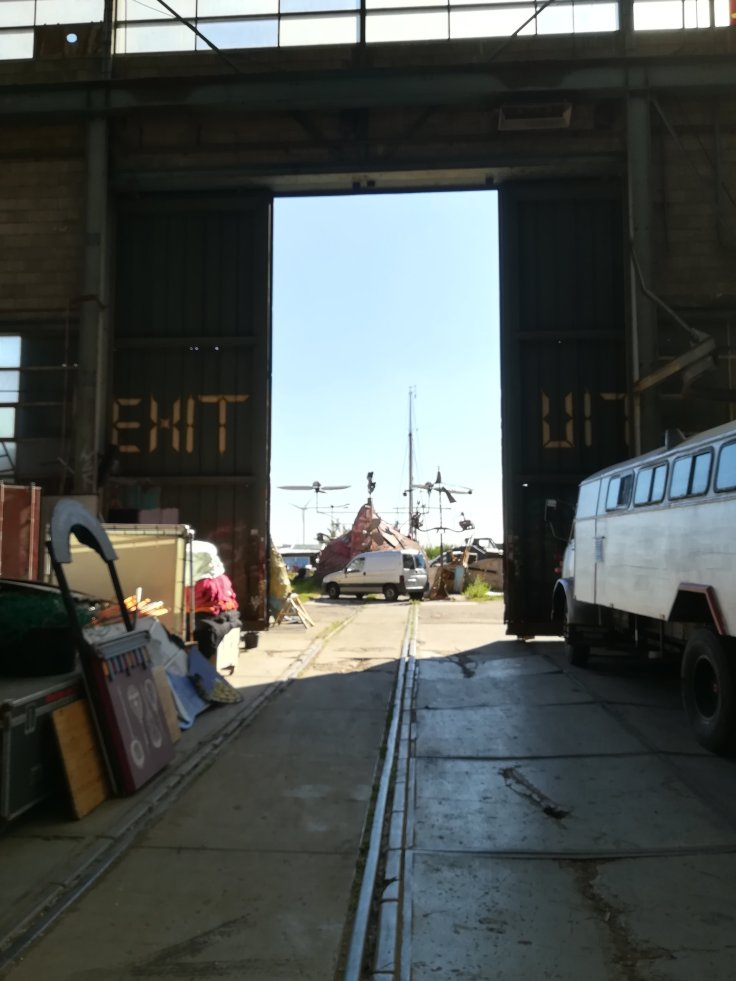
I was fortunate enough to spend a few weeks in ADM in the summer of 2018, where I got to step beyond the rhetoric and learn the rhythm of the life there. I was there to fix a vehicle (first time for everything, right?) and got to use the infamous RoboDock space (read about RoboDock and the creative response to gentrification that was ADM)
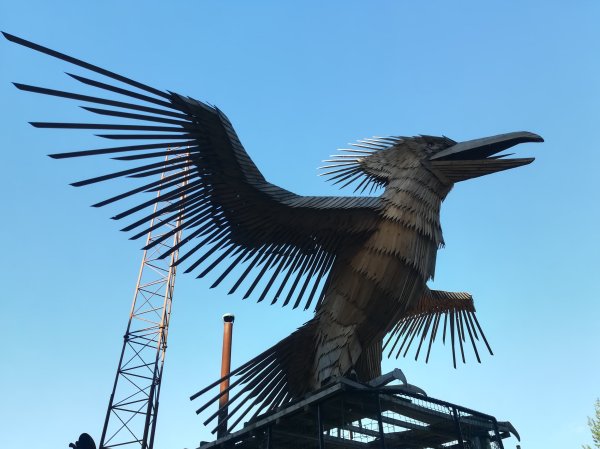
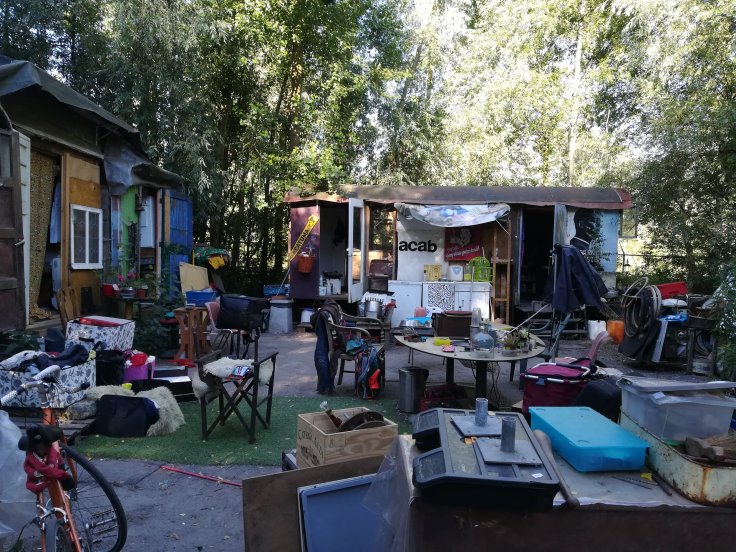
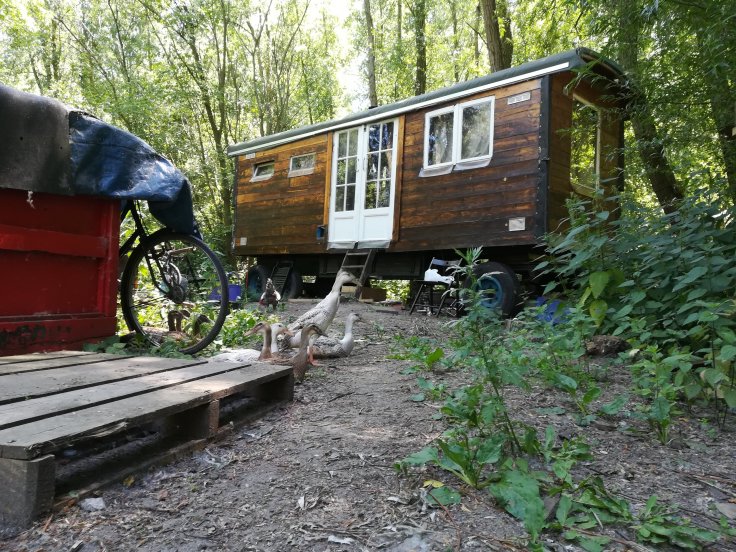
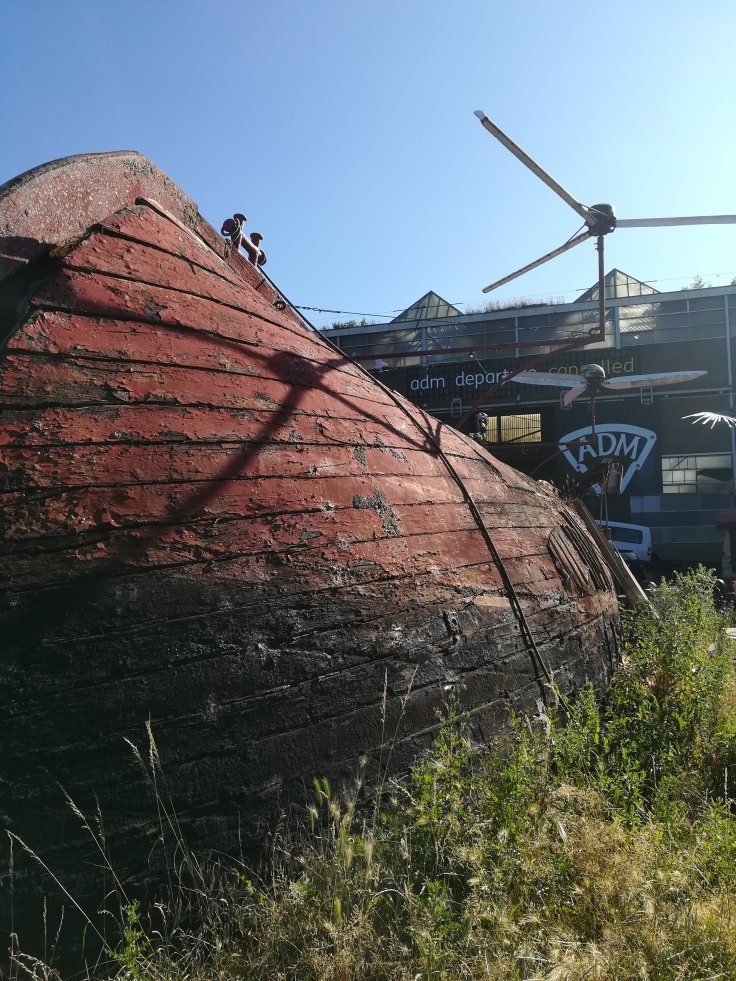
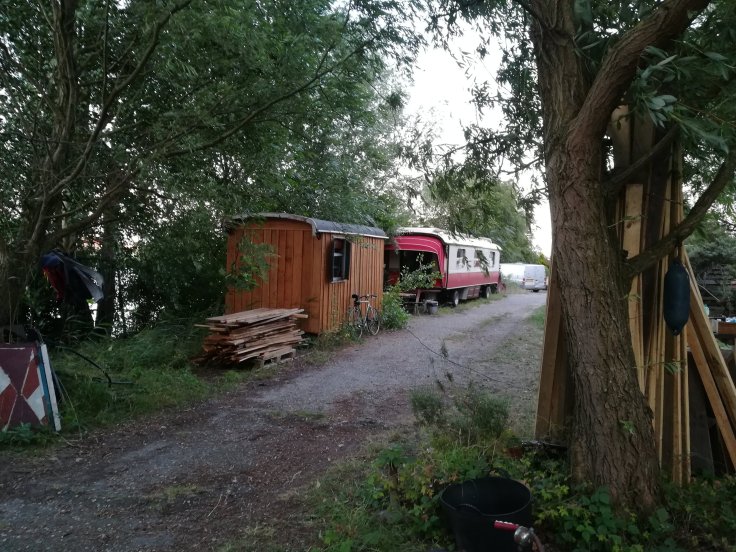
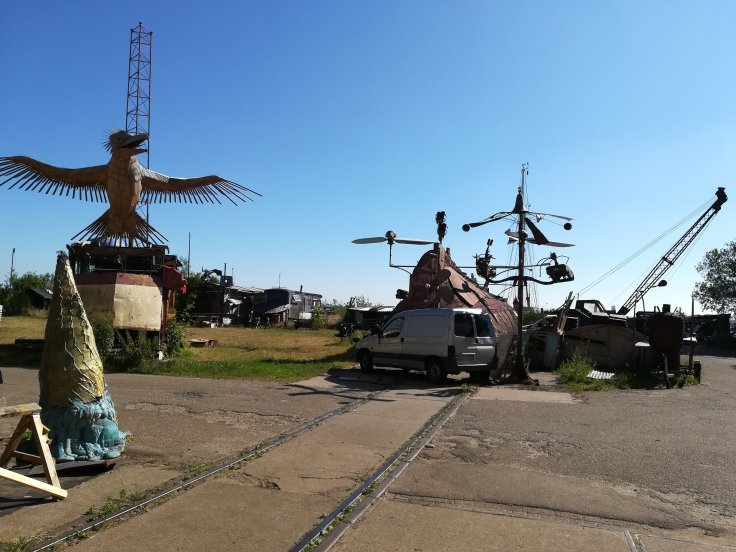
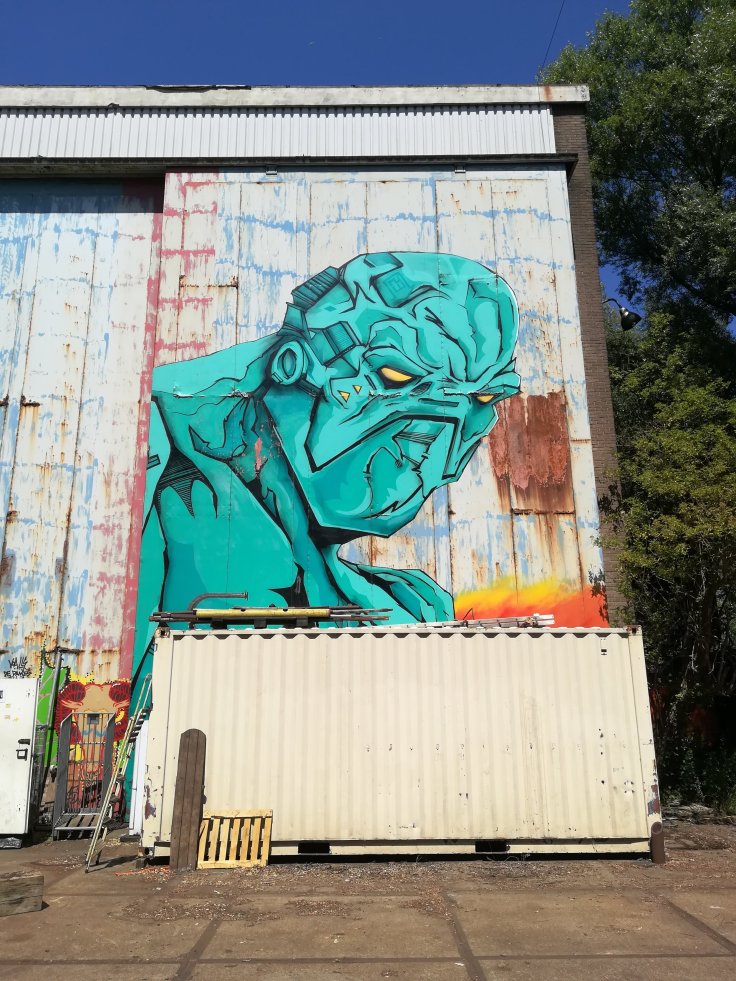
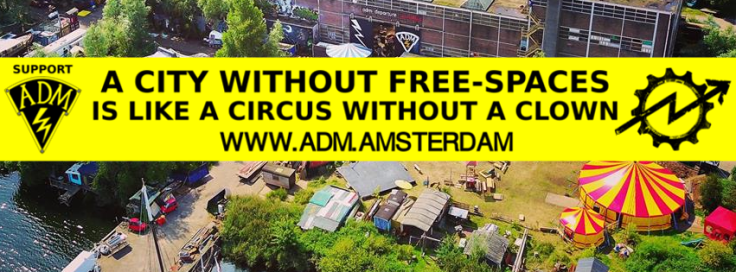
ADM was a special place in the world, situated on the outskirts of Amsterdam in the industrial harbour area north of the city center. It was abandoned and subsequently squatted in the 90s. Around the families and artisans that gathered there since then, the space became a haven for free -thinkers, a laboratory for the metal- and fire-artists that congregated, gardeners and anarchists living with children and the circus folk. The ADM space was known to be a collection point for creators to make and shape beyond the need for capital as the incentive, as well as providing a base for the struggles against gentrification
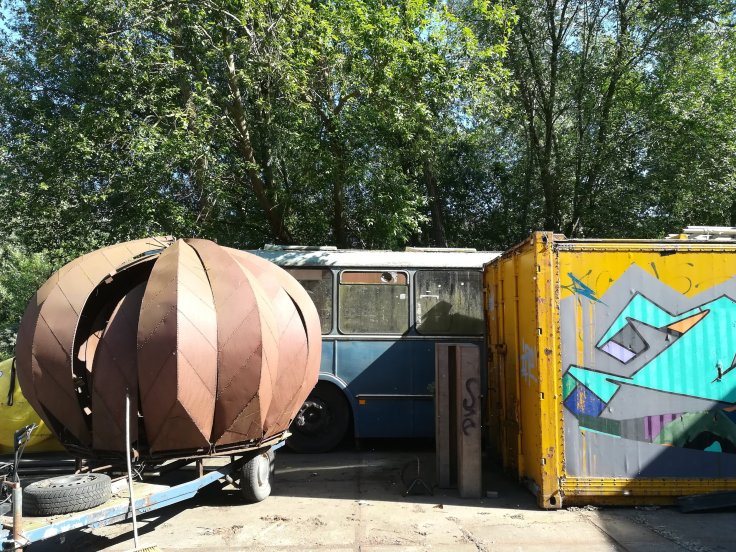
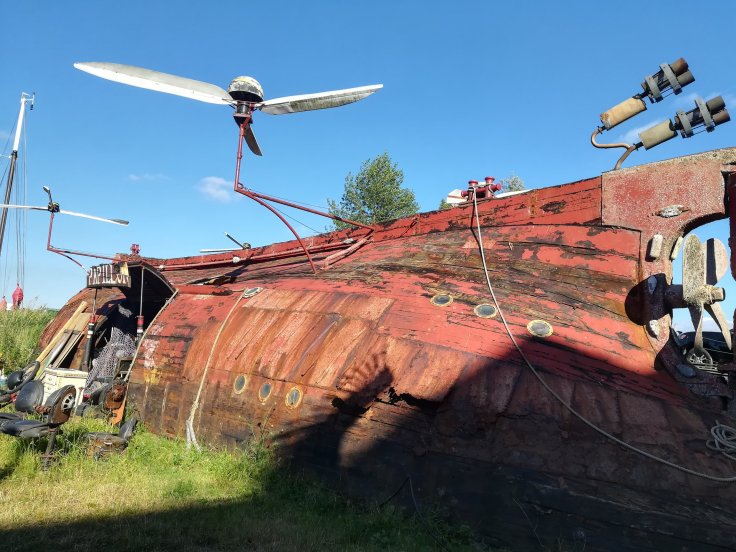
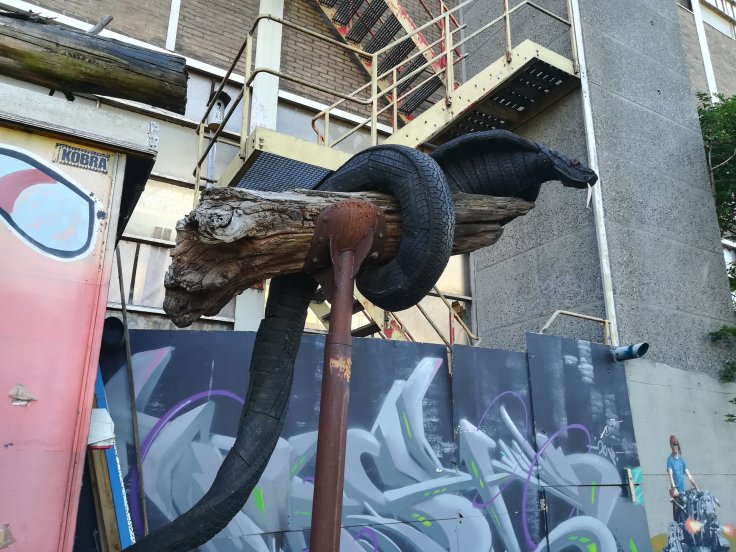
Just one of the many art pieces that adorned the corners and centers of ADMEveryday was AfrikaBurnYou know you are in Amsterdam…..
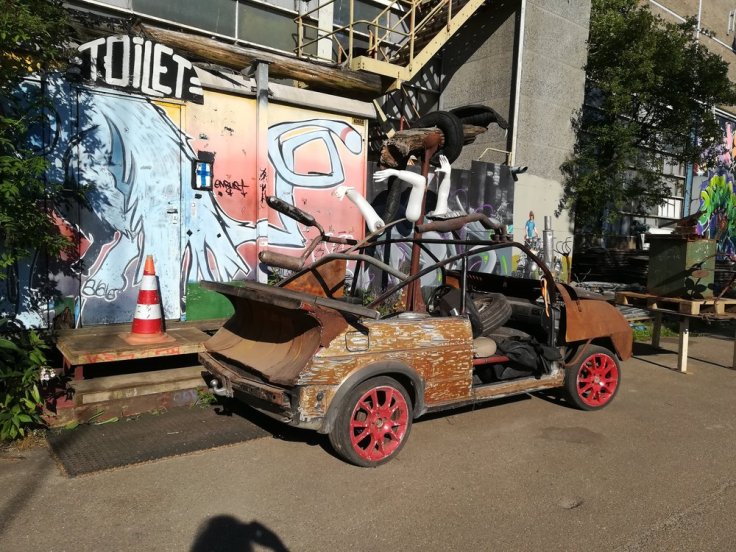
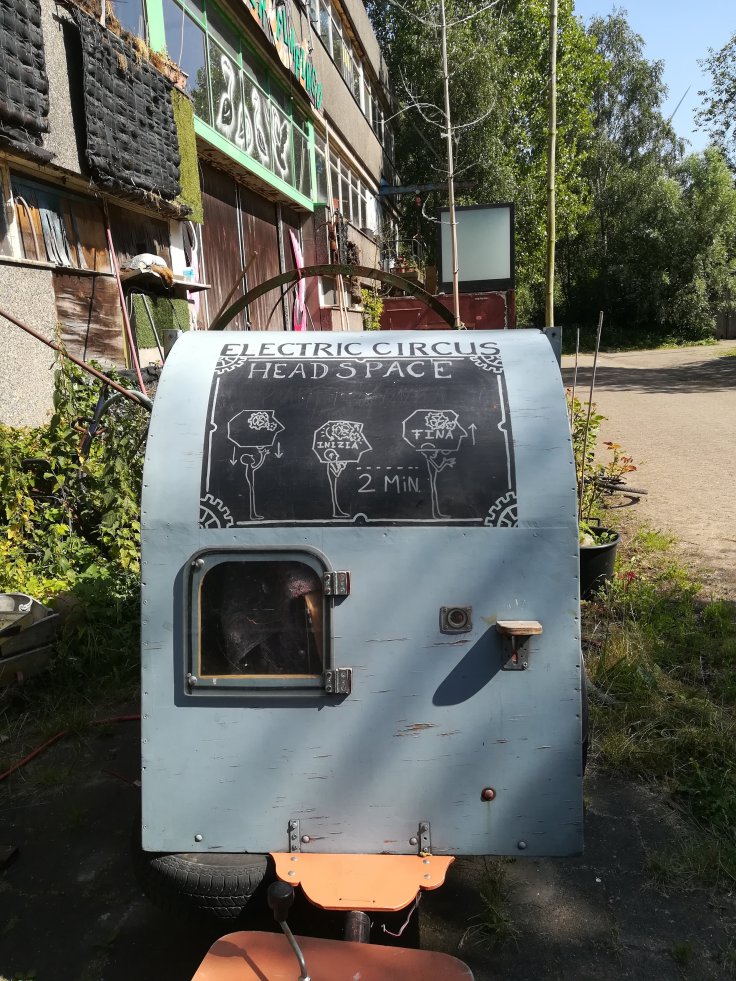
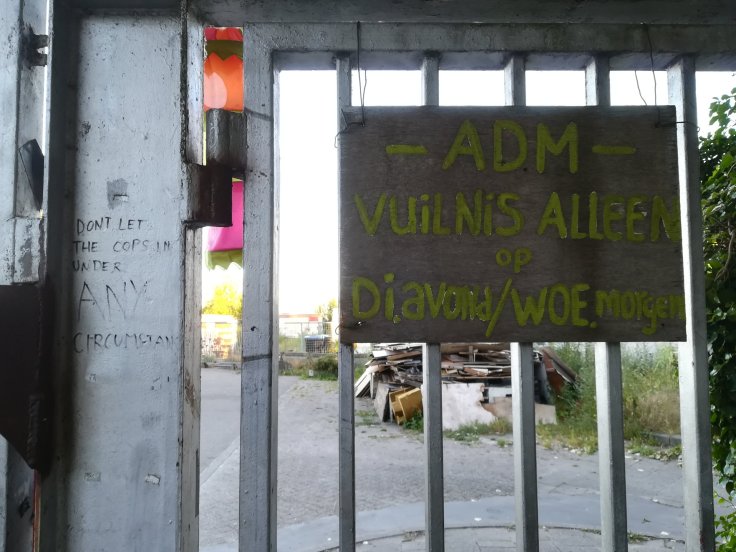
Besides the amazing sculptures, murals, mutant vehicles and amazing architecture, the space has hosted festivals, parties, symposiums, concerts and every other kind of communalisation. The space became synonymous with the advancement of the circus theme, using robotics and fire displays. The freedom held in place through that front gate made space for so many to meet, mingle, make and master artforms, the most common being the art of being free.
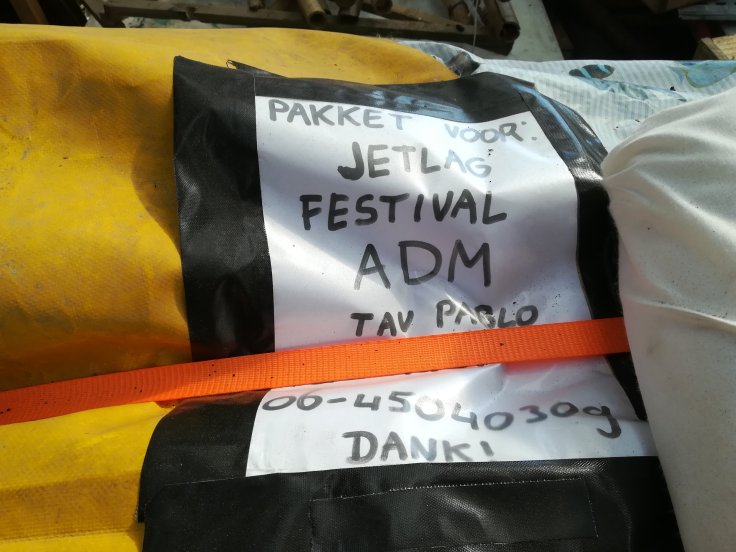
JetLag Festival was one of the highlights of the annual culture program of ADM
Check out Lora’s video that explores some of the history of ADM, and documents the arrival of the Ship of Fools project for ADM’s birthday party
I found a small knit community defiant and proud of the life they had defended for so long. For them, ADM was the dream manifested, not an investment in some theoretical future. Magic is of course always in the moment, and my time at ADM was filled with magical moments and people, mostly highly skilled and compensated artists and artisans who preferred to live in the shadows of Society, according to their own rules and in the belief that it is always possible and indeed necessary, to write another story.
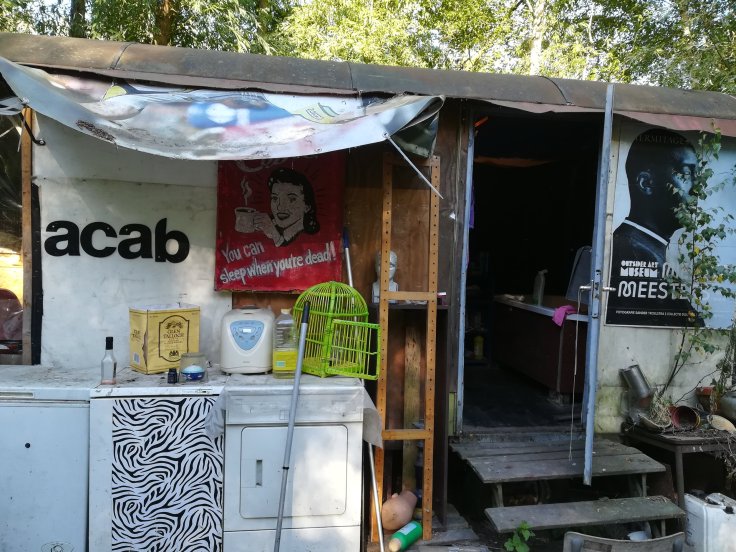
Home to humans and beyondWithout the ADM crew, we would have never fixed our vehicleSeriously larger than life art
I chatted to some of the residents, many of them key people who helped establish and defend the space, competent people and crazy people, living a not always comfortable life yet being free or having some freedom and autonomy. Though we were all unaware of what would unfold in the coming 6 months, we spoke candidly about the threat of eviction, what they planned to do, and what had made ADM such a significant occupied space for so many. These people had the bravery of an idiot, drawing a line and defending what they loved, living their life according to their individual beat, yet marching together as one community. They proved, over decades, that this was not only possible, it could provide the container for genius and expression to emerge as a natural consequence.
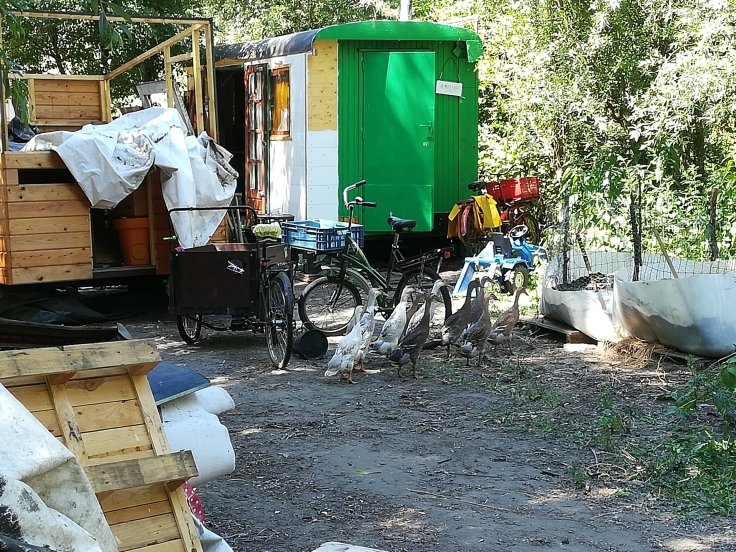
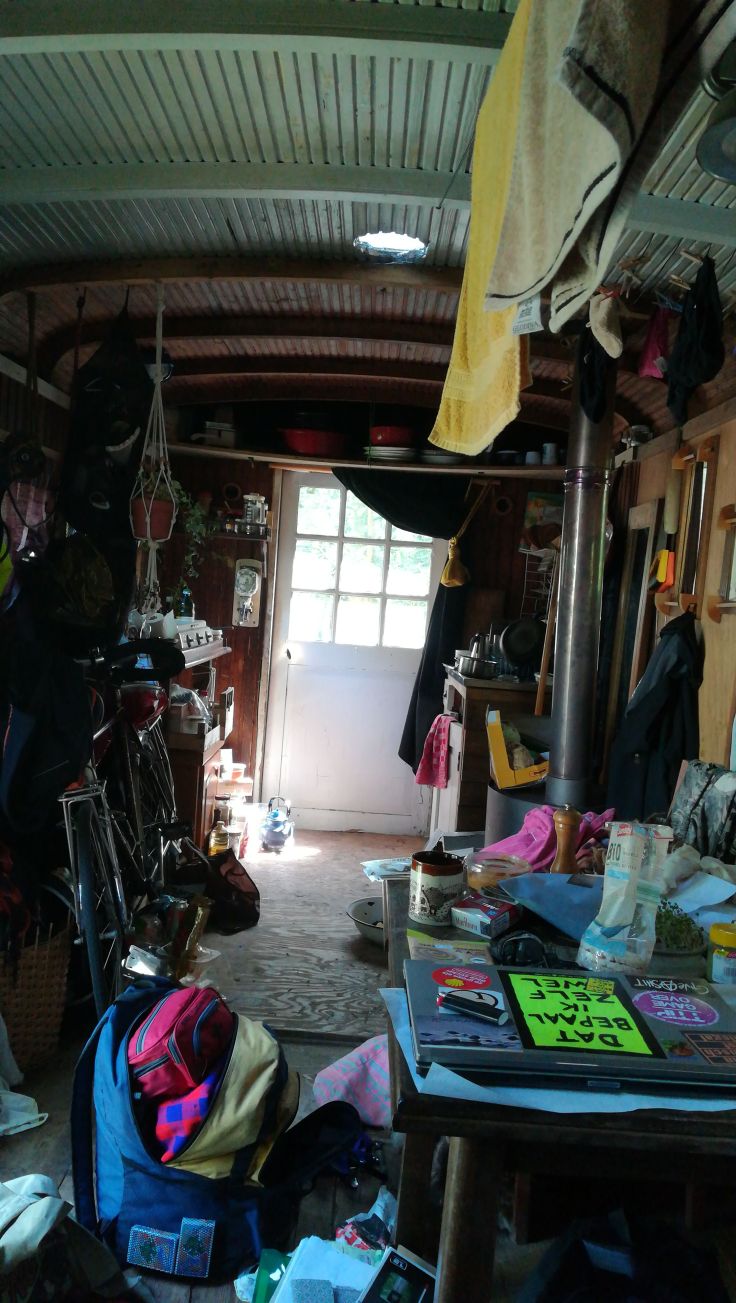
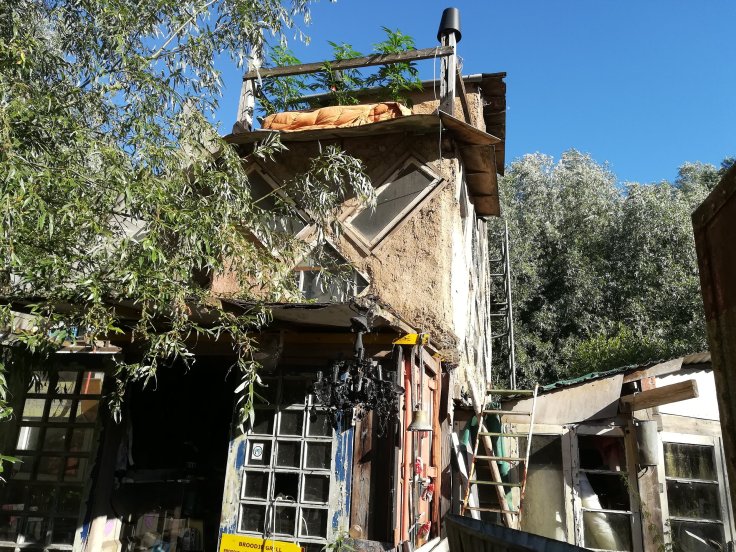
Wagon Life on the edges of the cityVisionary spaces, here a communal kitchen space and sleeping quarters made from earth and shipping containersOne of the communal kitchen areas
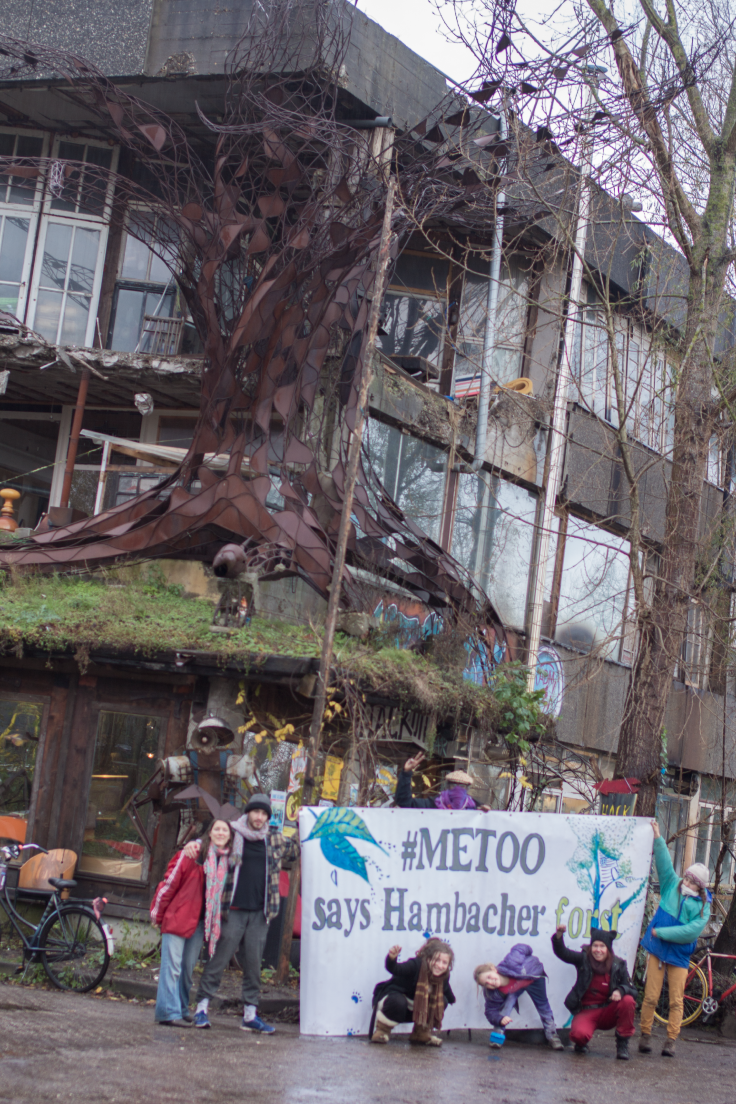
Stress and challenges often galvanize communities, yet in ADM there’s two sides to that coin. Firstly, the daily life has a cloud of potential violence and the impending eviction looming overhead. Like many other zones to be defended ( Hambi Forst and the resistance treehouses is a very viral example), this tension dominates and intoxicates. And still, the ADM crew has a long history of defending and winning, the flagship being the 1998 demolition aborted. A huge machine started demolishing part of the main building while there were people still inside, and the ADM home crew ran to shut down the machine and eject the eviction team.
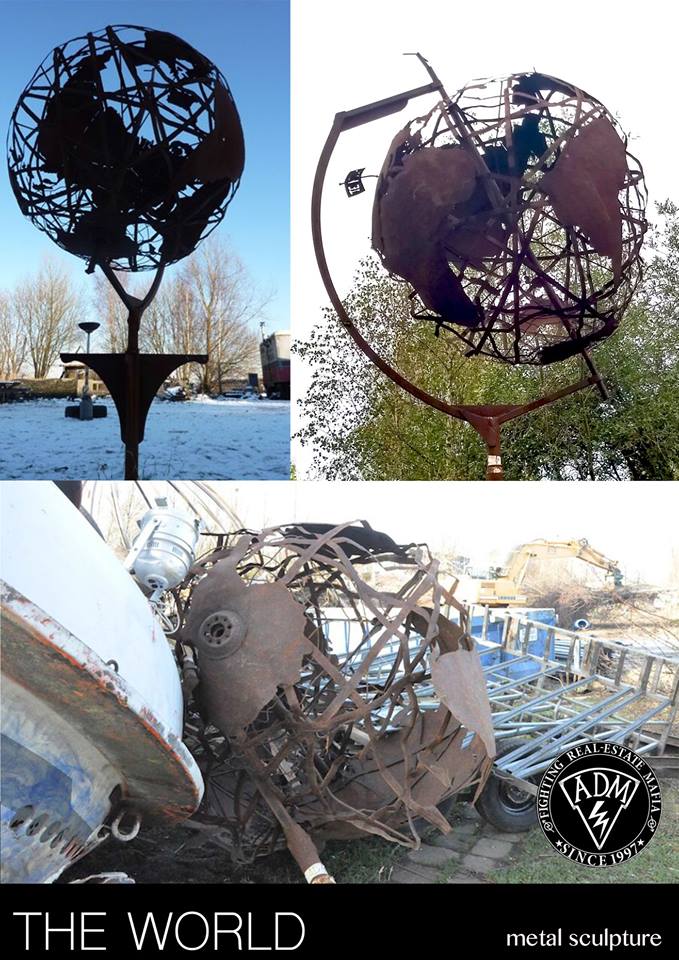
That building was lovely re-crafted and reoccupied, and became one of the central spaces of ADM, with an amazing metal tree growing out of the wounds to symbolize the tenacity of the human spirit of resistance and the search for justice. In so many ways, this tree represented the gutsy and grimy grasp that this community had on the psyche of Amsterdam. Metal, forged in fire,shaped and strong, conductive, reflective, fragile and functional, a bold statement to the world that out of the ashes of repression, beauty can and does emerge.
I didn’t realise that last time I closed the front gate, that that would be the last time I would be there. Casting back, I’m filled with gratitude for having spent some time at such a legendary space, and grateful to all those people who never gave up, who innovated and fought to save one space, as a means to secure freedom for all. My time at ADM brought me new skills, a new sense of hope and a firmer belief that when people come together as sovereign individuals and are empowered, impossible is nothing!!!
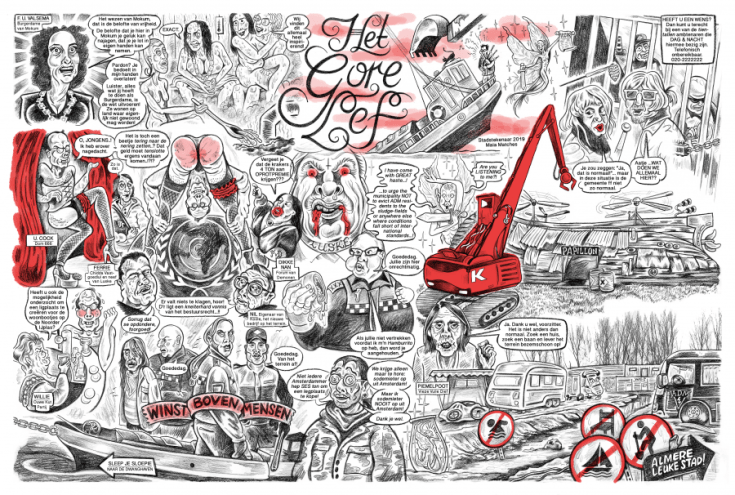
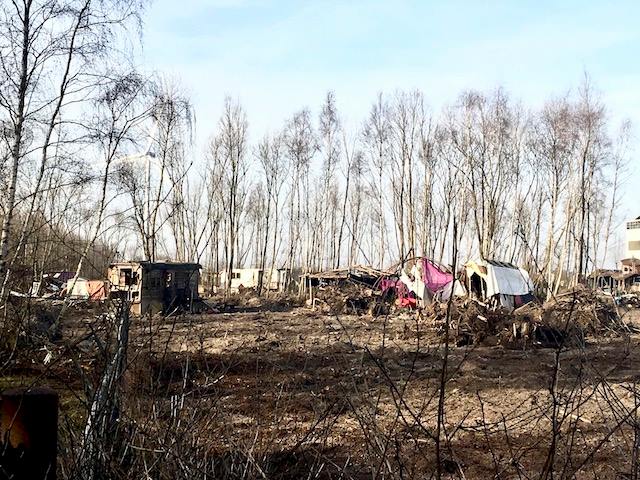
Like a thief in the night, the forces of greed and violence slipped behind the fences of one of these last Cultural Free Spaces in Amsterdam. Ignoring even a UN recommendation, the community of ADM in Westpoort, north of Amsterdam, was swiftly and violently evicted from their homes, many not having enough time to take out their equipment and possessions. One of the last of the truly FreeSpaces had its gates closed, and with that closes a story of resistance and growth and magic and mystery and wonder.
The people of ADM were given a ‘deal they couldn’t refuse’, which was actually a pretty shitty deal, if one could call it that :
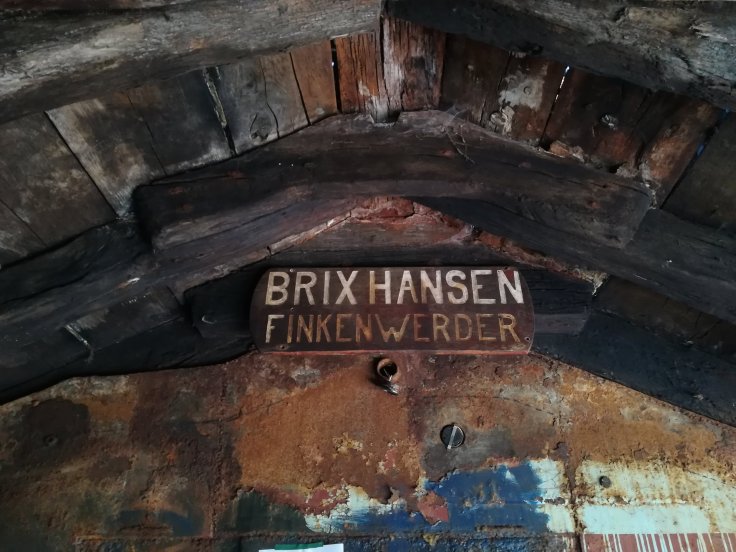
To ease the pain the council is offering the current ADMers a 2 ha piece of polluted wasteland beside the A10 motorway in the north of Amsterdam, for the duration of only two years. With this land come many restrictions: no more cultural events or festivals, very little space to work and no communal or public spaces. There is not enough room for even half the ADMers, and where are all the ships supposed to go? The ADM forest, habitat for wild animals and rare species will not be relocated…
Amsterdam’s oldest and most well known squat was in the making for decades, as they stood against the Real Estate Mafia to defend this space. Still, the eviction force moved quickly, and in a few days had torn down what had taken years of mischievous magic to craft. The FreeSpaces are shrinking around Amsterdam and the world, and with ADM being evicted and flattened, a powerful message has been sent out to other radical freespaces as well. Sustained post-capitalism will eat Anything and Everything
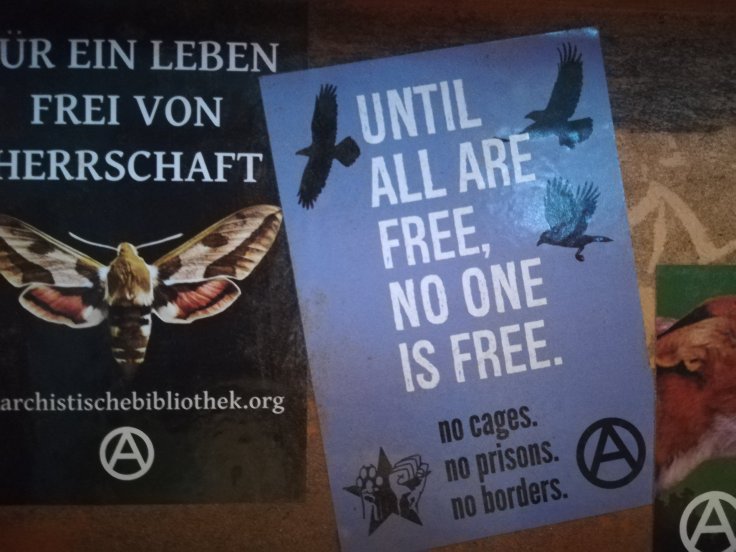
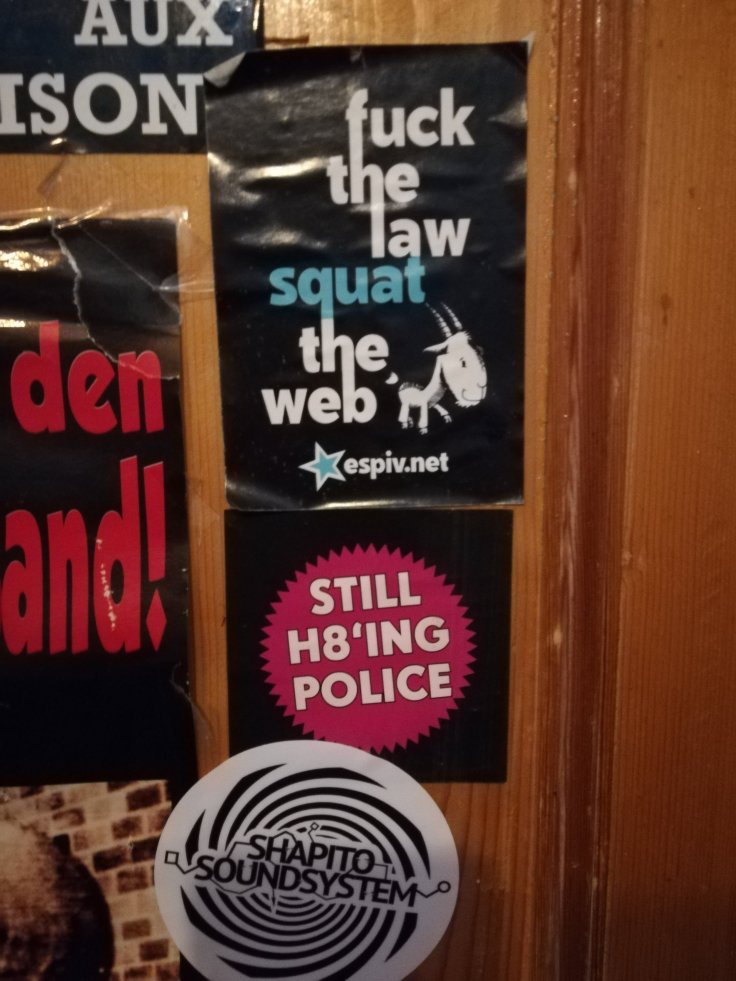
Around the world we see the closing down of these spaces, true spaces of experimentation and authenticity, where value can be seen for itself and community can see for itself, and figure things out for itself. Like other FreeSpaces such as Can MasDeu in Barcelona, ADM was a distinctly anarchist space, open, inclusive, inventive and not up for taking bullshit! Indeed both spaces were claimed and fought for, and both places have used the elements of the people to make a different vision for the world, a different way to live together, while being apart of the System.
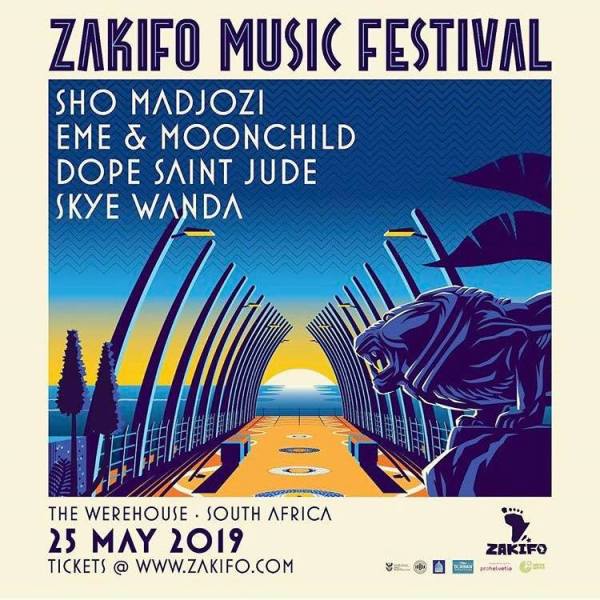
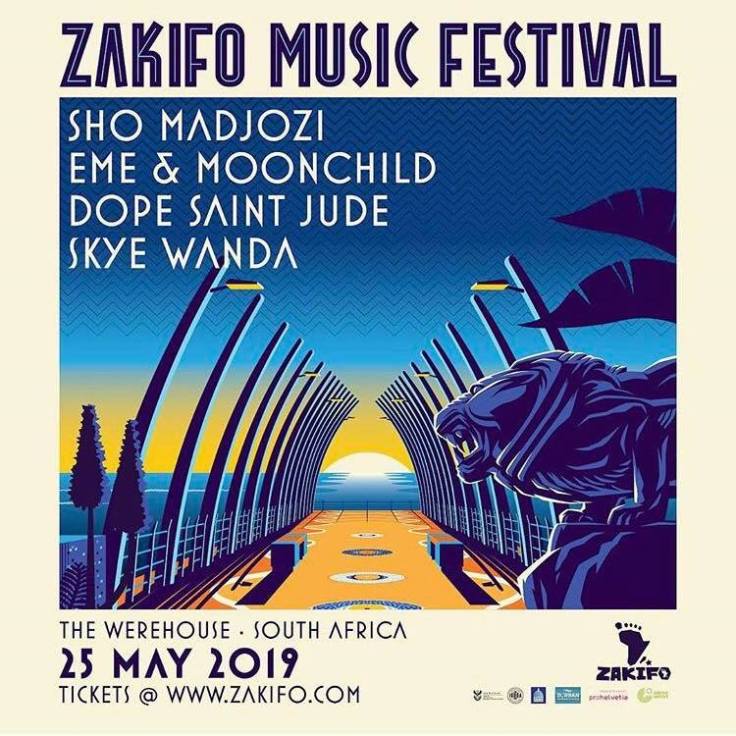
For 5 consecutive years, Zakifo Musical Festival has put Durban on the map in terms of being a city that caters for a discerning musical palate. The festival which prides itself in quality over quantity has gone for a more boutique approach to the curation of the concept. Which has an air of nomadic sensibility as it utilizes numerous venues and spaces around the city in their eclectic series of “bespoke” concerts which make up the unique Zakifo experience.
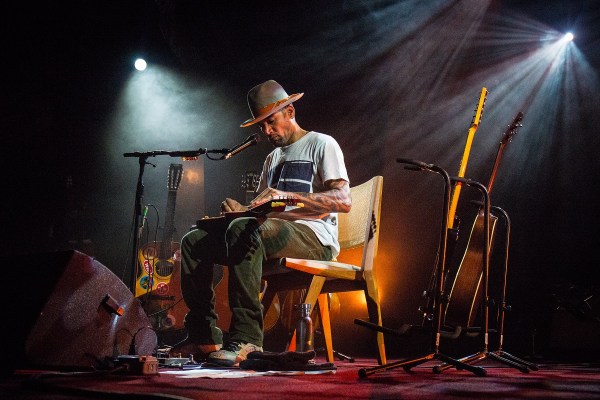
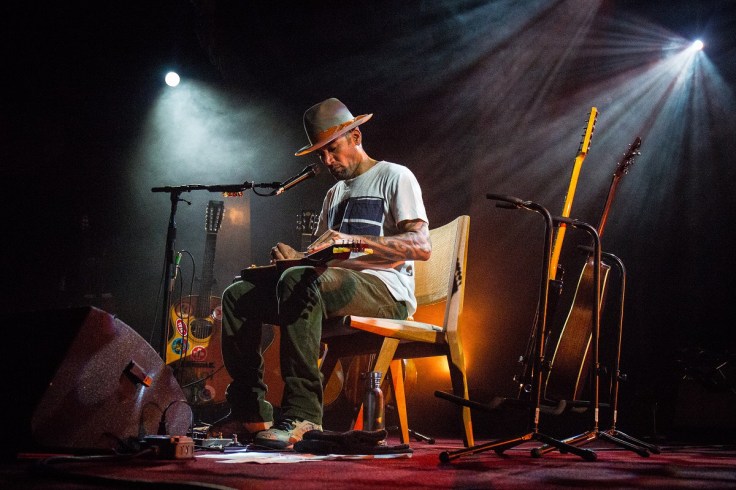
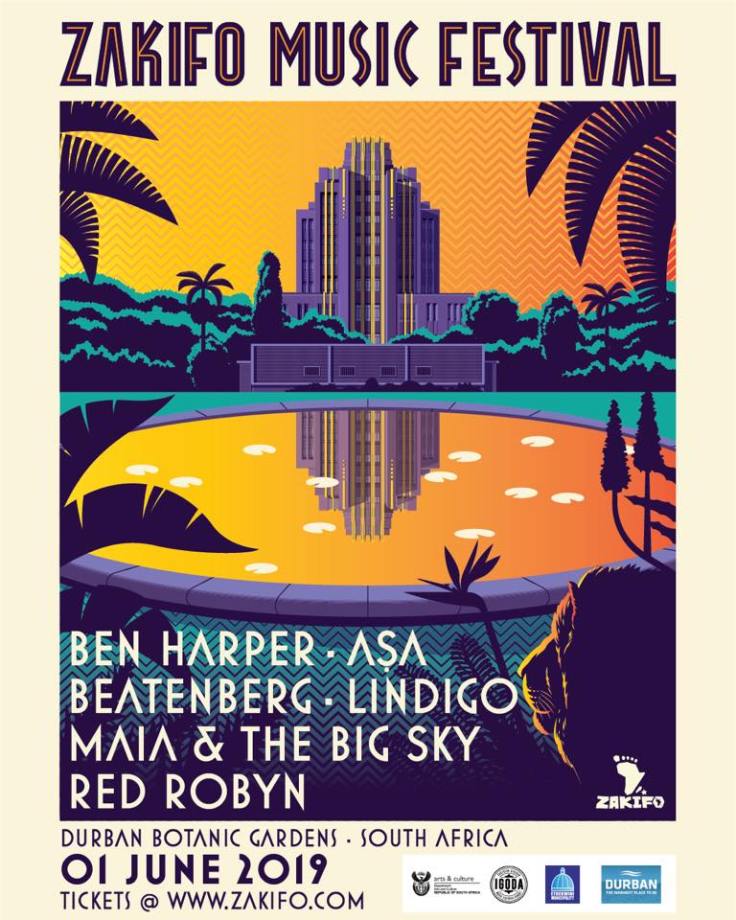
Ben Harper to perform at Botanical Gardens – Sunday June 1st
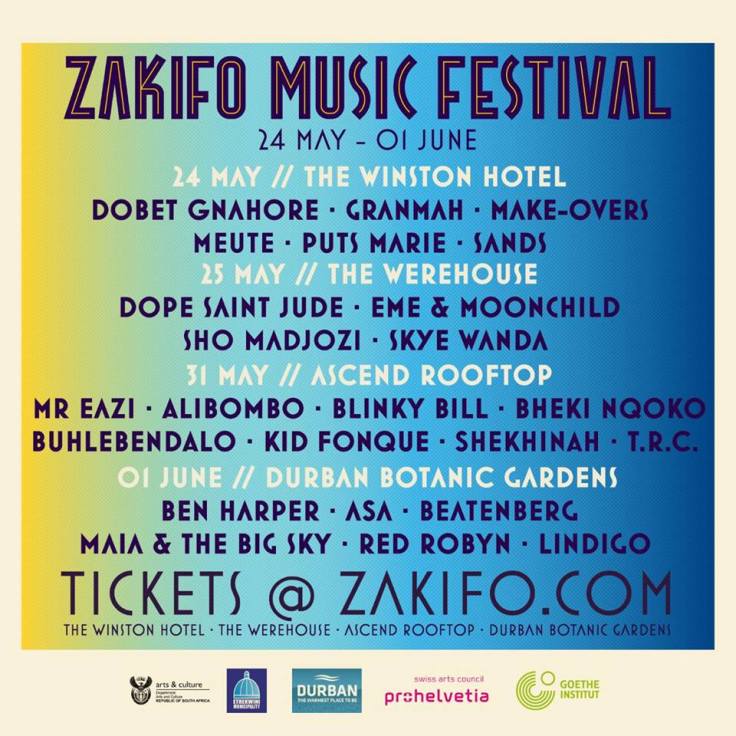
The event is a part of the Igoda Music Festival circuit which partners with other festivals in the region including Azgo Festival in Mozambique, Bassline Africa Day concert in Johannesburg, South Africa and Bushfire Festival in Swaziland. As well as being the sister event to the highly sought-after Sakifo Festival in Reunion Island. This year they are occupying some of Durban’s stalwart underground spaces as well as they city’s most obvious outdoor concert venues in an event which is sure to capture the hearts and minds of both the underground “scene kid” as well as the more mainstream music listeners. All due to a line up with both nuanced integrity and mass market appeal. Below is everything you need to know about the events and venues, which kick off this Friday at the infamously beloved Winston Pub.
The Winston Pub (parking lot stage) and Origin’s Engine Room team up for a night of fantastic live and electronic music. With fabulous brass techno marching band, Meute (Germany); alternative Indie Puts Marie (Switzerland); Dobet Gnahoré (Côte d’Ivoire / France) and her urban / alternative French / Tunisian band; psychedelic garage rock band – Make-Overs (SA) ; guitarist, songwriter, performing artist and singer, Sands Eswatini, (Swaziland); and six-piece Dub Reggae fusion band Granmah (Mozambique).
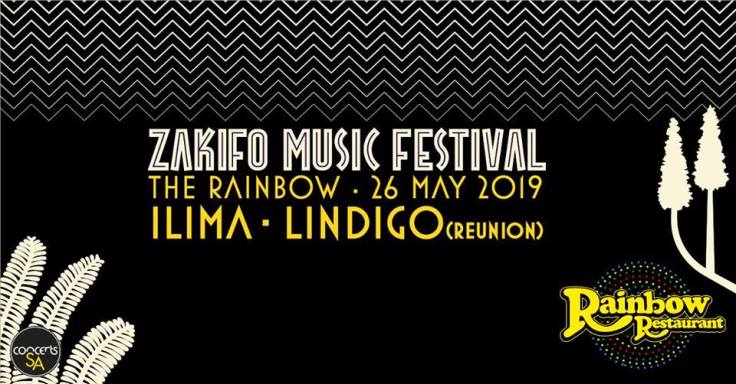
The Rainbow Restaurant: Zakifo Music Festival, in conjunction with Concerts SA, brings the island sounds in a small intimate performance by Lindigo (Reunion) a band committed to champion Reunion Island’s vibrant musical symbol of Creole culture – Maloya; and South Africa’s Ilima band (presented by Concerts SA) together for your listening pleasure.
Friday 31 May
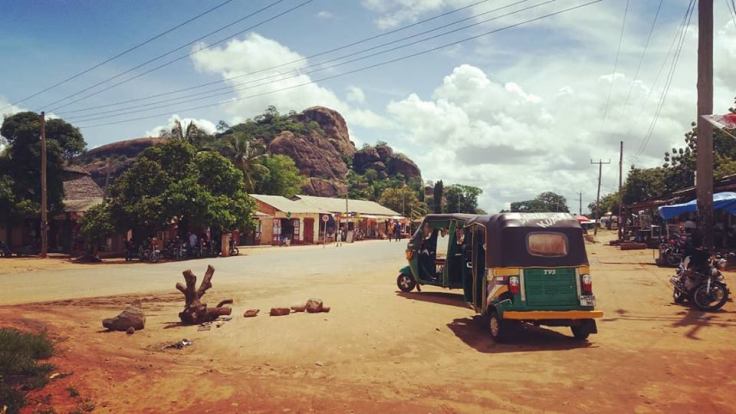
Ascend Rooftop uMhlangain the company ofMr Eazi (Nigeria) pioneer of Banku music which fuses Ghanaian nightlife with Nigerian chords and Afrobeat; Blinky Bill (Kenya) hip-hop / rap artist and DJ; Kid Fonque – SA electronic music and club culture taste-maker; Bheki Nqoko – singer, songwriter, arranger and producer; Tune Recreation Committee – SAMA Nominated contemporary jazz quintet; Buhlebendalo – accapella group, the Soil’s, lead vocalist doing a solo set.; Alibombo Percussion (Colombia) who perform experimental percussion on home-made, recycled instruments and commute to hometown gigs in a three-wheel auto rickshaw.
Saturday 01 June:
Durban Botanic Gardens in a concert named: What you Need, a variation of “Sakifo which means ‘what is needed’ in Creole” with international artists Grammy-Award winning, multi-platinum-selling artist Ben Harper (USA); iconic Nigerian singer/songwriter Aṣa who will stop by Zakifo Festival on her Southern African tour, Aṣa rose to prominence with the release of her hit song ‘Jailer’ in 2007; Lindigo (Reunion); Maia & The Big Sky (Kenya) who blend soulful funk influences with Kenyan rhythms along with the sensational Durban talent of Red Robyn (ZA).
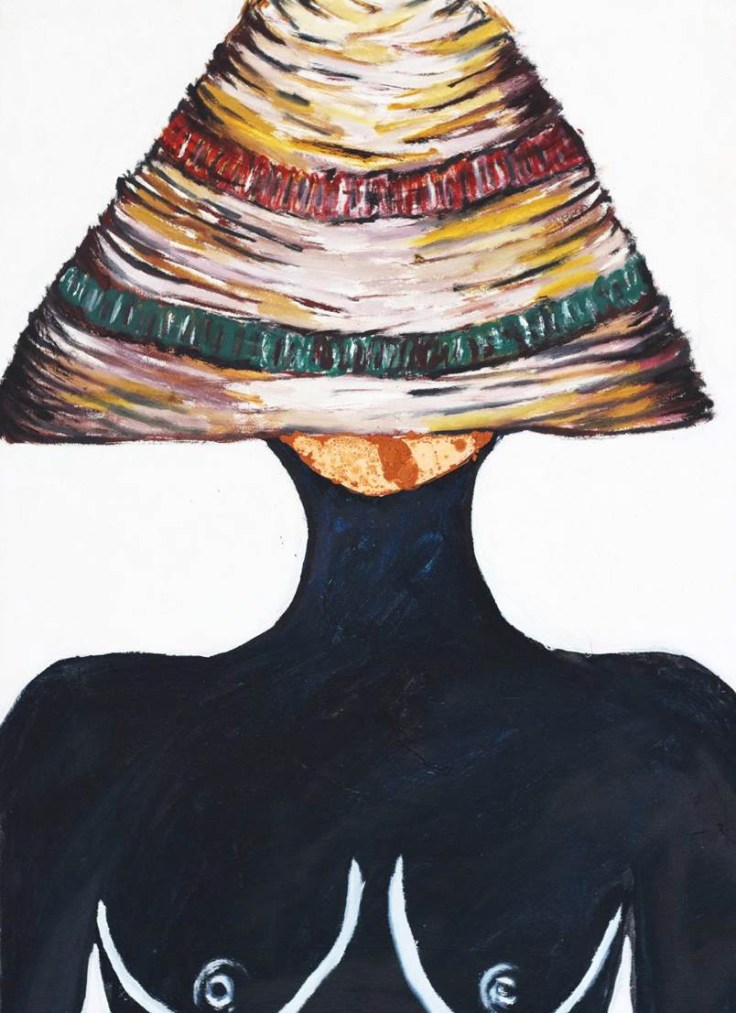
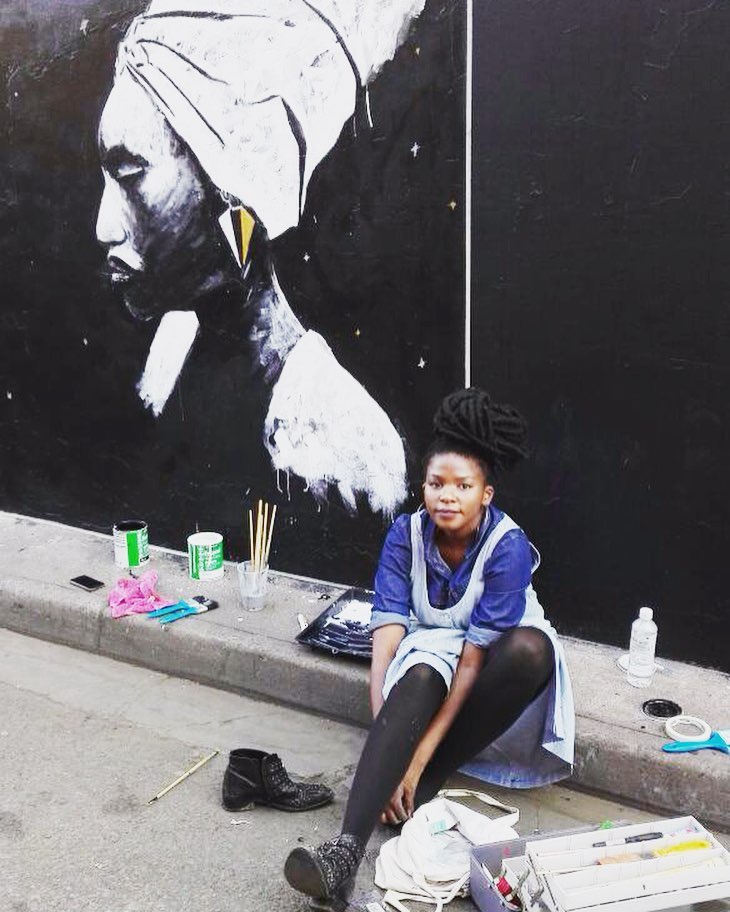
I first met Selloane in 2003 at tertiary. We were still fragile beings back then. Our attire very teenage. She mostly dressed exactly as she is in one of her oldest and one of my favorite pieces “Basotho Barbie”, a fitting title for a self-reflexive portrait by a student artist at that age. She always dashed across the courtyard, wearing a repellent look on her face. You could only just stare at her, admire and wonder. She wore dreadlocks and was to me naturally fascinating. I thought she was cold but in a fragility masking type of way. I saw through that shield however, but, I will not indulge you on my shoddy and instantly and constantly rejected attempts to serenade her with my famously seductive intelligent conversation. Since those days, many bottles of wine, Phumla’s bankies and other friendship trysts later we are here, both artists and independent individuals, with a large circle of mutual friends, a common love and hate for art, music, wine and social media.
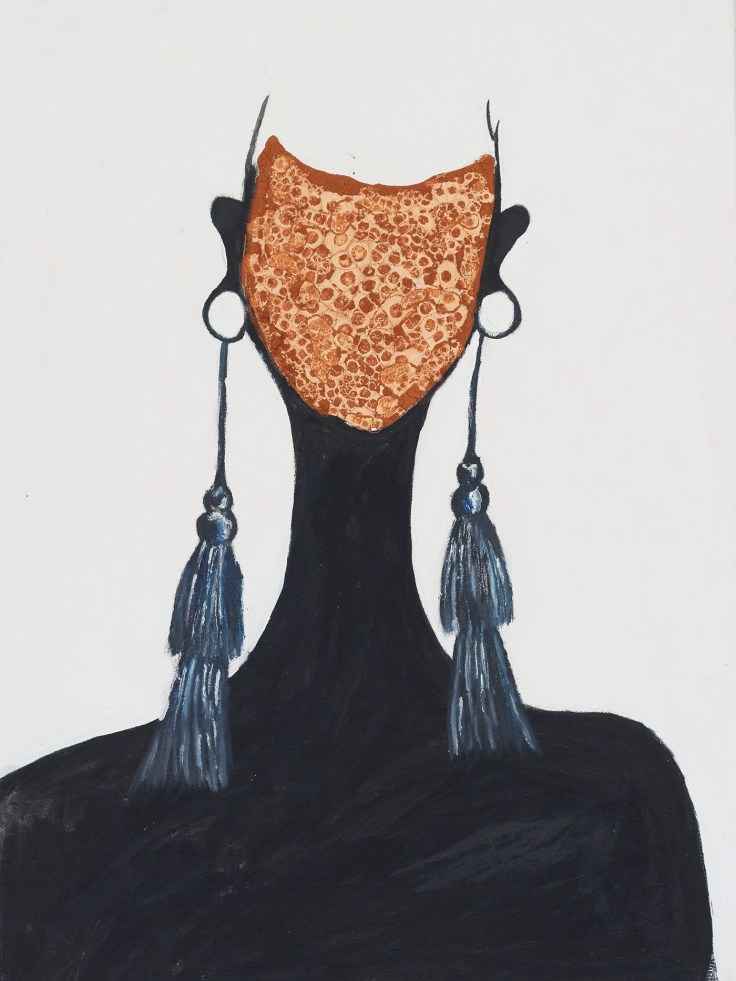
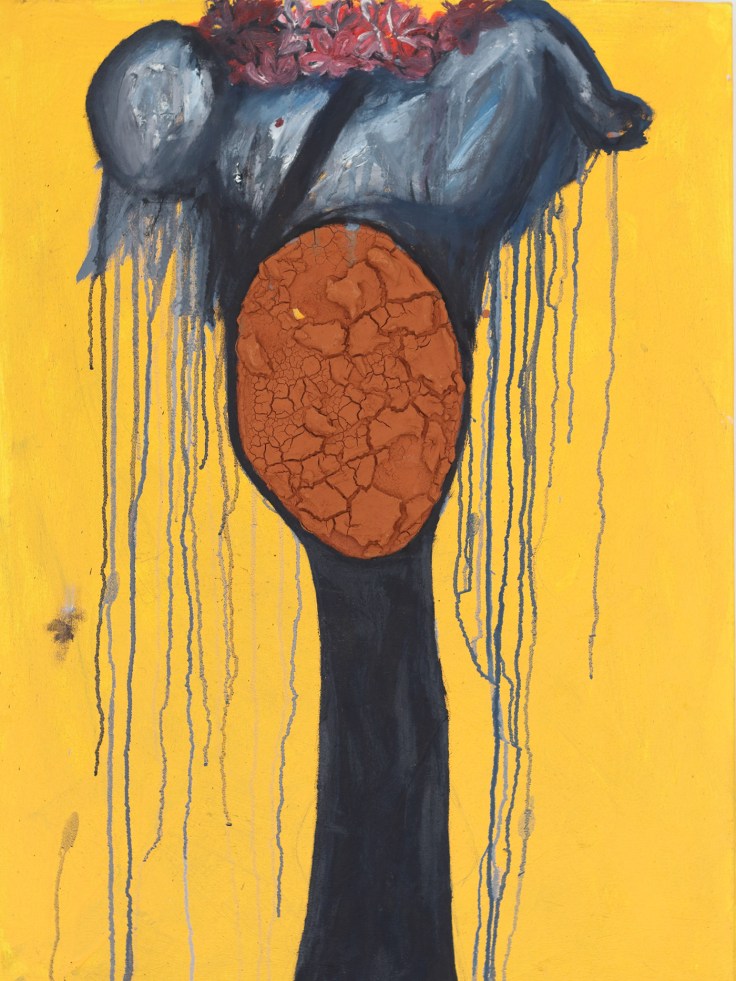
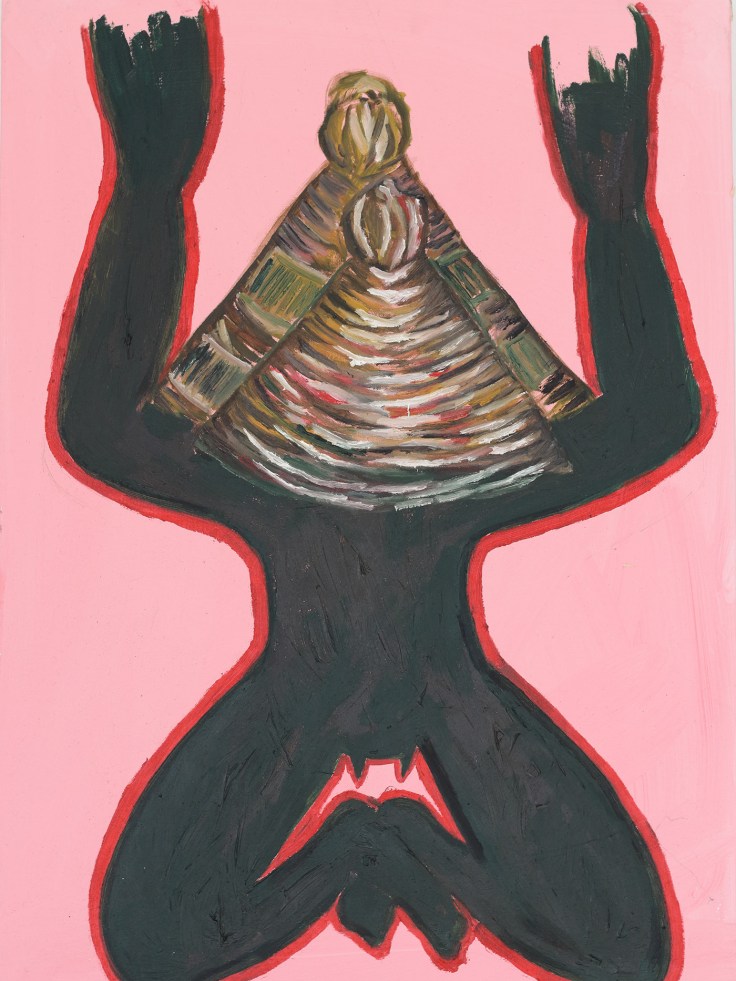
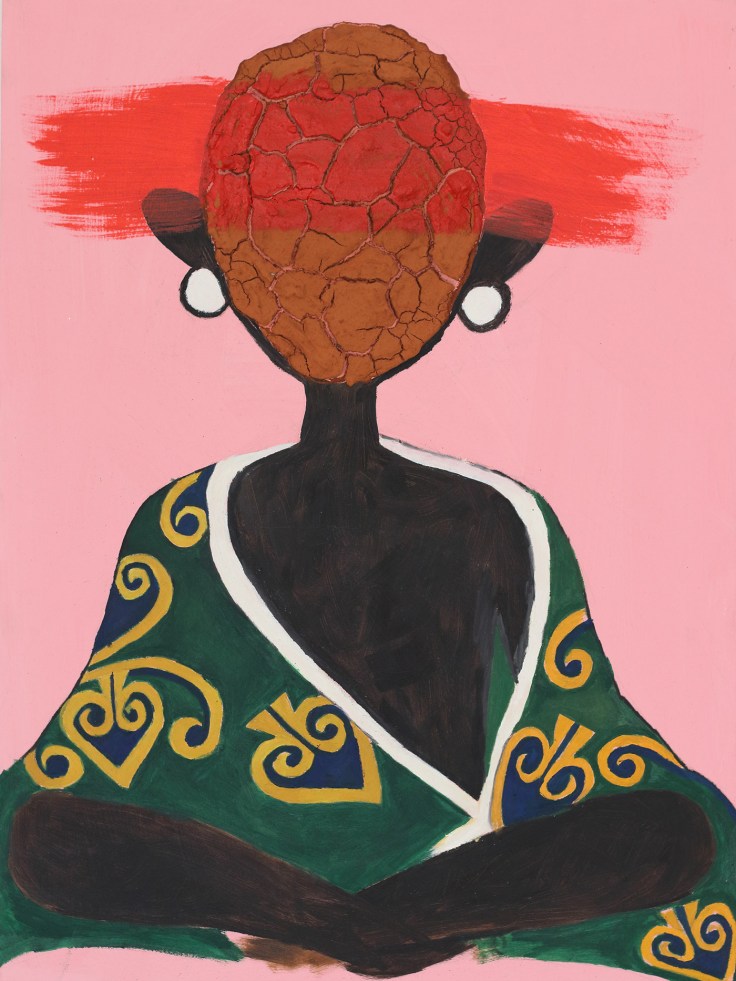
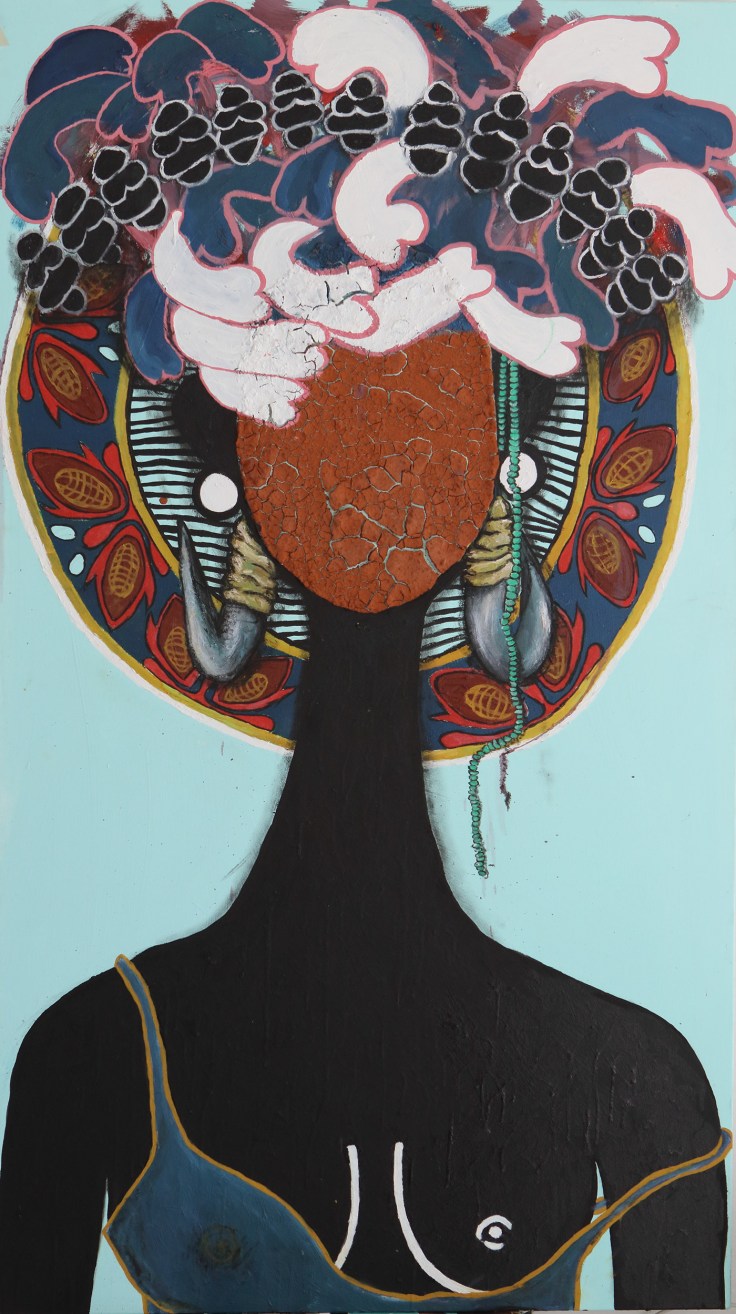
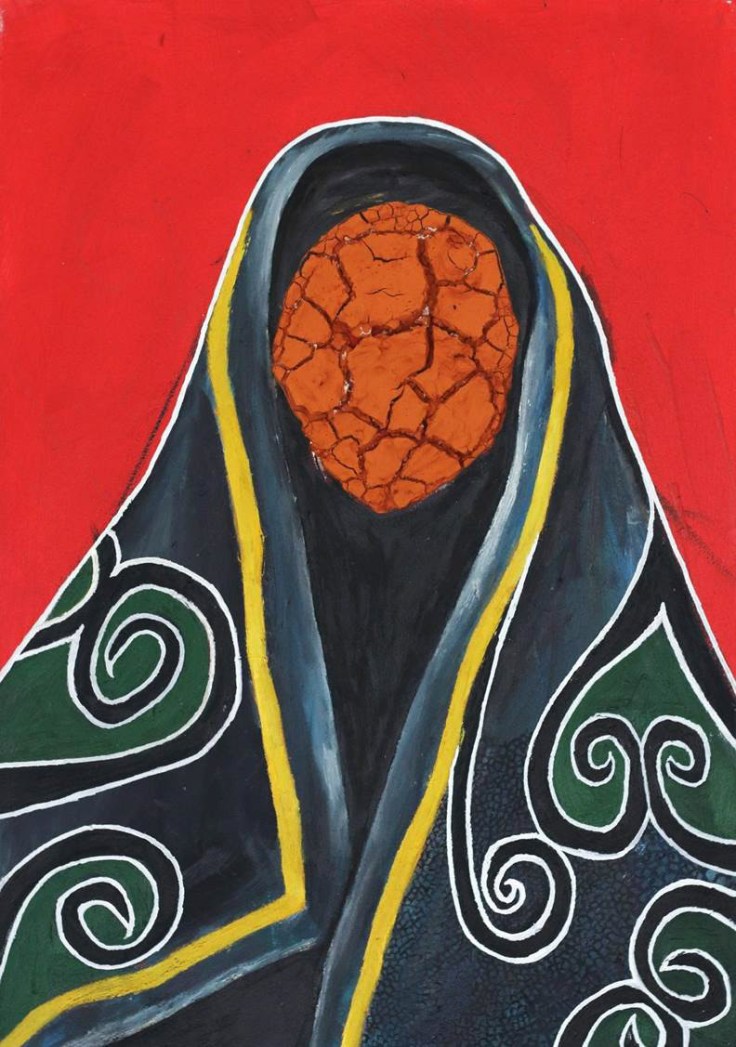
Her artwork has fascinated me for as long as I can remember. As with any artist, techniques and philosophical prerogatives change and develop to precision with the years. This change and evolution is usually influenced by a milieu of personal and socio-political and economical impositions or realities.
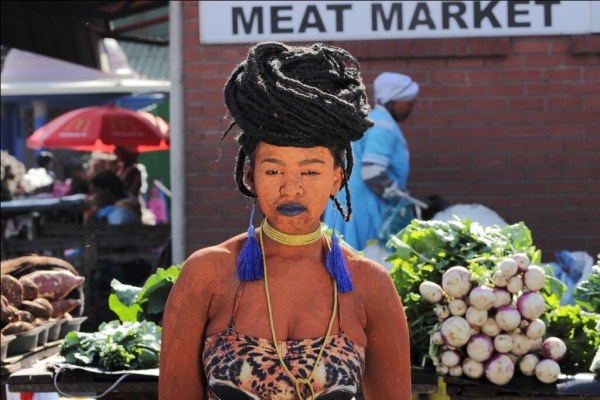
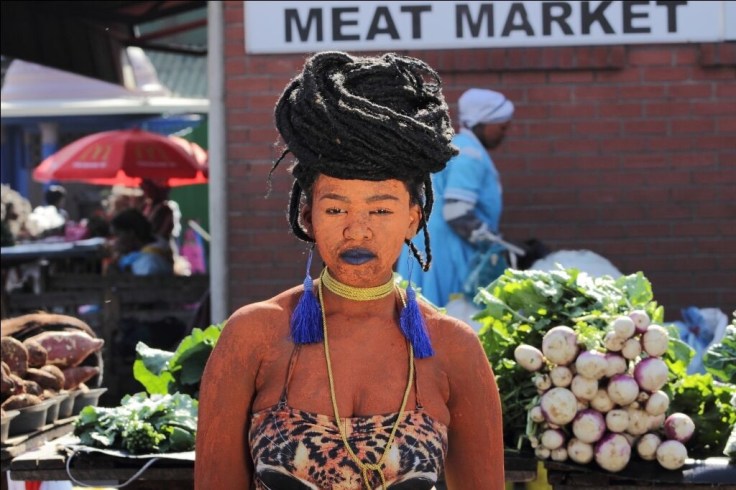
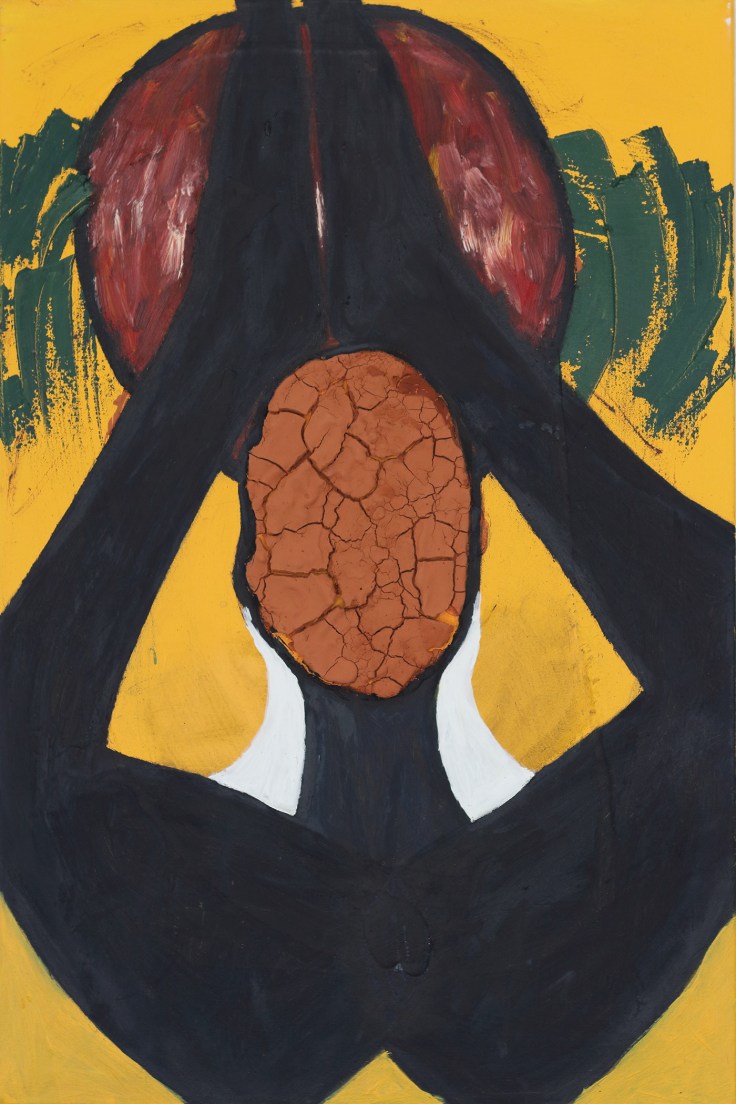
What is most striking, is her use of “imbola” (red clay) around naked women’s bodies or faces including her own. The use of red clay in Nguni cultures has spiritual and ritualistic implication. It is used by newly initiated sangomas, and in Xhosa and Sotho cultures it is used by young initiates returning home from circumcision school. It symbolizes rebirth and is also used as a fortification against exterior forces that may seek to harm the still fragile spirit or soul of the initiated/newly born. In this transformation one undergoes a rite of passage in which they shed old skin and unload old baggage in order to become anew.
I find Selloane’s work to be both a seduction and a vexation of the mind. It seduces your senses, allows you to speculate on its meaning, its intended message and then vexes your intellect, because just as you think you have it pinned down, such as the abyss it is, it gazes back. It is therefore always better to ask the artist herself.
What, if anything, informs your process if you have a process?
I start by a voice recording my concepts. Then conduct my research while I sketch, before transferring to the canvas or performance piece.
If I am right, what fueled the transition from your earlier traditional work towards the abstract use of imbola?
Earlier in my work I managed to get caught up within the politics of the industry, I was too young to know who/how/what. Then my paths lead me to fashion and styling space for a good 4 years. It was a deliberate move cause I felt my concept and work were bigger than me at the time and was not mature enough to articulate them as I can right now.
So when I returned to the Visual art industry I was less fearful of portraying the pain and spiritual conflict I was dealing with. I started to include my personal traumas of physical, psychologically and spiritually displacement as a Basotho woman. I am now acknowledging my purpose; I have started to question culture, family dynamics. I have made sure I am releasing and unlearning of the old, that is where the use of red clay came from. I am becoming.
Traditionally Imbola has very specific uses. What does it represent in your work?
My body of work speaks loudly about personal cleansing, dislocation and relocation while investigating the gender roles within the cultural boundaries of a Sotho woman born in KwaZulu-Natal. As you know in our culture ibomvu has been used as a representation of becoming used for spiritual and physical purification.
In the past 4 years I have also seen you begin to venture into performance, just as much as you paint. What inspired this shift?
I started painting to tell stories, whether the stories disturbs or comfort my audience that was not my concern. I started performing in 2017 by invading public spaces, so the shift was inevitable. I feel before my paintings start relating socially or politically they start with me, my experience, my subconscious mind, and my spiritual connection with my ancestors. I paint from pain which it’s something I’ve been avoiding to admit. It became a natural move for me to start performing, my heart became so heavy and I wanted to heal, I didn’t feel I was doing justice to myself by only portraying painful experiences. I wanted purge and I did that through performance. Performance for me it’s where I allow the public to engage, I become vulnerable in my healing, I allow them to go on a journey with me.
The performances I have seen carry very ritualistic injections, do you not fear to delve into the spiritual realm. As you know, if you gaze at the abyss for too long it gazes back…
Whether it’s a painting, installation or performance I rely a lot of on shifting energies. So yes, I am aware my work carries imoya. My late grandmother was Umthandazi (spiritual healer) when she was younger and my mother is blessed with a gift of premonitions through dreams and heals through prayer. Through years of creating I’ve realized I’ve used myself as a subject and a conduit or vessel between the two worlds. I’m very much aware I am spiritually sensitive being. Currently it’s something I struggle with understanding fully, but it’s an energy filled journey I’m not really sure where it’s taking me.
Kurt Peinke is one of Durban’s most iconic and prolific musicians and producers. Since he was very much a part of Marques Mkhize’s growth as an artist (click here for the full story), we decided to ask him a few questions to bulk up the Marques Mkhize article. Kurt’s interview came out so well, we decided to make it a stand-alone Q & A.
Kurt is a person who has achieved a fair amount of success with his pop/rock/rockabilly outfit, City Bowl Mizers. After their breakup a few years ago, Kurt has been living in both Cape Town and Mexico City respectfully and has written and fronted for bands such as Young Hands (Cape Town), Enter The Mirror (Mexico City) and Dead Lizards (Mexico City).
A teacher by trade, he has decided to carry on pursuing music for the passion. However, this hasn’t stopped the man from rubbing shoulders with some of the biggest names in central American music, as well as opening for bands such as Clap Your Hands and Say Yeah.
We caught up with Kurt over email, and asked him questions that sent him down memory lane. Giving Aweh.Online readers a clear path to his introduction into the pop/hip hop/rock ‘n roll music scenes of both Durban and Mexico City.
1. Firstly can you give me your name, age and what you do for a living?
Kurt, 34 years. I am a geography teacher.
2. So you played in City Bowl Mizers and a couple of other successful bands how did you get into music?
On tour with City Bowl Mizers – photo by Kevin Goss-Ross
I’ve always been listening to music since I can remember. My dad was in some pretty cool bands before I was born and we had it everywhere! The house, the car and the garage where he worked on his motorcycles. I got into playing music after seeing my close friends ripping it up in a clubs and societies meeting, it was called the “pit club”. I lost my shit and knew that I wanted to be in a band right there and then.
3. How did you get into hip hop music?
Man, I can remember it clearly, I was 14 and knew the run of the mill; 2Pac, Biggy and Snoop, still love all that but it was when I heard Wu-Tang Clan during a show and tell in English class. This dude played the song “Tearz” and I was so into the sample of Wendy Rene’s “After laughter (comes tears)”. It was discovering old and new music at the same time. I later learned that RZA used all sorts of samples, even one where he took a bite of an old Peter Pan record.
4. How did you first meet Marques?
Marques was hanging out at a studio/ rap boutique called “Gangster Culture” up the road from my parent’s house. I was walking past to get a loose (South African slang for a single cigarette) from the Engen garage and he was standing in the driveway of the place with his crew. I was a little intimidated by their presence, guys with chains, tattoos and gold in the teeth. They were really nice and so was Marcus! They invited me inside to check the place out and Marcus was kind of like their ambassador showing me the music they were making there. The music was sick! Tough beats and chorus’s which was Marques’s specialty. He could rap and sing which was impressive. They were still putting his voice on auto-tune though which was the sound back then, and still is I guess.
5. How did D’urban Knights and the K-Bomb form?
The orginal D’urban Knights line up – photo by Grant Paine.
Marques and I hung out more frequently and between University and gigging with the Mizers he would come over to my bedroom studio which was pretty basic at the time. The first song we recorded was Banana Clip, He started with the lines “What you know about rap? my Rhymes are laced with crack, so strong you get a fucking heart attack!” He wanted two other guys on the song, Viv AKA Breezy V and Genie, they were all killing it. The K- Bomb was something that transpired from D’urban Knights down the line.
6. Tell us a little bit about Marques his character and what was it like working with him?
Marques was hungry, he had the attitude and anyone he could call out as being fake or arrogant he would fucking cut them down to size real fast. There was this other rapper on the scene getting a lot of attention his name was Princeton and Marques asked him if he was named after the cigarette, getting clever with the owe. He could also take it though, some kid he was burning turned around and tuned him “Oh ja! Where’s your tooth bra?” We knew what he was up to. On the microphone he was like a dog barking at the gate, it would be soaked in spit and bad breath, but the takes were great and had power.
7. What is the difference between being in a band like the K-Bomb or D’urban Knights compared to being in a band like City Bowl Mizers?
They were completely different, I was experiencing a lot of success with the Mizers and we were playing some big gigs. D’urban Knights and the K- Bomb were much smaller outfits and the shows were happening in the cracks of the scene. It was much easier to hold a band together like the Mizers, we were family and close. But with D’K shit was always spiraling out of control. Marques was excessive with the jol, showed up to gigs fucked and sometimes didn’t show up at all, the guys were mega pissed about that. Genie left and found God after being arrested and I never heard a word from the guy again, not a word. Viv liked the jol but he was also focused in a LL Cool J kind of way, we both had the same drive and wanted to be a little more serious so that’s how the K-Bomb happened. We were all still tight but that just all fizzled out, unfortunately.
8. How is Mexico City treating you? What projects are you involved in there?
Enter The Mirror live in Mexico City – photo by Raúl Campos.
Mexico City is big, and like LA there’s something for everyone. It’s heavily populated and so is the music scene. Nonetheless well established, Mexico City gets all the bands that tour the States and most the bands here are heavily influenced by music from England. There is a crazy Elvis like obsession with Morrisey; people cry, people faint and he acts like a dick. He recorded at a studio where a good friend of mine worked at and he didn’t want to see any of the staff, a last minute request. They all had to cram in the basement while he went upstairs to lay down some vocals. Apparently, his manager yelled at everybody. Told the producer and the engineer to take off their leather gear and shit. Crazy! Anyway, I’ve had the pleasure of recording at that very same studio with my band ‘Dead Lizards”. it was fucking expensive and it’s going to take a long time to release everything but I also have another three-piece band called Enter the Mirror which has taken a more affordable route in home recordings etc. I’ve been teaching at an international school here to stay financially sound so that I can enjoy my music. Music hasn’t paid in a while but I do it for fun you know. The fun runs out when you make your passion your primary focus in life and your financial dips make you hate what you love.
Kurt recording with Dead Lizards at Panoram Studios – Mexico City.
9. Tell us a bit about Durban, the scene there, the negatives and positives and general vibe of the city?
Durban is fucking sick, it’s a paradise and the variety of cultures make it one of a kind. The only problem it’s an old age home and a gym at the same time. The live gig scene has been put on its knees over and over by the cops or conservative property owners who want no part of it. But we will always have The Winston! Long live that place and the friends that have kept it going through the ups and downs.
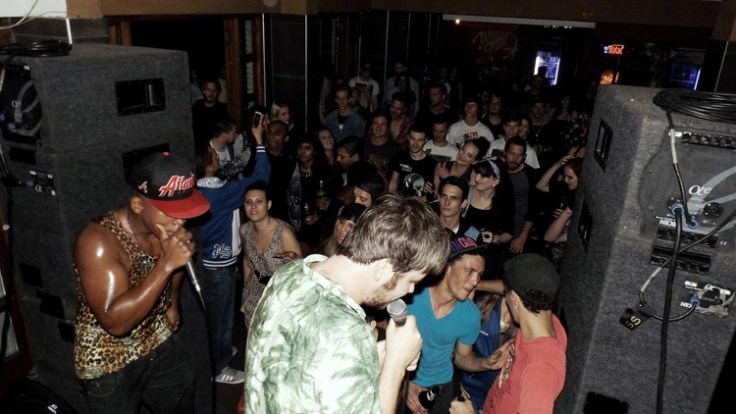
The K-Bomb live at The Willowvale Hotel.
10. What attracted you to someone like Marques in the first place?
He was really funny and was great at impersonating people, he could give Trevor Noah a run for his money!
11. Any interesting stories about the Durban hip hop/punk/rock scene?
Yeah, for a while the hip hop scene and the punk scene worked well together, everybody liked to get pissed and have a good time.
There was this one time where we did a show with D’K at an Irish pub called The Jackie Horner and mid-gig, a gnarly fight breaks out! A friend of ours smashes a beer draught in this dudes face and that was that. Our first or second gig, great start.
It was really naturally integrated, supportive and complimentary at the same time. There were some pretty cool Dj’s like Bob Perfect, Fuego Heat, Ballie Mike, Rocco and the Nut-Scratchers to name a few. they all played really good music of all genres and people could be dancing to Carly Simon’s “You’re So Vain” and the next thing “Still Dre” is going down nicely with a cold black label!
12. Any interesting stories about Marques?
We all went to a festival called “Spogweni Fest”, with a fucked up name like that you would already know that it was a proper flop. Anyway, it was a gig in support of raising funds to help combat rhino poaching. Marques went up there and shouted out at the crowd “Fuck the Chinese for using rhino horn to make their dicks hard!” Right in front of families and kids. It was like a movie, absolute silence until someone shouted: “Yeah, Fuck that shit!” Then we went on to play a song called “We gonna fuck shit up”. You can imagine how the chorus went.






 Aweh Online