“It’s perfectly logical to me that surfing is the spiritual, aesthetic style of the liberated self, It’s the metaphor of life to me: the highly conscious life. Think of the tube as being the past – and I’m an evolutionary agent – and what I try to do is to be at that point where you’re going into the future, but you have to keep in touch with the past,” -Timothy Leary
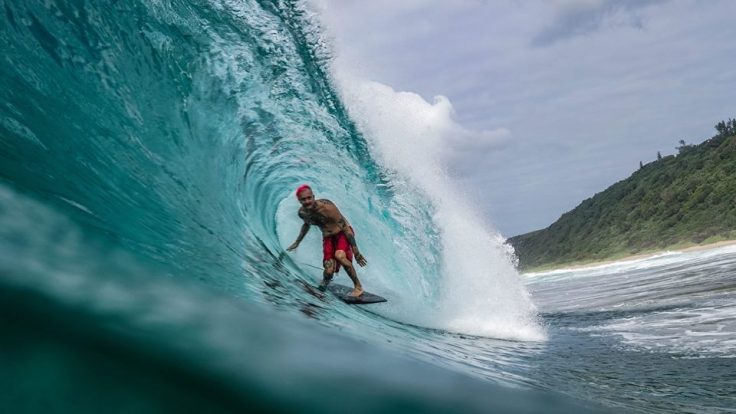
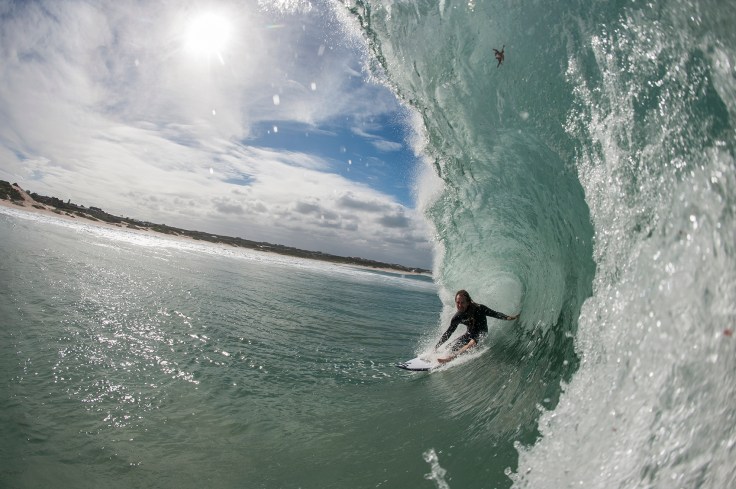
Heading towards the future, in touch with the past. – photo by Darren Sims
Towards the South of Durban, lies a hazardous sea of trucks and menacing factories and warehouses, bellowing smoke of noxious venom. A dirty harbour can be seen just after these views of the apocalypse, and just when it seems to end, a knot of endless unused train tracks traverse over roads, sugar silos and industrial containers, which slowly turn into labyrinths . Once you have made it through the madness, one will find The Bluff, a place known for various idiosyncrasies, and for being somewhat of an oasis right on the edge of all the chaos.
Besides for the much needed respite from the remnants of Durban’s “industrial revolution”. The Bluff also has some of the best waves in the country. As far as surfing goes this small seaside suburb of eThekwini needs no introduction and neither does Ricky “Bobby’” Basnett, one of the areas most well-known and interesting surfing personalities. In recent years, Ricky has made the transition from being one of South Africa’s leading international surfers to becoming one of the countries’ most interesting free surfers. Aweh, caught up with Ricky to see what he’s presently up to.
1. Firstly can you give me your name, age and what you do for a living?
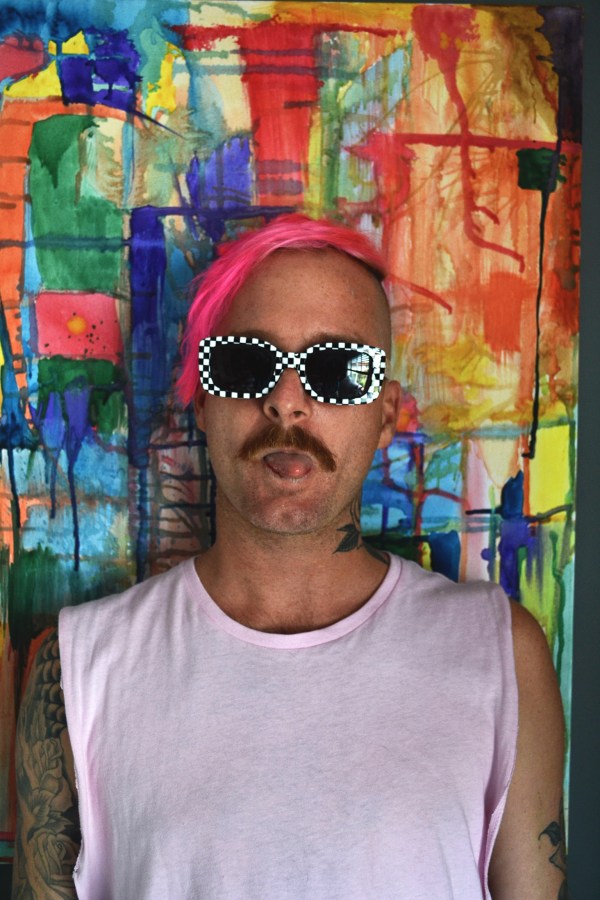
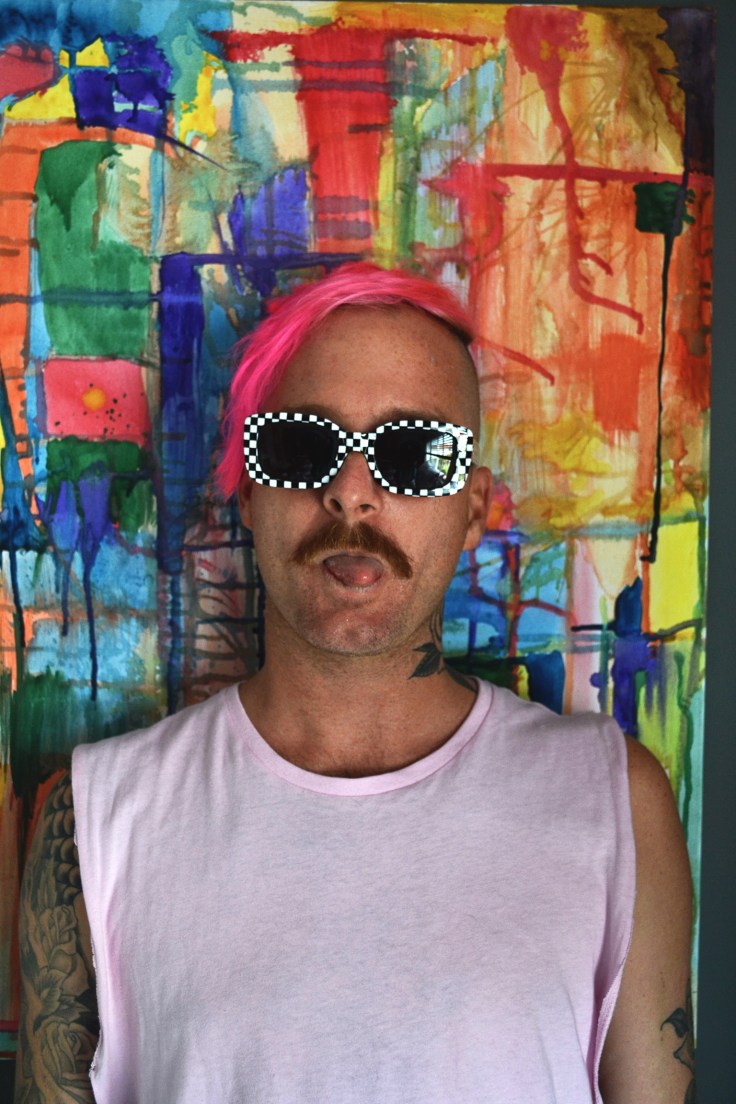
Ricky Bobby , 33 , freesurfer
2. Tell us about how you got into surfing and when you started surfing?
Shit I think I started surfing at like 6 years old, my dad would take us down to Addington and we would just jol in the foamies. I hated having to get pushed into waves though so I kinda gave up for a year or two. Played tennis and cricket and all types of other shit until I took it up again at about 8… been on a board ever since!
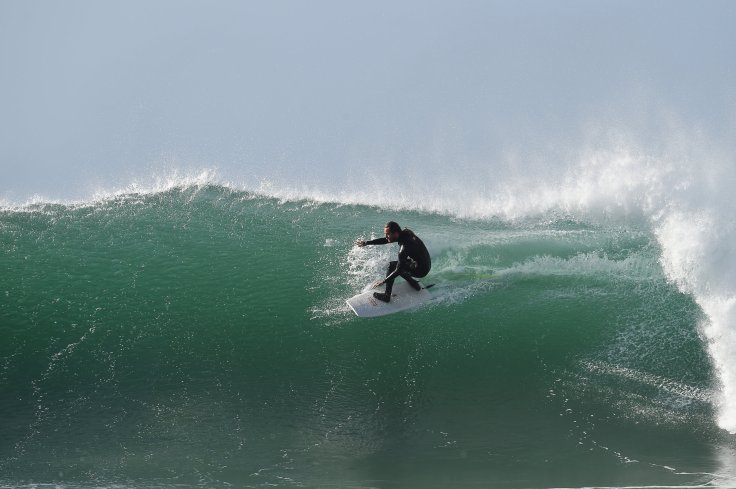
Image by – Sacha Specker
3. You live on the bluff, which seems to be a very fiercely local place, what was it like growing up there and still living there today?
Ah man I fuckin love the place! It’s so close to town but feels like its own little island, full different breed of people here. It might not have the insane localism that it used to, but I think the wave has always been its own protection. When the Rock is over 4 feet there’s few people who can handle it properly. We’ve always been the siff little stepchild of Durban, and its just the way i like it. You hang out here and its just people going about their own shit, no pretentious bullshit or cliques you know?
4. You’re now a free surfer, yet spent a number of years on the tour, what was that like? How does it compare to free surfing professionally and what do you prefer?
Yeah I spent the better part of my teens and twenties competing and traveling , it was a pretty crazy ride! I started competing internationally from like 13 years old, and back in the day the tour was just a wild jol. It was like being shoved into adulthood. I grew up pretty quickly, you really had to hustle with the weak rand. Sleeping in some of the worst spots imaginable and eating what you could afford. I loved it! But the tour isn’t just traveling to exotic locales, you’ve obviously gotta compete too, and that’s the part that caught me in the end. It kinda just sucked the fun out of it, the whole reason I started surfing in the first place you know? It really fucked me up, I was earning amazing money and travelling the world but I hated it all because it all just felt so fake. I became an alcoholic and addict because I was so depressed doing what I was doing. I had this constant need to mask what I was really feeling inside. I couldn’t stand the pressure, I hated having to surf to a certain criteria. I was just looking for some freedom from it all. I ended up drinking and jolling in a bad way for like ten years until i came right. Nowadays it all just feels right, the color is back in my life and i get to do what i love! Surfing, drawing, tattooing, shaping some boards. Creativity saved me in the end!
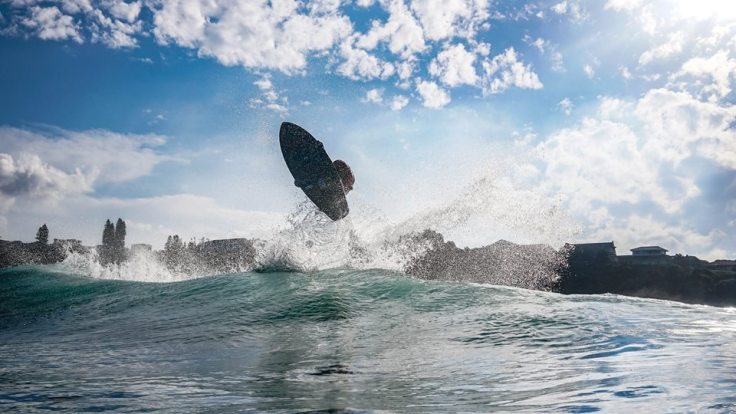
Image by – Sacha Specker
5. So you also are a Durban/KZN boy, what is the city like? Any interesting stories and how does it compare to the rest of South Africa and the world?
Real African energy! That’s KZN to me… there’s nowhere else that has the same buzz, the rawness of it all. It’s colorful and vibrant and hot and everyone is pretty chilled out. I reckon Rio comes the closest .. they also both have this dark underbelly, which keeps you on your toes. I don’t know man, where else can you surf ten foot pits all morning then go smash an incredible chow for like R20 bucks? Its heaven!
Image by – Leigh Vermaak
6. Give us a little more insight on life as a professional surfer and how it can sometimes take it’s toll?
I think the toughest part of being a pro surfer is trying to stay relevant .. I’ve seen so so many incredible surfers just fall by the way side cause they couldn’t keep up with the times. Social media has completely changed the game. Nowadays entire contracts are based purely off online stats, so yeah, my life revolves around content creation and shredding. You really gotta be constantly pushing to find something new and exciting for viewers.
7. You have quite a number of tattoos and you are now getting into a more creative side in hand poke tattoos and drawing, how does that compare to surfing? Surely there is a link due to the fact that they are both art forms in a way? Are you considering a career in art and tattoos?
Ja, its that freedom of expression that I love about both surfing and art, you can literally do whatever you want! From the beginning I’ve always wanted to be the guy drawing different lines in the water, keeping people guessing you know? And I think that just naturally evolved into drawing real lines on paper haha.
8. Are there any other creative outlets that you are pursuing at the moment?
I’m super into photography and film too, I’ve been doing a bunch of work with Justin Mcgee lately . Street photography is my fav, just cruising and finding moments amongst the chaos? Would dig to get more into documentary style clips, there’s so many different cultures here, each with their own unique stories. I would also dig to start doing more cross genre clips, getting guys together from skate, art, bmx, music etc. I love seeing and hearing different perspectives on creativity.
9. What do you think makes Durban and The Bluff unique and what has kept you attracted to the city for so long?
There’s just so much going on here, and I’m not talking about the nightlife.. The north and south coast, the mountains, so many different cultures, you can travel an hour in any direction and feel like you are in a different country!
10. You’ve lived in a few other places besides Durban, how do those places compare and how do the waves compare to Durban and The Bluff?
I’ll say this straight up, The Bluff has the most consistent waves anywhere I’ve been, and I can surf in front of my house , by myself, every day of the week. It’s fuckin paradise man! You can eat the best food ever on a shoestring budget, warm clear water and the place is just real as fuck. I lived in St Francis for a couple of years, and although its one of the most beautiful places in South Africa, I just always felt kinda out of place there. When i’m here on The Bluff I just feel like I’m with my people, like I can go to the shops with no shoes on and its totally chilled haha! Hawaii is amazing but crowded as fuck, Oz is super similar to here but its always felt too policed to me. You need to be a millionaire to live in Europe. So ja it all works perfectly fine for me this side of our planet.
Image by – Sacha Specker
11. Any other interesting stories from being on the road and from pursuing a career in surfing?
Fuck, surfing has taken me to some pretty wild places. One that always sticks out is a trip we did to Nigeria to surf this insane little wedge right off the harbour mouth of Lagos. Our first day there this guy put an AK47 to this lady’s head like 5 metres behind us. Thank god our fixer managed to calm the situation down but it was pretty fuckin scary. Same trip while at the airport on the way home we had to take our board bags downstairs to oversize. This big ass dude was behind me trying to hurry us up and when i got to the bottom there was this big pool of blood with drag marks into this dodgy little room and some other guy coming with a mop to clean it up. I didn’t ask questions and just got the fuck outta there as fast as possible.
12. Who are the people who have inspired you in life and surfing?
My parents for their insatiable work ethic, my daughter cause she keeps me fighting to be a better human. As far as surfing goes, Christian and Nathan Fletcher, Archy, Bruce and Andy Irons, Wardo , Frankie O , Dre Botha…I guess the common thread between these guys is that they all didn’t give a fuck and did it their own way…and they all did it with STYLE !!!
13. Anything else you would like to add?
Shit I think the best thing I’ve ever learnt is to always try approach anything you do from a place of LOVE and not FEAR. Also, you can always fail at something you hate doing, so you might as well go for what you love…
There was a time when everything in my life was about punk rock music, largely due to the fact that it always seemed to be the soundtrack to the numerous surf and skate films I devoured as a grommet (surf kid).
My introduction to Californian surf and skate punk rock led me to discover another genre called “ska”. At the very impressionable age of 15, I was duped by the two other “punks” I knew at school into believing that “ska” was a bastardised hybrid of punk and reggae. Played predominately by bands such as Less Than Jake and Reel Big Fish. After further investigation I discovered that “ska” was paramount in helping conceive a lot of popular Jamaican music as well as being the predecessor to reggae and dub.
I started to enjoy “ska” and the more I got into the genre, the less I liked the American ska-punk variety. I liked the ska from Jamaica, and if it wasn’t from Jamaica it had to at least sound as if it was inspired by the island nation.
One faithful day in the music store (somewhere in the late 90’s when people still bought CDs), I surreptitiously stumbled upon an album originally pressed in 1979 by a band called The Specials. I had heard of this band before, and soon after reading the liner notes in the album after purchasing it, I discovered that none other than Elvis Costello (songwriting 70’s icon) had produced this fantastic piece of music.
I’d later learn as my opinion of ska/reggae and dub became more informed, that this album marked a turning point not just for British music but also for racial unity in the UK as well.
The Specials were part of a movement that they had a huge role in creating – that movement was called 2Tone. With the introduction of this new musical revolution came a record label with the same name.
“2-Tone was conceived and aesthetically overseen by The Specials’ Jerry Dammers, and launched from Coventry. They released records by Madness, Specials, The Beat, The Selecter, ska veteranRico, and later,the punk-funk ofThe Higsons. The bands featured black and white members on an even footing, which was still pretty unusual. They recycled Sixties Ska, injecting its tight-or-nowhere riddims with punk’s ragged energy and witty, direct socio-political lyrics that pulled no punches in stories about unfortunate characters that were half familiar and wholly believable”.-David LaurieJuly 18, 2016 (https://sabotagetimes.com/music/how-ska-2tone-woke-up-the-country)
So when I recently revisited the debut Specials album (circa 2018), after all those years, I couldn’t help but still hear the relevance behind some of the words, the relevance that could easily be imparted into a South African context some 40 years later. With lyrics addressing certain social dilemmas of the time.
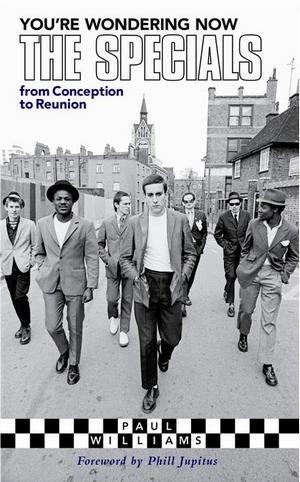
Punks’ Racist underbelly in 70’s England:
This image was originally posted to Flickr by nicksarebi at https://www.flickr.com/photos/34517490@N00/3332783357 . It was reviewed on 25 January 2010 by FlickreviewR and was confirmed to be licensed under the terms of the cc-by-2.0.
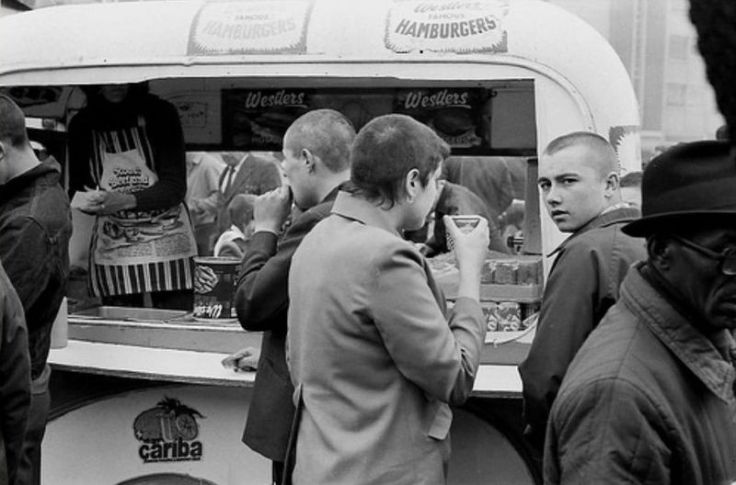
Research soon became vital to my existence so I delved, deeper than ever before into my obsession with “punk” and its various ideologies and movements. Often my readings led me to the blatant racist activities and ideals of some of the punk related sub-genres which were prevalent during 1970’s England.The word ‘skinhead’ started getting thrown around, and an organisation called The National Front was introduced into my vocabulary for the first time.
“Skinhead culture faded in the early ‘70s, but revived as a response to the commercialization of punk at the end of the decade. At the same time, many skinheads became involved in far-right and racist politics.Some factions of skinheads had previously been known to attack immigrants and gay people in addition to their usual brawling; now many were openly sporting swastikas and giving Nazi salutes. By the mid-1980s, the term “skinhead” had become synonymous with neo-Nazism, fascism and xenophobia”. -Alex Q. Arbuckle (https://mashable.com/2016/03/29/british-skinheads/#0FqepdiiMgqC)
Although skinhead culture wasn’t all about racism and white power, it seemed a lot of the rhetoric being thrown around just before the late 70’s was violently bigoted. And sadly there was a cloud of racism hanging over the British underground musical subcultures.
Bands such as The Specials were hell bent on changing this ugly part of the UK underground around the late ’70s. White working-class youth found themselves sharing space with Jamaican immigrants. Clashes started to happen, but with these clashes came the birth of something new, interesting and inclusive for British culture.
“Whilst some of the acts may not even have recognised it as such, having black and white musicians on the same stage was a political act in itself in the late 70’s. The decade had seen the growth of the British Movement (BM) and the National Front (NF) not just as political forces electorally but with boots on the ground as violence and extremism made its way onto the streets. The BM standing on an explicitly Nazi manifesto and including images of Adolf Hitler on their election material managed to secure over 300 votes in the Birmingham Ladywood By-election in 1969. Meanwhile rival far-right organisation the NF polled just under 200,000 votes in the 1979 General Election. Many of the early 2-Tone gigs were marred by fights and violence as far-right skinheads fought with black youth and anti-Nazis. Young people wearing the clothes, buying the records and associating with the 2-Tone scene were making a political statement against racism and for multiculturalism. The courage this took in many parts of British cities should not be underestimated. To underline this point, guitarist Lynval Golding was attacked simply for walking down the street in London with two white girls and had ended up hospitalised with 29 stitches in the head and neck”. -Graeme McIver (http://www.thepointhowever.org/index.php/culture/226-the-dawning-of-a-new-era-a-brief-history-of-2-tone-and-the-specials)
South Africa in the 80’s:
While The Specials started becoming a pop sensation in England, Europe and the world, South Africa was experiencing the dying days of Apartheid and the situation was reaching boiling point. Violence was rampant all over the country, and the rest of the world was starting to take notice of how bad the situation was becoming in South Africa.
“There was little change in the situation from the late 1970s to the early 1980s in South Africa. After the crisis of the early and mid-70s, the government’s ‘total onslaught’ had managed to suppress much unrest and had it under some measure of control. With leaders from the 1976 uprising either imprisoned or exiled, the liberation struggle did not move forward much. It was in this climate that anti-apartheid organizations in the country realized that they needed flexible structures and leadership to survive in the future, as well as have a mass movement focus. This would facilitate the continuation of resistance even when the government imprisoned major leaders. The obvious importance of unity was also acted on”. –https://www.sahistory.org.za/article/apartheid-early-1980s
How The Specials played a part in the anti-apartheid movement:
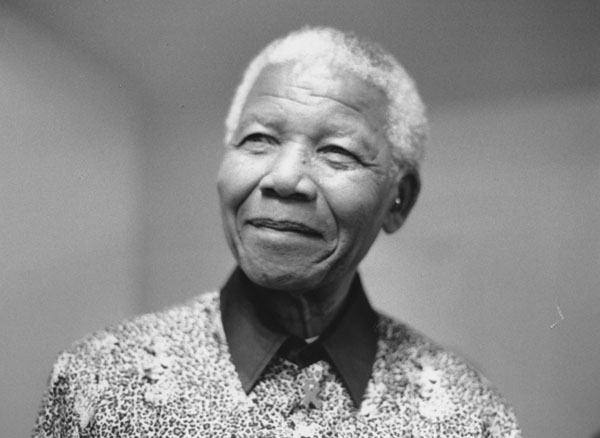
Finally, the world was becoming aware of the horrors of apartheid, sanctions started to be imposed, and people of notoriety were speaking up globally against the situation in South Africa. It was becoming widely unanimous that apartheid wasn’t good for humanity, and wasn’t good for the future of South Africa or the world.
This image, originally posted to Flickr , was reviewed on May 29, 2011 by the administrator or reviewer File Upload Bot (Magnus Manske) , who confirmed that it was available on Flickr under the stated license on that date.
In the year 1984, The Specials released a track to stand in solidarity with the ANC (African National Congress) and it was their way of showing their disdain for the unjust system in South Africa. The song was regarded to be a catalyst and a contributing message to enable the end of this plague that kept a country hostage for several decades. The song was simply titled “Free Nelson Mandela” and the lyrics were presented in a simple and understandable way to get the message across loud and clear.
Free Nelson Mandela – The Specials AKA (1984):
Free, free, free, free, free
Nelson Mandela
Free Nelson Mandela
Twenty-one years in captivity
Shoes too small to fit his feet
His body abused but his mind is still free
Are you so blind that you cannot see?
I said free Nelson Mandela
I’m begging you, free Nelson Mandela
Pleaded the causes at the ANC
Only one there in a large army
Are you so blind that you cannot see?
Are you so deaf that you cannot hear his plea?
Free Nelson Mandela
I’m begging you, free Nelson Mandela
Twenty-one years in captivity
Are you so blind that you cannot see?
Are you so deaf that you cannot hear?
Are you so dumb that you cannot speak?
I said free Nelson Mandela
I’m begging you, free Nelson Mandela
Free Nelson Mandela
Although it was just one song, amongst a myriad of world-wide protests against the oppressive regime, it seemed to become somewhat of an anthem for the anti-apartheid movement globally, and this was also heightened by the fact that the song became a top ten hit.
CNN would later reflect on this jivy pop-ska anthem which saw the band take on a more South African groove in the arrangements and composition. It could even possibly be compared to similar South African bands during this period, maybe this statement will be met with contention, but Mango Groove comes to mind. Especially with the layered and harmonious back up chant of “free, free, Nelson Mandela”.
“The anti-apartheid message was serious and heartfelt but the song that alerted many around the world to the injustices of the South African regime could not have been more upbeat. “Free Nelson Mandela” was a Top 10 hit in the United Kingdom for The Special AKA in 1984, and it instantly became the unofficial anthem and slogan for the international anti-apartheid movement”. – Peter Wilkinson 2013 (http://edition.cnn.com/2013/12/06/showbiz/south-africa-mandela-protest-song/index.html)
One of the founding members of The Specials was made aware of the wrongs that was happening in South Africa in 1983 after he attended an anti-apartheid concert. The keyboardist and songwriter had never even heard of the man before this period.
“The composer of “Free Nelson Mandela,” Jerry Dammers — the founder of the multiracial English ska-punk band The Specials, later renamed The Special AKA — admits he knew little about Mandela before he attended an anti-apartheid concert in London in 1983, which gave him the idea for the song”. — Peter Wilkinson 2013
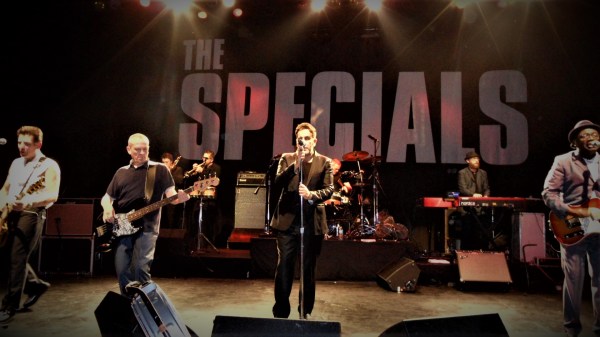
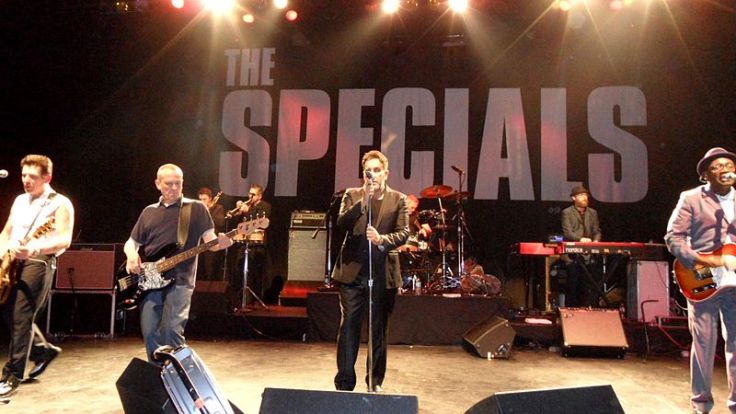
The Specials in 2019 and the release of their new album Encore:
A few weeks or so ago, an image on my Twitter feed popped up : “New The Specials Album out tomorrow”. It goes without saying that I was excited, it’s incredible to see a band still putting out music almost 40 years after they started, and their sound and message is still relevant. I quickly searched YouTube to see if I could find a song and I was pleasantly surprised by the first single “Vote For Me”, which is a politically charged ska-anthem which music journalists and fans say, is in a similar vein to their 1981 hauntingly sublime hit – Ghost Town.
The song Ghost Town would later be praised for its accuracy in documenting the devastation and desolation of Margaret Thatcher era Britain, as reported by the BBC.
“Few songs evoke their era like the Specials’ classic Ghost Town, a depiction of social breakdown that provided the soundtrack to an explosion of civil unrest. Released on 20 June 1981 against a backdrop of rising unemployment, its blend of melancholy, unease and menace took on an entirely new meaning when Britain’s streets erupted into rioting almost three weeks later – the day before Ghost Town reached number one in the charts”. -Jon Kelly (2001) –https://www.bbc.com/news/magazine-13780074
In Vote For Me, the message of protest music that has spanned decades remains true, that politicians do not have our best interest at heart, with lyrics that could very well be a call to arms, in a similar vein to “Free Nelson Mandela”. Yet this time around it seems the message is personal and a lot closer to home.
You’re all so drunk on money and power
Inside your Ivory tower
Teaching us not to be smart
Making laws that serve to protect you
But we will never forget that
You tore our families apart
Except taken from Vote For Me – The Specials – Encore 2019
A new kind of activism with “10 Commandments” the second single on Encore:
Essentially, The Specials started out as a band who paid homage to a lot of Jamaican music during the 1960’s. Their debut album was littered with popular Jamaican classics, with a new edgy Coventry punk rock undercurrent. Its what gave the band it’s power.
However, in any culture it’s necessary to take a conscious look at the past and readjust things to suit a contemporary message, yet also make right some of the wrongs of the reggae subculture. Bob Marley preached love and unity, yet it’s hard to ignore the ugly sides of Jamaican and reggae music. It can often be soaked in patriarchy, misogyny and homophobia. Some of the biggest names in reggae have openly spread a violent homophobic message including reggae or dancehall public property such as Buju Banton or Sizzla.
“Jamaica has a bad reputation for anti-gay prejudice. This small island in the Caribbean has become notorious not only for its anti-gay laws, political rhetoric and murders, but also for its broad societal acceptance of severe sexual prejudice and openly hostile music.” -theguardian.com/commentisfree/2014/jun/06/jamaica-music-anti-gay-dancehall-homophobia
One of the genres’ most liked and respected artists is Prince Buster. But on a track from 1967 titled “The 10 commandments of man”, it’s clear after listening to the song that its soaked in sexist undercurrents. Even though you can hear the tone is light and the artist in question is using humour, it’s still cluttered with problematic or even violent themes, especially in the current political climate of the “me too” movement.
The Specials decided to do a remix of this classic yet controversial ska-tune, yet this time collaborating with 21 year activist Saffiyah Khan. Khan rose to prominence a few years ago, after a photograph of her bravely facing an English Defence League activist at a protest outside a Birmingham Library went viral.
“Horace Panter, bass player and founding member of The Specials, happily admits the Prince was a big influence on why he started things in the first place.”The band had done a cover of Enjoy Yourself and sampled Al Capone on Gangsters,” he remembers.”But Ten Commandments has not travelled very well, and from listening to it again it felt important to do a contemporary version.”The problem is our attempts ended up sounding like comedy versions of the song.”It led to the idea of turning it “completely on its head” by getting a woman to do the vocals – and getting Khan onboard injected real excitement”.- David Schaffer 8 February 2019
When the song was released as a lyric video on Youtube, the comments section erupted Many were praising the band for the message, yet some where utterly horrified.
“Great music! Lyrics are expressed as forcefully as Prince Buster did over 50 years ago…updated – Told by a woman with an ego-driven message too…she put PB’s version up for a great challenge…I think this Specials version is going to be remembered for decades” -KTWOA
“Shockingly bad… Disrespectful to Prince Buster r.i.p” -CAZCOUNTRY70
“Specials cashing in on neo liberalism…not edgy in the slightest just more of the same ….disappointed fan” -Dc Marvel
“The specials have really gone down hill, to have this wannabe feminist far left nobody singing for them is pathetic. The original Prince buster would turn in his grave if he heard this shit.” -snodds88
“Men offended in the comment section are either heteronormed straight white men born in a first world country within a privileged middle class family… or they’re completely blind”. -Maria Paula CB
True protest music creates contention and debate, and that’s exactly what 10 Commandments does. The fact that they allowed Khan complete creative control with the words is testament that The Specials are a band willing to bring new life to old traditions, in order to change perceptions and do something original.
Their multi-cultural message was met with equal contention and violence from white power groups like the National Front at some of the 2 Tone concerts of 1970’s Coventry. Now they are creating a stir on the Internet. Showing that even though the band is roughly 40 years old, they are still contemporary or even post-modern in their focused intent on sparking debate and conversation.
I’ll let you decide what you feel about both versions with the lyrics presented below:
The Ten Commandments of Man – Prince Buster – 1967:
The Ten Commandments from man given to woman
Through the inspiration of I, Prince Buster
One, thou shall have no other man but me
Two, thou shall not encourage no man to make love to you
Neither kiss nor caress you
For I am your man, a very jealous man
And is ready to lay low any other man that may intrude in our love
Three, remember to kiss and caress me
Honor and obey me, in my every whim and fancy
Seven days a week and twice on Sundays
Because at no time will I ever be tired of I-T, it
Honor my name so that every other woman may honor it also
Five, thou shall not provoke me to anger
Or my wrath will descend upon you heavily
Commandment Six, thou shall not search my pockets at night
Or annoy me with your hearsays
Commandment Seven, thou shall not shout my name in the streets
If I’m walking with another woman
But wait intelligently until I come home
Then we both can have it out decently
For I am your man, a funny man
And detest a scandal in public places
Commandment Eight, thou shall not drink, nor smoke
Nor use profane language
For those bad habits I will not stand for
Nine, thou shall not commit adultery
For the world will not hold me guilty if I commit
Murder
Ten, thou shall not covet thy neighbor’s dress
Nor her shoes, nor her bureau, nor her bed, nor her hat
Nor anything that’s hers
Neither shall thou call my attention to anything that may be for sale
In any stores, for I will not give thee anything but what
You actually need for your purpose
Those are the Ten Commandments given from man to woman
By me, Prince Buster
10 Commandments – The Specials words by Saffiyah Khan – 2019:
The commandments of I, Saffiyah Khan
Thou shall not listen to Prince Buster
Or any other man offering kindly advice
In matters of my own conduct
You may call me a feminazi or a femoid
And then see if I give a stinking shit
Pseudointellectuals on the internet
They tell me I’m unhappy because I’m not feminine
Failing to consider that I may be unhappy
Because it’s 3 AM and I’m in the depths of YouTube
Watching them… whining
Thou may catcall me on the street
But thou should take note that I’ll catcall you right back
To tell you that you look pretty sexy too in your joggers
Or your suit, or your new-found look of confusion
Girls should not turn on each other
Or use man-made ideals like paths
Don’t you realize that you’re only making a fool of yourself
When you ask… “Why don’t you wear makeup?”
Is that what it takes to impress a bloke
Whose brain is made up of promises of curvy size zeros
And anti-gravity tits?
Thou shall not tell a girl she deserved it
Because her skirt was too short
She walked home, streets lights illuminating her as a target
But she started it, because she looked at him
And he finished it ’cause he wanted to
And they’ll bring out her skirt as “exhibit A” before the judge
And she should have the right to say
“Thou shall not tell me what to wear
Nor how to wear it”
I shall not be the icing on your cake
And I shall not be the candy on your arm
But I shall be seen
And I will be heard
The commandments of I, Saffiyah Khan
Pseudointellectuals
Stay tuned for the album review of Encore coming soon to Aweh.online
This image was originally posted to Flickr by Mohammed Jaffar at https://www.flickr.com/photos/29442760@N00/9267390478 . It was reviewed on 11 July 2015 by FlickreviewR and was confirmed to be licensed under the terms of the cc-by-sa-2.0.
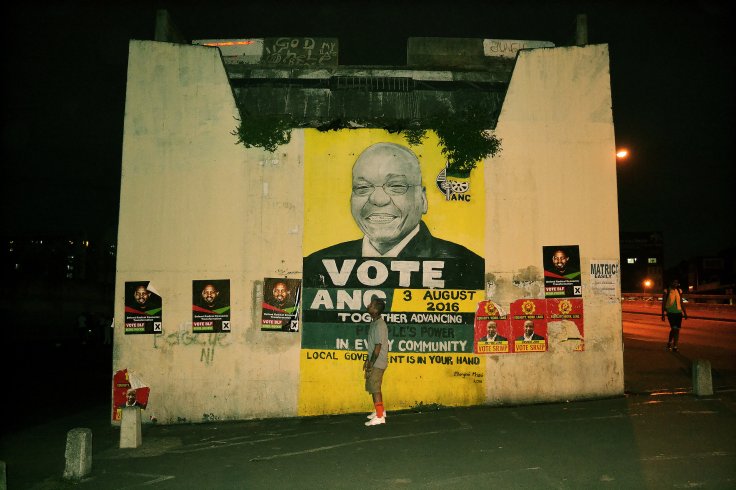
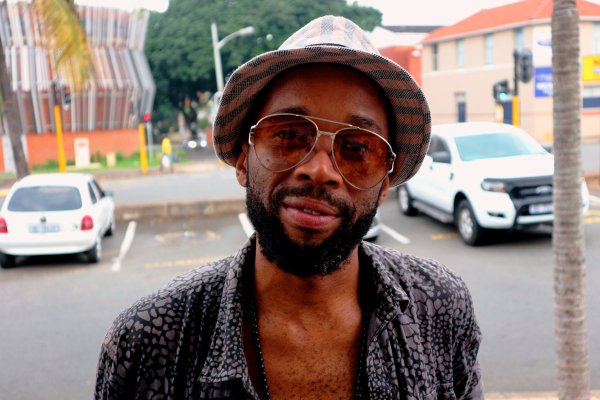
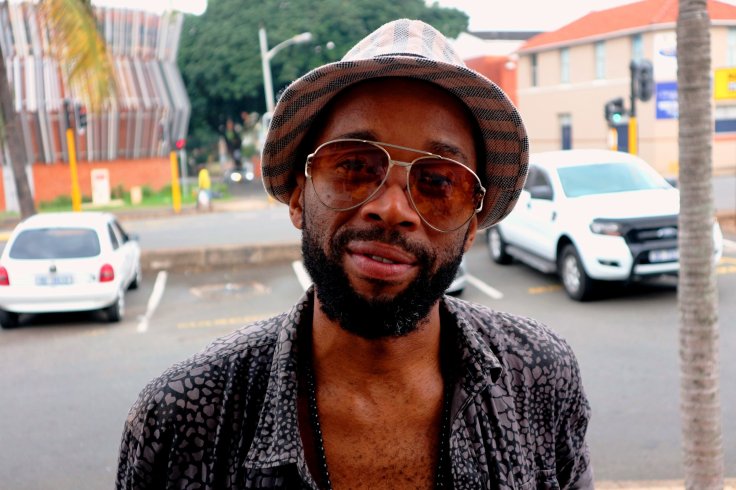
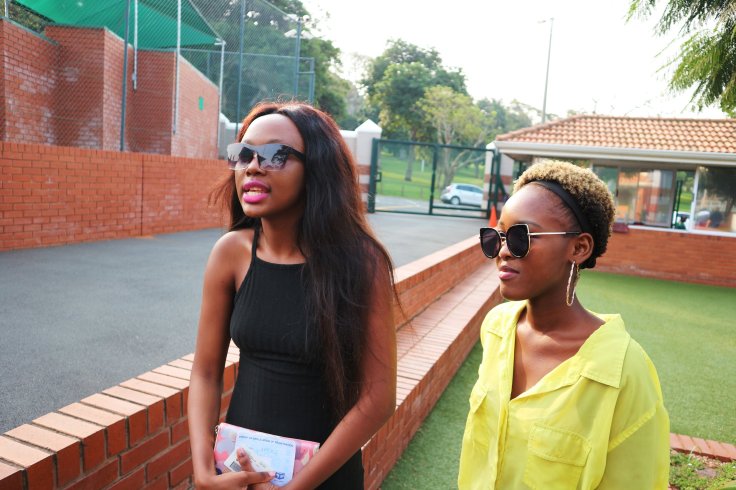
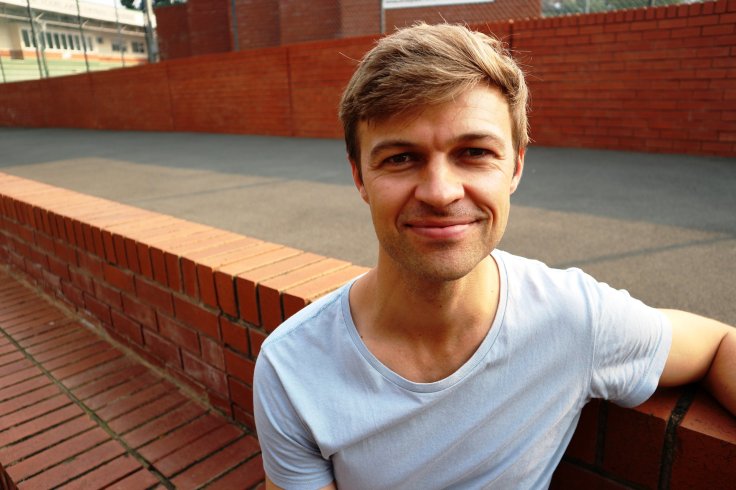
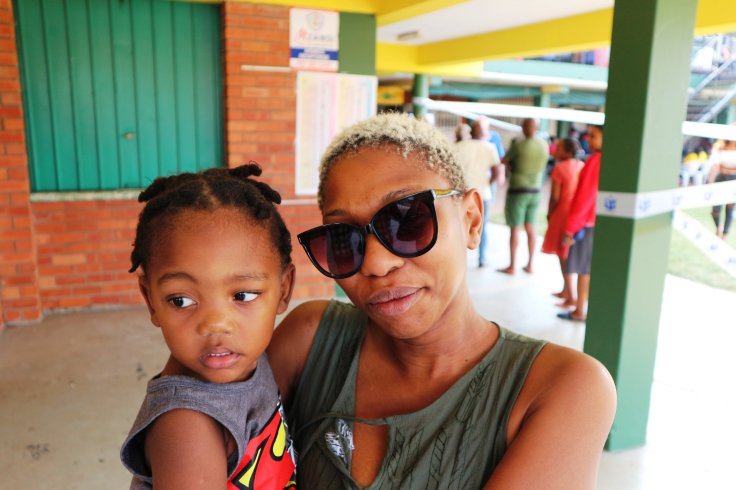
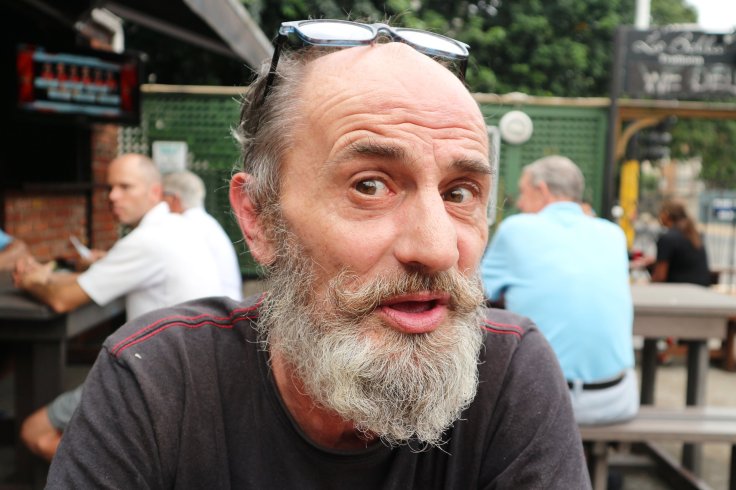
Yesterday was voting day in South Africa and we thought it would be a great opportunity to find out a few opinions at voting polls and on the streets. Below are the opinions of a handful of individuals who decided to vote and not vote. Thanks to everyone who participated.
ANDRE PHEWA – 38 YEARS OLD – VUMA FM RADIO PERSONALITY
Photo by – Llwellyn Juice Makhanya from Fotobooth .
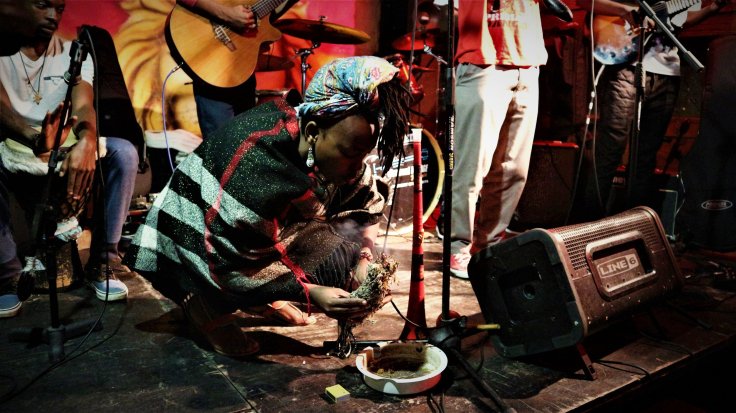
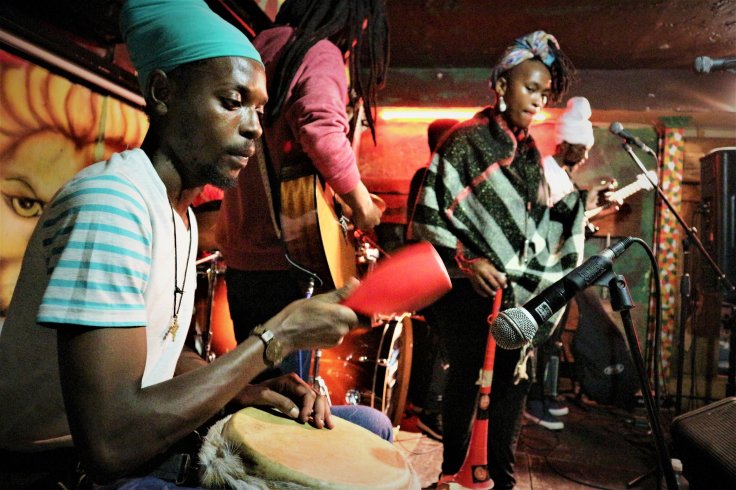
With a fiercely independent approach to the music industry and a sound which focuses on unity and healing instead of hatred and division, The Sun Xa Experiment is poised to become the next big thing out of Soweto, following in the footsteps of other “Afropunk” bands from the area including BCUC (Bantu Continua Uhuru Consciousness). Since 2014 they have been mixing the chemicals in the groove laboratory to develop a sound, feeling and live show which is entirely their own. 7 extremely unique individuals make up the band, where traditional rock and roll instruments collide, with deep-rooted, African drums, chants and a ritualistic spirituality that creates a culturally fascinating experience, which incorporates, other elements of the performing arts into the show. Which is evident in the delivery and aesthetic of the band members and performance. Watching a Sun Xa Experiment is almost like watching an oil painting being painstakingly made in real time, right before your very eyes. Its pure art and the dedication and commitment of every member is clearly evident every time they get up on stage.
Photo by – Urban Nomad
However, with every successful act, there is a driving force behind the scenes, pulling the strings and pushing the project forward. Lebohang More is that individual in Sun Xa, and he has taken the role of the most unforgiving job in the world – the band manager. We caught up with this dedicated born and bred Sowetan, to find out exactly what makes this band so special.
1. Firstly can you give me your name, age and what you do for a living?
Hello, my name is Lebohang More and I am 34 years old. What I actually do is I use 80% of my creative mind and I deal with ideas, and I also manage 3 projects (bands) through Digging Thoughts (Pty) Ltd.
2. What is that like being a manager in the South African music industry and how did you get into music in the first place?
It is the most challenging work as every day is a new day, new application, new event hunt, it never becomes old. I got involved in the music industry by making hip hop beats. I used to be an avid beat maker and produced a couple of albums and featured on a few compilations. I am a hip hop DJ and jazz/ancestral and world music selector. That is how I got into the music industry. Through time, I eventually found myself in a managerial position. It has been an amazing journey so far.
3. You are based in Soweto, seems the area has had a massive revival in the punk/rock and afro music genres, with bands like TCIYF, BCUC and various other edgier genres doing well both internationally and locally and all coming out of Soweto. Sun Xa seems to be a part of this scene in some way. What is like to live and experience this energy every day? And what do you think the future holds for the Sowetan underground music scene?
Yes, I am from the heart of Soweto, it is such a beautiful time to live in this area. It keeps us as a band on our toes since we are an independent movement. Bands you mentioned like BCUC put in a lot of work and that can only reverberate, good energy towards us. However the energy is not always clear in Soweto amongst bands. This (somewhat) lack of unity might cripple a great looking future for our industry as Sowetans.
However, the future is looking bright as many bands are coming out and the talent is emerging. I like the newer developing bands more, as they are exciting and it’s awesome experiencing their passion. We just need to nurture newer artists and create a sustainable music industry from Soweto.
4. Tell us a little about Sun Xa, what is the music all about and how did you get involved?
The Sun Xa Experiment I consider it as a family name first and foremost, a clan, a living body. Sun Xa Experiment is also a musical band that brings out a message for healing and love, it is an ancestral awakening, and our truth. The music is purely about spiritual upliftment and the influence of good. It is a voice for the lesser.
I got involved from its inception as the music started out with two guys, Tebogo and myself chopping up records by Ndhiko Xaba – Sunset and various angles from Sun Ra. The fusion of the samples over programmed drums gave birth to Sun Xa then later it became Sun Xa Experiment because it evolved into a full band and that’s when I stepped to the side to take care of the business aspect.
5. Tell us a little bit about Soweto, what is it like to live there and did you grow up there?
Soweto is not just a campsite for all our families but it is home to a lot of great people in our country, from politics, to sports to acting to music. It’s the birthplace of Kwaito Music and growing up there and living there is an amazing experience. The township on its own has become the capital mother of the system and before it became a suburb, we had the best of times going to hip hop sessions, to attending events like Lokxion live and Street Pop Culture. This is where live music used to be very alive. Soweto is that space where your neighbour is a banker, your other makhelwane (neighbour) is in expropriation and your best friend is a lawyer then you are a musician, which is the scene I grew up in. A Messed up chaos, but beautiful chaos nevertheless.
6. The Sun Xa Experiment seems to be making some big moves at the moment. What does the future hold for the band?
Thank you, yes the guys are putting in work and it’s amazing how they keep being driven and the future looks bright if we can build now at the present. We are currently building the movement with other artists to work with on tours around the country and to collaborate with as many artists as we can. This is us preparing for the future and we couldn’t be more excited.
7. You guys have a very clear message of healing, why do you think this is so vitally important for a diverse South African audience at a turning point in the history of the country?
Healing comes in many formats and we also heal ourselves with every performance. It is important for our country to hear our message as the music helps everyone and reminds individuals of who they are and where they come from. Whether black, coloured, white or Indian, the beautiful thing about musics healing properties is that it doesn’t have any prejudice towards who is receiving the message. It just catches you as a listener which is very important to us.
8. You guys seem to have a strong connection to Durban, so why do you frequent this city so much?
Apart from my first born son being born in Wentworth Hospital in Durban, and my fiancée coming from Lamontville Durban, I think for us as Digging Thoughts as a company we found a home down there and the respect we received from the people gave us that feeling of Durban being a second home to us. Also for every event we did, we connected with inspiring people and created families all over Durban and that is what keeps us amped to come back. We love it there. It has become our other “city” of choice where we just book bus and flights down. We also have been working quite closely with Ryan Van Rooyen as well, who has been booking the band many shows in the city for quite some time now.
9. What do you think are some of the biggest challenges for local bands trying to make it in the music industry at the moment?
The choices musicians make:
Choices how? This is how…the way we accept gigs, the type of gigs we take, the type of deals we make, that is the part that bands face as a challenge and lack of representation (Manager/PR). I always tell bands to choose wisely and if you want to put your name out there, keep rehearsing and be available at all times. Never put money first, but put it second as payment and reward. The music industry currently allows a lot of room for independence and that is how they crook you, because you as the musician accepts contracts or gigs without thinking of real benefits, but for the name of rocking the stage. We do not stop to think, and also a lot of musicians are not being professional. What I have noticed is that they are always scouting for talent but talent is not prepared sometimes, and that makes it difficult for bands to crack it.
10. Any plans for international tours anytime soon?
Yes. We are currently having discussions with a booking agent from the Netherlands, and are talking about gigs for 2020. At the moment we are still busy in our home country. We will keep Aweh publication updated on this movement. Our aim is to try being part of the move to Europe so we can do what we do in our country, but over there.
11. What sets Sun Xa apart from other bands doing similar things?
Constant rehearsals, spending almost 6 days of each week together even outside the band, and our vision as the band.
12. Tell us a bit about the members, their contribution to the band and what makes them so unique?
Cool. Firstly what makes them all unique is they are all self-taught and are very driven and dedicated.
Buyisiwe Njoko – is the lead vocalist who is also co-founder of Digging Thoughts (Pty) Ltd. and her roles not only include singing, but off stage activities for the project including a lot of admin, document typing, proposals and representing us on the media front.
Tebogo Mkhize – Original founder of Sun Xa Experiment who started out playing the Drums then moved to Guitar when Bopha came. He plays Acoustic Guitar.
Karolo More – Dancer and energy propellant during the experiment performances and he also does adlibs.
Benedict Watte – plays a wide range of percussion for the band and is also a solid poet.
Lerato Seitei – Electric Guitar, plays bass as well and is also a very good vocalist and is the oldest in the band and his role is the most important as the oldest, meaning in every idea we do we first ask him.
Musa Zwane – plays bass for The Experiment and also guitar for Shameless Band, a very good composer as well and vocalist who is very creative and smart and he also has a good ear.
Siphiwe Mgidi – Drummer for the band and does adlibs where he contributes many other sounds to the music, including percussion and whistles.
Photo by – Urban Nomad
13. The best and worst part of the music industry?
Best Part – being independent at this day in time whereby you determine your next moves and you do not have to wait for a phone call.
The Worst Part – seeing events and festivals being postponed, that is scary as it means that bands and musicians who are relying on music for their income have fewer opportunities.
14. What other bands and projects are you involved in?
TUG Time Unveils God – Live hip hop band who happen to be the first band in South Africa that is straight hip hop. Their message is also about awakening and introspection, their music speaks of a Black God whereby it translates to the ghetto youth that since God is made in our image as the global community. Meaning the God energy comes in all shapes colours and sizes and that they must remember that they too are gods. Other songs talk about- soul healing as well.
Zen Groove Project – Heavy percussion based ensemble by Sabelo, who is a former traveler and percussionist for the African Footprint. The project also is dedicated to the current souls and its sounds are also for reaching out and touching lives and writing history anew.
15. Anything you would like to add?
We are music and music is one harmony, the best part was the Cape Town tour and performing with Cami Scoundrel. We are ready for anything anytime and we are very dedicated. Thank you for interviewing me.
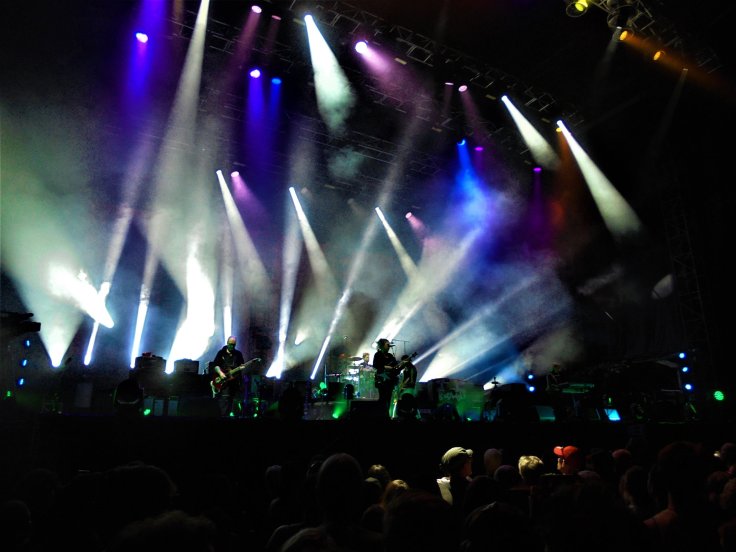
The Cure in all their Gothic glory – Carnival City – Rocking The Lawns – 2019.
WORDS AND IMAGES BY PSEUDO GOTH
Towards the end of last year, a friend of mine who works in music production puts a status update on Facebook that says: “Big announcement made soon, massive international act coming to South Africa”. Now, I’m sitting there going, “Yar right, it’s probably Ed Sheeran or Cardi B.” So I sit back, and do what I usually do, and try and get through an unrealistically long work day at the Orwellian nightmare I keep trying to wake myself up from.
A few hours later, I see that it’s none other than The Cure.
A Gothic, hero – Robert Smith.
Holy shit!
A band that has been so dear to my heart, for so long, that I can’t believe this news to be true.
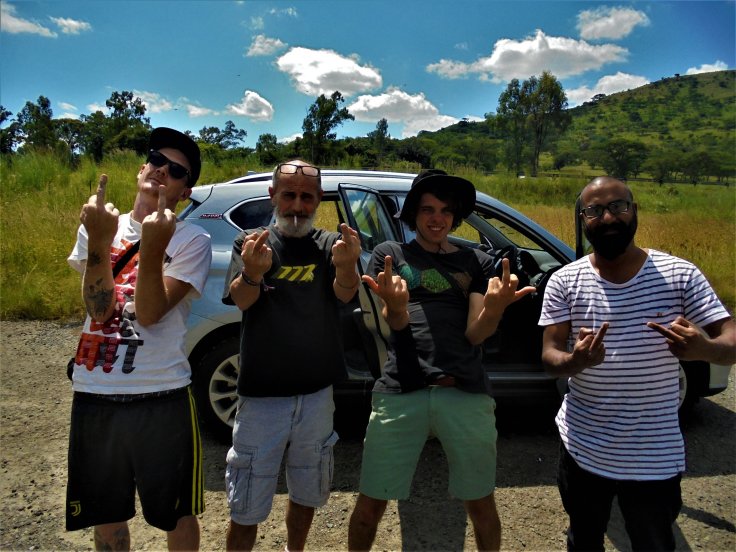
Road trip driver and artist Nivesh.
The following day I rush to Computicket to purchase a ticket, and they haven’t even issued them yet as the concert is months away. I wait, with nothing but a receipt, in anticipation for what is literally a dream come true.
2019 arrives and so does my ticket, and since the beginning of February I haven’t been able to sleep as well as I usually do. This intense, electric excitement is welling inside of me at the prospect of watching a band that helped create so many of the genres of music that I love.
A motley crew…
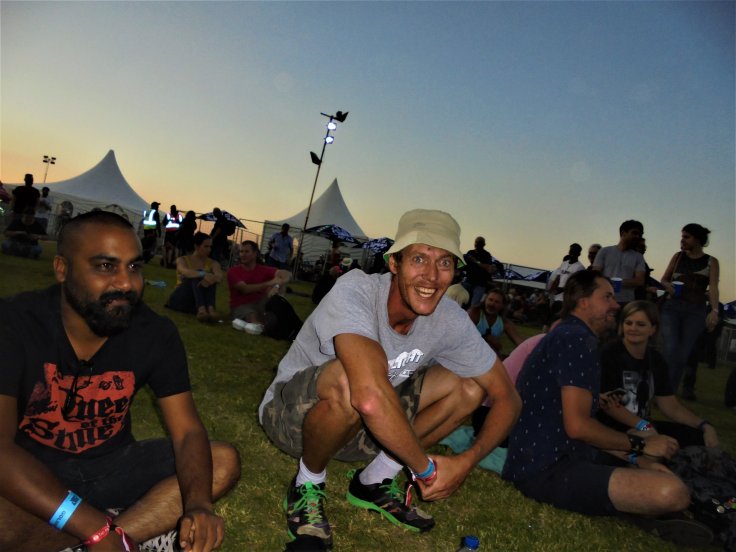
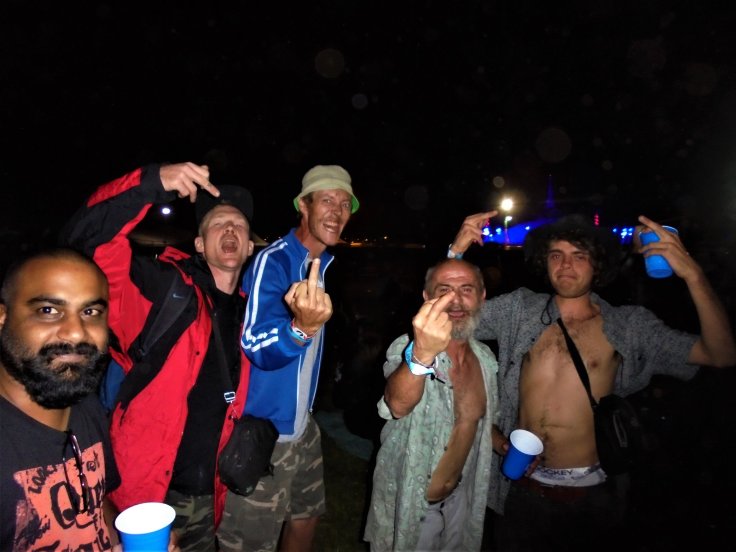
A few days before this monumental event, I have managed to assemble a rowdy bunch of Cure fans and we start our Gothic pilgrimage to watch one of rock ‘n roll’s most interesting, eclectic and dark bands. Friday comes, and we are all certainly very much in love. So much in love that our robust exterior upsets a few bewildered pedestrians en route to the show.
“If only tonight we could sleep in a bed made of flowers” – Robert Smith
After some run-ins with irate neighbours just before leaving Durban (as our excitement was just too much to contain), we eventually find our way to the N3 highway. We are traveling towards Vereeniging, Gauteng, to pick up the last component of the ensemble.
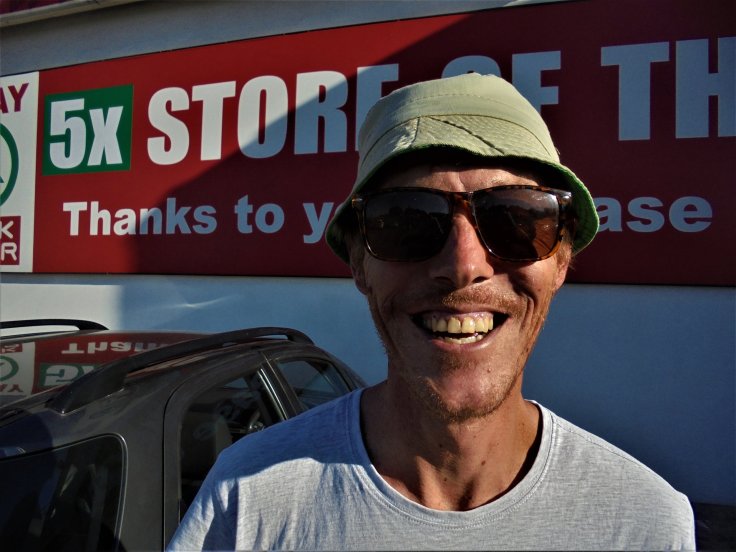
Mr. Creepy Steve.
An old Jedi out of retirement …
Creepy Steve, a legend of the Durban underground party scene who went into hiding a few years back. Kind of like Luke Skywalker in episode 4000 of the new sequel to episode 3999 of the never ending Star Wars franchise, or Obi Wan Kenobi in the first Star Wars film ever made.
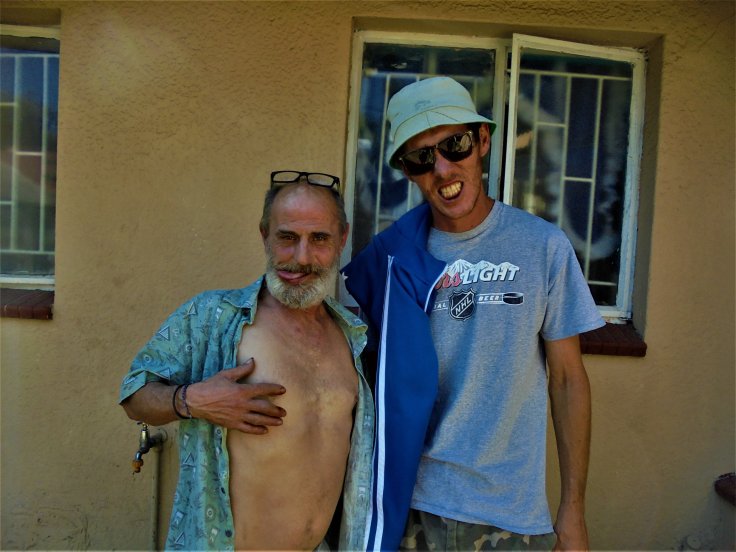
An unholy reunion Creepy Steve and Ballie “Mudbox” Mike back in action.
After a bit of coaxing, I convince the old Jedi to dust off his robe, change the light bulbs in his light saber, and “get involved”. At first he seems disinterested in the whole idea, but after he brushes over a bit of the Cure’s 80’s era hits, he becomes just as excited as the rest of us.
“Help me Obi Wan, you’re our only hope.”
Just the kind of guide we need to bring balance to the force. Creepy delivered.
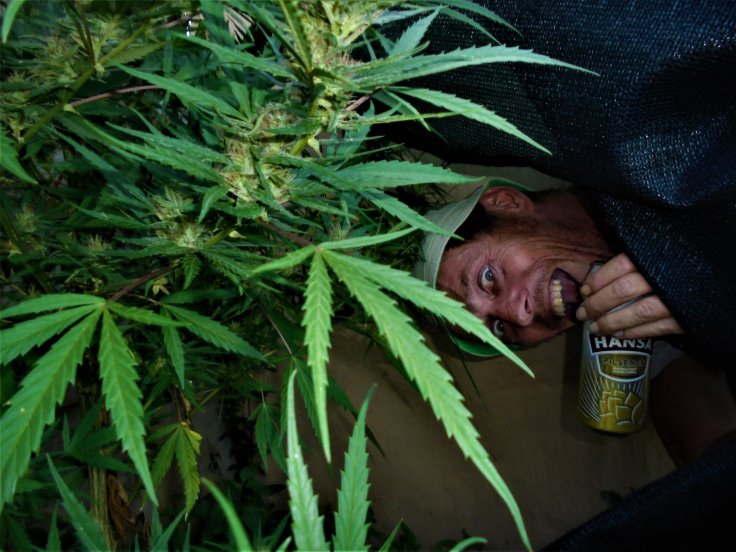
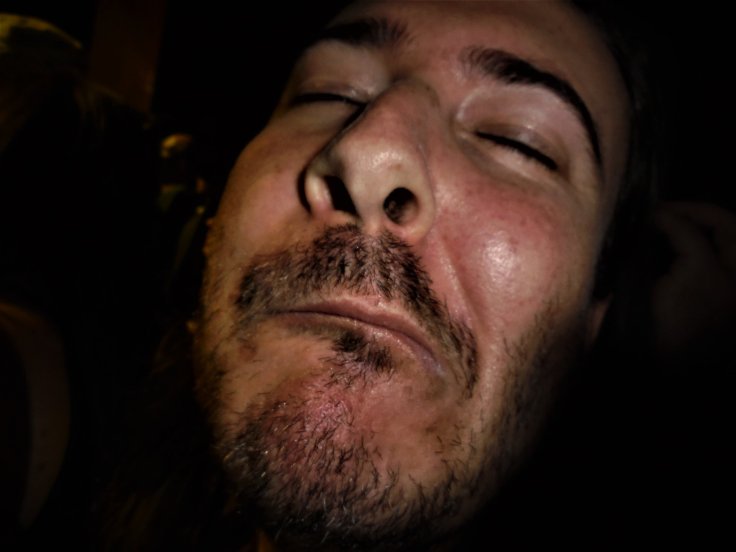
Creepy exercising his constitutional rights.
We have a briefing in Vereeniging the night before the show, which consists of a fire, beers and the use of various flammable devices. We wake to a full-spread breakfast and descend towards Brakpan like a pack of hungry dogs, ready for what we were about to witness.
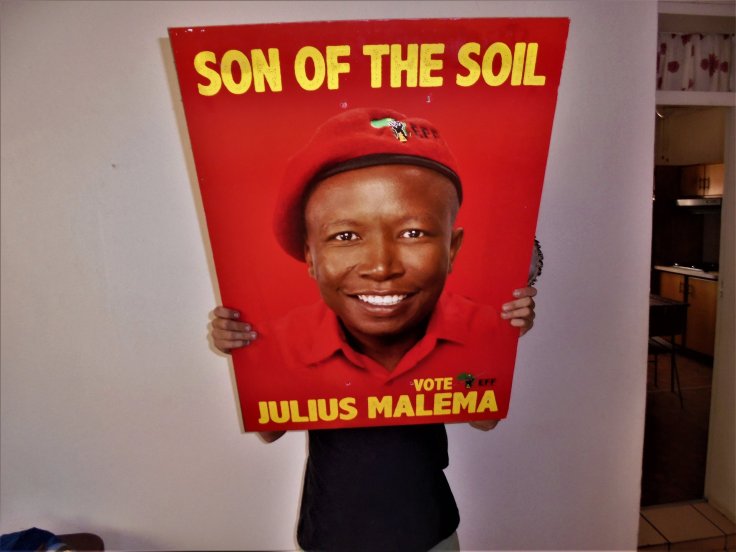
Even Julius is excited for the show.
The Cure, live in South Africa for the first time.
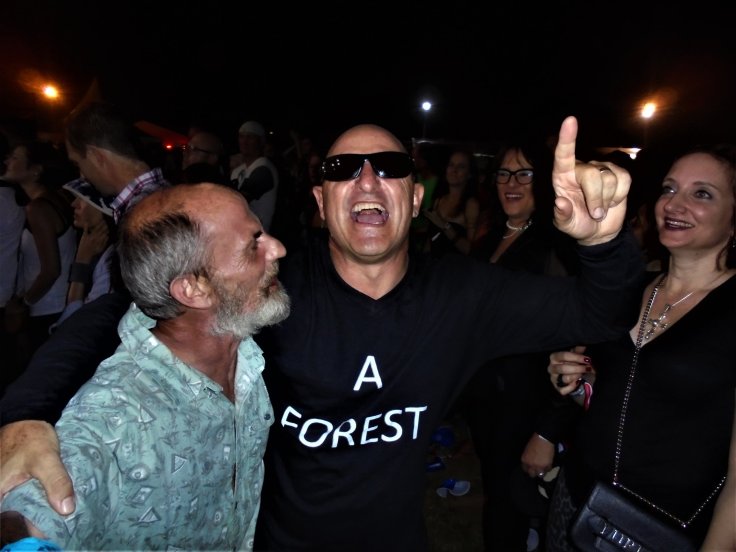
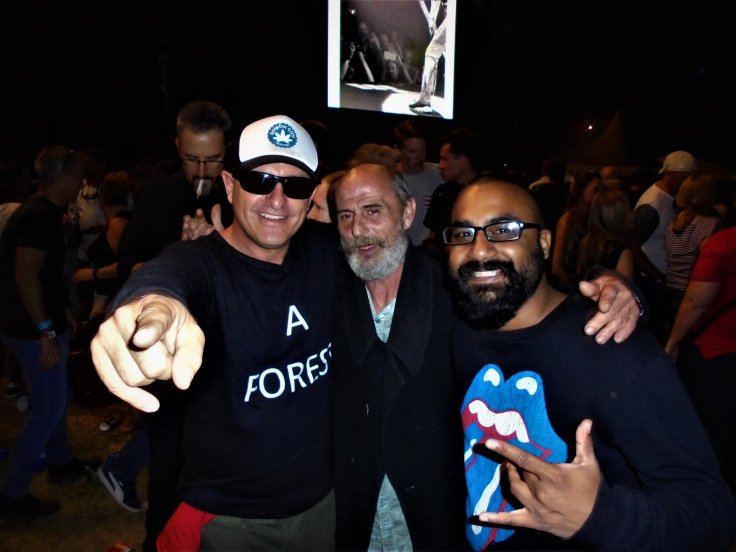
You know shits getting real when you find a guy wearing a shirt that says “A FOREST” on it
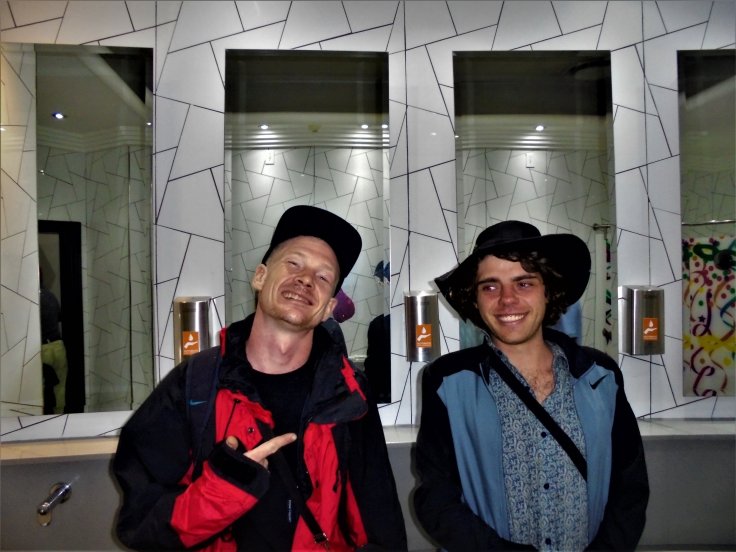
After roughly an hour in the venue I started to notice the eclectic motley bunch that The Cure attracts. Middle aged goths, young skater punks, trendy jocks. People of all different shapes, sizes and colours, all coming together in a very real and uninhibited kind of way.
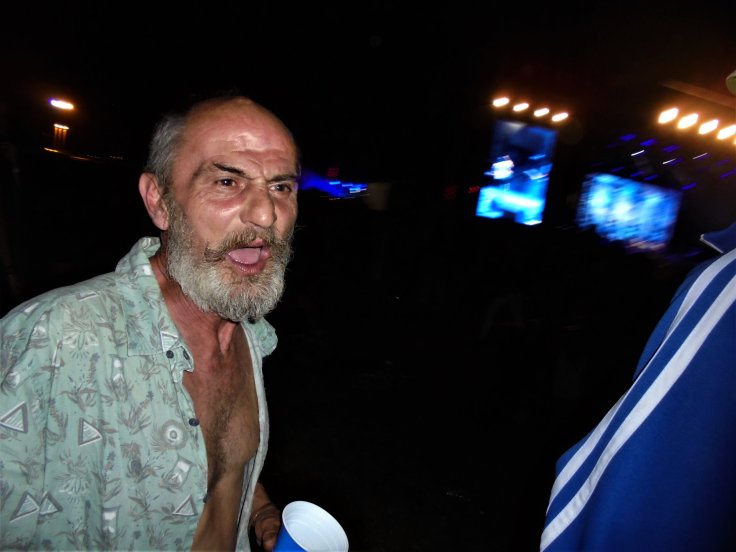
The weirdos have arrived.
Creepy lean’t into my ear and and with very warm breath slurred down my neck “there’s nothing quite like watching an old goth mincing across the veld in the brutal afternoon sun”. Shortly thereafter Creepy threw up, on account of drinking Ballie Mike’s boiling hot whiskey, an act which is in itself is a sight to behold.
The Cure is a band that has never subscribed or fitted in to one set thing or genre, and the crowd reflected this. The weirdo convention had come to town and everyone was there for one reason and one reason only, and that was to witness the dark, twisted, playful and bright world of one of pop’s most unassuming hero’s – Robert Smith.
A loyal fan of The Cure.
The support acts were lackluster, the biggest question everyone kept asking is “How does Ard Matthews still get booked?” Then again this is just an opinion, and I know that Just Jinger means and meant a lot to a lot of people, so I should try play nice. But I just couldn’t get my head around the American twang so I went for a beer. Zebra and Giraffe should have stayed on safari, before Fokofpolisiekar brought some much needed angst and energy to the now agitated crowd.
Nivesh and Creepy perplexed by the support bands.
My Afrikaans is limited and maybe my translation is off, but from what I could gather Francois Van Coke was asking the crowd if they had any spliff, so I lit one up in solidarity with the sentiment. They played their title track “Fokofpolisiekar” and then I realised something about how important this statement is for South Africans at large. We might be divided by race, politics, culture and religion but at least we can all agree on one thing. When the cops pull in, we tell them to “Fuck off”!
“When the cops pull in we tell them to fuck off” -Fokofpolisiekar
By now the energy was getting even weirder, The Rob Father was playing some fantastic tracks ranging from The Chats to the Talking Heads , and everyone was in full swing. More and more strange characters started coming closer to the front of the stage and for one of the first times in my life I felt like I belonged, because in this crowd no body belonged, and in that a sense of sincere connection was created.
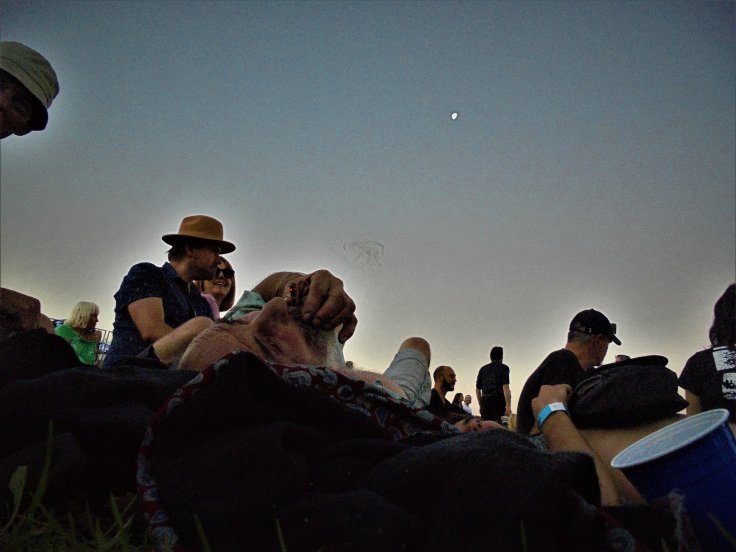
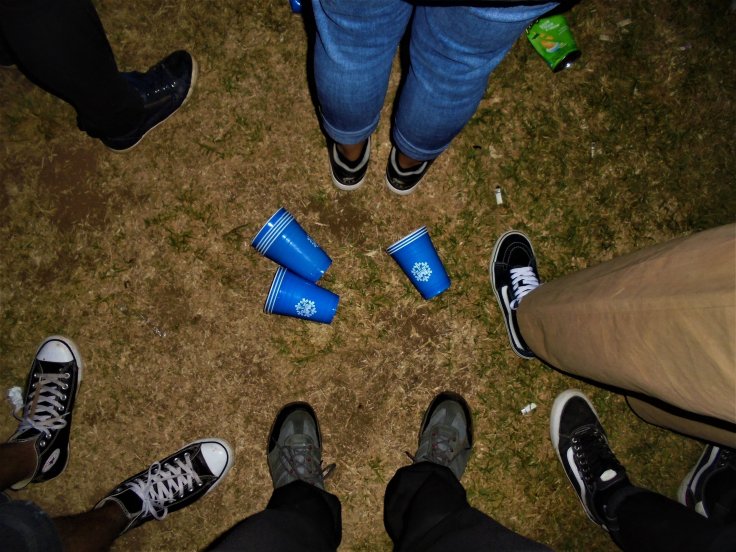
Grass life!The Cure live in South Africa for the first time.
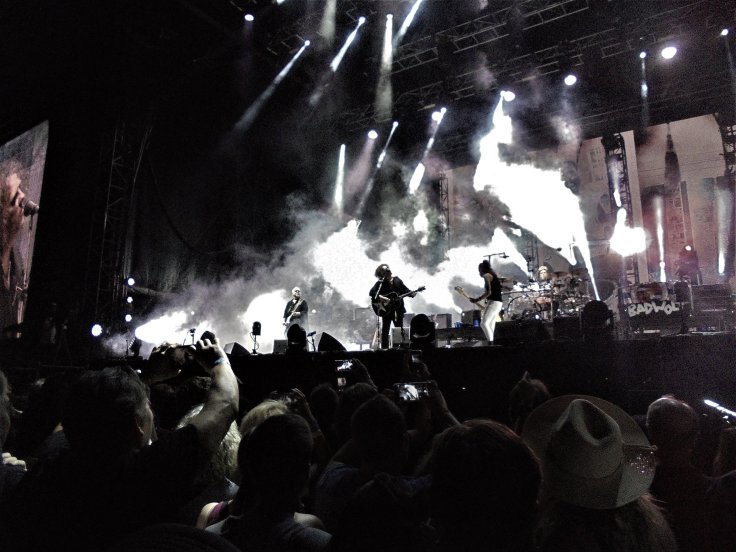
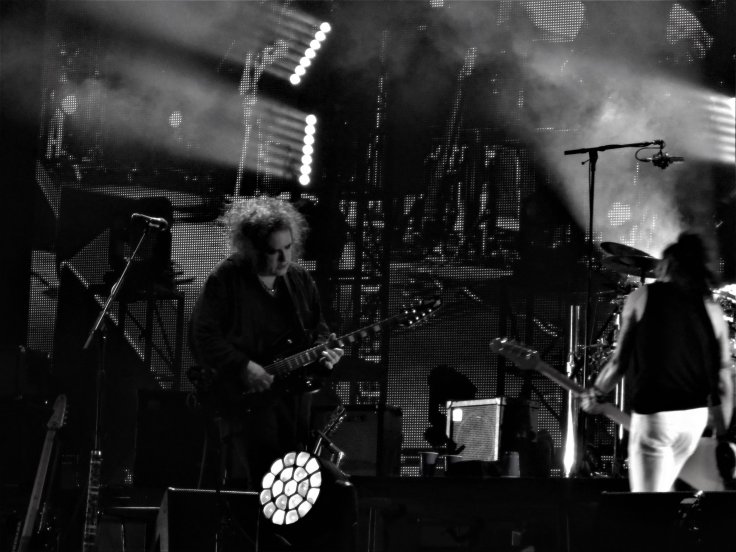
Then like a blinding flash of light Plainsong, the opening track from their highly atmospheric 1989 album Disintegration erupts through the speakers, and everyone is in a trance, slowly ascending to the front of the stage to get their first sight of the man and the myth, the songs that have been so close to all of us for so long. Providing comfort and relief in our darkest hours. Finally there it was standing in front of us tall and proud in all its macabre glory We had finally found a place to cure all our sadness, and a sound and sentiment where we escape to, a realm where we play with our nightmares instead of fearing them. This is what that opening moment of this concert meant to me and I could feel it meant the same to a lot of others there. It was a religious experience and for a few hours the lawns just outside the fabulously grotesque Carnival City became our Gothic church.
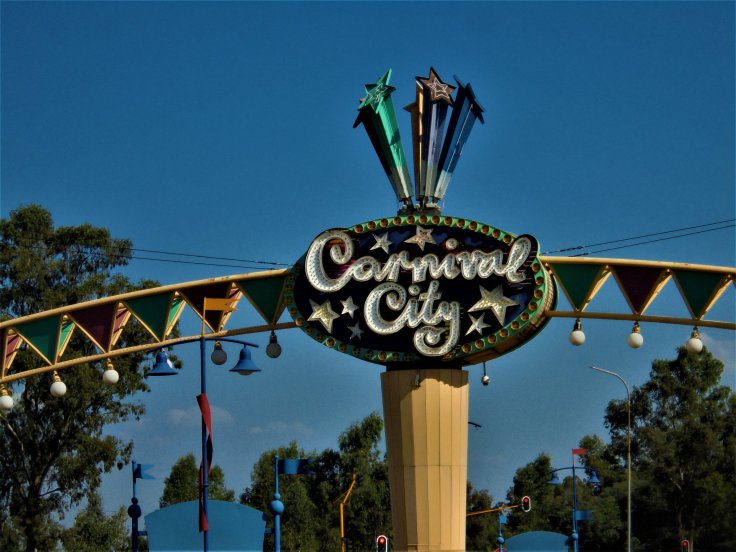
The fabulously grotesque Carnival City.
Soon after that I lost all my friends in the frenzied attraction to the stage, I was alone in a sea of atmospheric sounds and the mood was set, everyone was fixated, I look to my left and none other than SA folk/punk legend Shaun Richards is standing next to me. He’s an old friend so he grabs my hand and we try and get as close to the front as possible. I have one of the best seats in the house as In between Days ignites the crowd into a harmony that isn’t possible during the sad and reflective era of Distingeration. Love is certainly in the air and I turn to Shaun as Robert Smith busts out a riff that could be placed in any modern indie or post punk band. I remark “Can you believe it Shaun, we are here watching the guy that pretty much invented the music we love”.
Shaun Richards aka All These Wasted Nuts very excited.
Nature calls and I really needed to pee, so I rush off to the toilet, and by the time I get back to the stage A Forest starts playing and I find myself running through a jungle of people, as I’ve lost everyone I came to the show with. I start to interact with so many different characters a goth puts his arm around me as we sing every word back at the stage, until I notice a group of trance hippies laying it down as if its an outdoor party. I stop and just dance my arse off with the misfits as if its 1984 again, until one of friends Ballie Mike grabs my shoulder. After that we try again to get as close as we can to the front, as The Cure launch into some of their darkest and heaviest material, you can see how this era of The Cure influenced modern metal such as Deftones, (they even covered If only Tonight we could sleep) and it was almost as if Robert Smith was sending out a clear message “If you want the light happy pop side of The Cure, you’re going to have to get through the dark stuff first”. After a brutal onslaught of their heavier material, we can now see the light, and I’m not sure which song was played first, maybe it was Friday I’m in Love or Close To Me, but the energy had completely shifted and now everyone was smiling, dancing and connecting, the band even looked more relaxed.
Ballie looks at me and says “When are The Smiths coming on, I thought we came here to see Morrisey”.
I can’t recall how long the set went on for, it could have been minutes, it could have been hours, and most of the material I had heard before, which is great when you’re there to see one of your all time favourite bands.
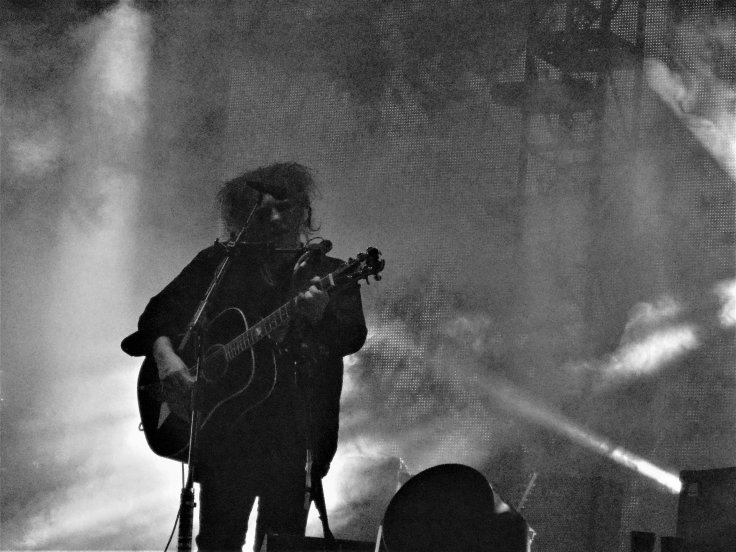
Robert Smith showing the kids how its done.
All I remember is they finished the set with all their older material, Accuracy, Killing an Arab, Boys Don’t Cry and Jumping Someone Else’s Train all made a beautiful appearance, suped up for a sonic live experience. Then all of a sudden, The Cure sounded like a young, brash, youthful punk band and just like a dying shooting star it was over.
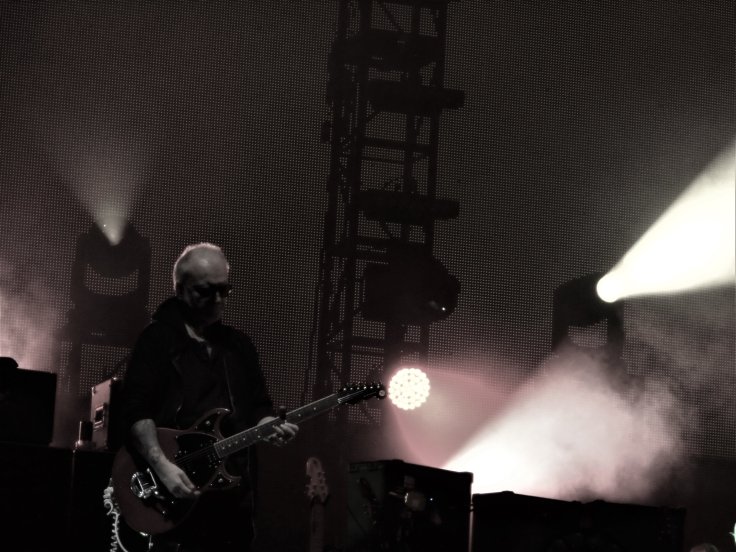
Reeves Gabrels doing his thing.
For me The Cure represents real love, because love is light and beautiful and enduring. But love is also dark and unforgiving, yet if we can persist through all its layered complexities, we can create something utterly beautiful in a world that has become extremely estranged, dark and hostile. The Cure represents the vulnerability of being alive, the darkness of heartache. And commitment, just real commitment, commitment to art and music and creation. Commitment to manifesting a safe space, for all the people in the world who just don’t fit in.




 Aweh Online